Contents
History & cultureBY TELLBY7 sections · numbered as on the map01 Orientation
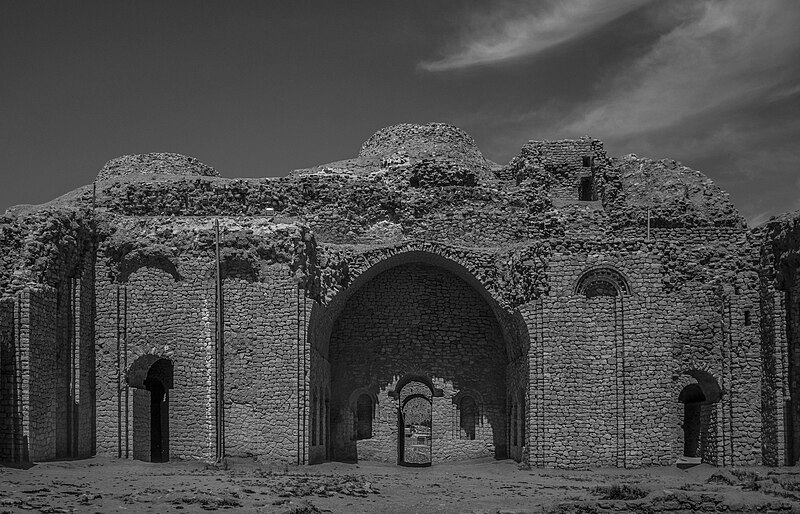
Welcome to the historic landscape of the Firuzabad Plain, home to the formidable stronghold of Tol-e Khezr, which once stood as a vital shield for the magnificent Palace of Ardashir. The region of Fars where you are standing today is the historic cradle where Ardashir I, the founder of the Sassanid Empire, realized his grand imperial vision and initiated an extraordinary architectural revolution. Included as a World Heritage Site, the Sassanid Archaeological Landscape of the Fars Region represents far more than ancient stone remains. It stands as an exceptional testament to the brilliant fusion of ancient Persian master engineering and sophisticated military strategy. The Firuzabad Plain is naturally protected by the rugged and towering Zagros Mountain range that surrounds the entire basin, while historically serving as a crucial economic hub along the vital trade route connecting the ancient port of Siraf with the Persian Gulf. Sassanid architects and military engineers skillfully incorporated these formidable natural barriers and strategic trade passes into an integrated defensive network designed to protect the royal heartland. When Ardashir I defeated Parthian rule and established the Sassanid dynasty, he constructed a grand palace in the center of the plain to demonstrate his royal authority and legitimize his rule. To ensure absolute security, strategic strongholds and monitoring outposts were established across key vantage points around the palace. The stronghold of Tol-e Khezr, where you stand now, was constructed on a prominent natural hill situated in close proximity to the Palace of Ardashir. Standing atop this elevated mound offers an extraordinary vantage point that overlooks the vast agricultural plain and the winding river below, while providing a direct line of sight to the royal palace itself. This site was not merely an isolated observation tower, but a critical stronghold designed to monitor regional movement, guard primary access routes, and communicate urgent warnings across the plain. As you explore this historic site today through our seven guide points, you will witness the remarkable physical evidence of this ancient defensive system. You will examine the well preserved double stone ramparts that stood guard for centuries, the circular tower foundations that anchored the defenses, the oval stone basin that supplied water to the garrison, and the residential quarters where soldiers were quartered. Furthermore, you will discover how this ancient military outpost transitioned into a sacred shrine during the medieval Islamic period, leaving a rich multi-layered heritage. We invite you to step forward and begin your journey at our first stop, where the formidable outer fortification walls still stand.
02 The Outer Stone Ramparts and Double Fortification
Constructed entirely without any mortar by fitting massive dressed ashlar blocks together in five distinct courses, this extraordinary outer wall still stands at a height of 1.7 meters after nearly eighteen hundred years, serving as a breathtaking monument to ancient Persian dry masonry engineering. Please direct your gaze along the western slope of the hill, where long rows of massive foundation slabs support the imposing masonry of the outer fortification. …
03 The Northwest Watchtower Foundation
Standing atop the circular tower foundation at the summit of this hill offers a breathtaking vantage point where the magnificent Palace of Ardashir and the entire expanse of the Firuzabad Plain unfold before your eyes across several kilometers. Please follow the circular curve of the round stone foundation beneath your feet, and turn your eyes toward the distant light green fields and the winding river traversing the basin below. …
04 The Oval Stone Basin and Rainwater System
Constructing an oval stone basin measuring eight meters long by four meters wide to collect and store rainwater on top of a dry, arid hill stands as a remarkable testament to the hydraulic expertise of ancient Persian engineers. Please bend down and closely observe the northeastern wall of the basin, where three tight courses of finely dressed ashlar blocks remain exceptionally well preserved. …
05 The Southern Garrison Hall and Living Quarters
The archaeological discovery of massive ceramic storage jars and abundant pottery fragments across this excavated complex conclusively proves that this site functioned as a long term military garrison for stationed soldiers. Please direct your attention to the impressive southern wall, which remains standing at a height of 1.5 meters as the tallest surviving section among the stone structures measuring twelve meters long by eight meters wide. …
06 Emamzadeh Khezr Shrine and Ancient Carved Chute
The fact that this thirteenth century Islamic shrine was built by directly repurposing one thousand year old Sassanid stone materials and water channel components represents a fascinating historical transformation embedded within the site. Please look closely above the shrine structure at the distinct carved ancient stone chute featuring a clearly defined water groove. …
07 Closing
We extend our heartfelt gratitude to you for exploring the historic stronghold of Tol-e Khezr and the surrounding heritage of the Sassanid Empire on the Firuzabad Plain today. Every step you have taken across this elevated mound has brought you into close contact with the extraordinary legacy of Ardashir I, who established a powerful dynasty and transformed this valley into the cradle of an imperial architectural revolution. …