Contents
History & cultureBY TELLBY7 sections · numbered as on the map01 Orientation
Welcome to La Vela de Coro, an extraordinary historical site situated in western Venezuela within the state of Falcon, nestled between the majestic Sierra de San Luis mountain range and the dramatic expanses of the Coro Dunes National Park. This remarkable location represents the only surviving example along the entire Caribbean coast of a fully preserved urban ensemble built with traditional earthen architecture. In recognition of its outstanding universal value, the site was officially inscribed on the UNESCO World Heritage List in 1993. Spatial layout spans a total area of 18.40 hectares, encompassing 7.85 hectares within the historic inland city of Coro and 10.55 hectares within the vibrant coastal Port of La Vela.
The historical foundations of this settlement date back to 1527, making it one of the very first European colonial towns established along the South American Caribbean shoreline. Long before the arrival of Spanish colonizers, however, the territory was inhabited by the indigenous Caquetio people. These resourceful original inhabitants developed a sophisticated system of land management, constructing a major irrigation canal supplied directly from the Coro River to cultivate the semi-arid coastal plain. When Spanish settlers arrived, they designed their urban grid around this existing indigenous water network, establishing a durable checkerboard pattern that defined the city's growth. Reflecting its early strategic importance, Coro became the first capital of the Captaincy General of Venezuela and was designated as the seat of the very first bishopric in continental South America in 1531.
What truly sets the architectural landscape of La Vela de Coro apart is its unprecedented synthesis of diverse cultural influences. The domestic, religious, and civil structures showcase an organic blend of indigenous earthen construction methods and Spanish Mudejar architectural details. Beginning in the second half of the 17th century, this hybrid heritage absorbed distinct Dutch architectural motifs introduced through active commercial maritime networks connecting the mainland with the nearby Dutch Caribbean islands of Curacao and Aruba. The resulting urban fabric seamlessly merges Spanish spatial arrangements, Dutch decorative roof gables, and native mud walling, creating an environment found nowhere else in the Caribbean region.
Your guided exploration today will lead you through the core historical markers of this coastal heritage complex. We will begin along the shoreline at the Francisco de Miranda Walkway, where pivotal moments in the South American independence movement transpired. From there, we will visit the historic coastal fortification known as Fortin de La Vela, inspect the striking Dutch-influenced facade of the Antigua Aduana, wander through narrow streets lined with authentic mud-brick walls, and conclude at Plaza La Antillana, the living center of local folk traditions. Please step forward and enjoy this immersive historical journey.
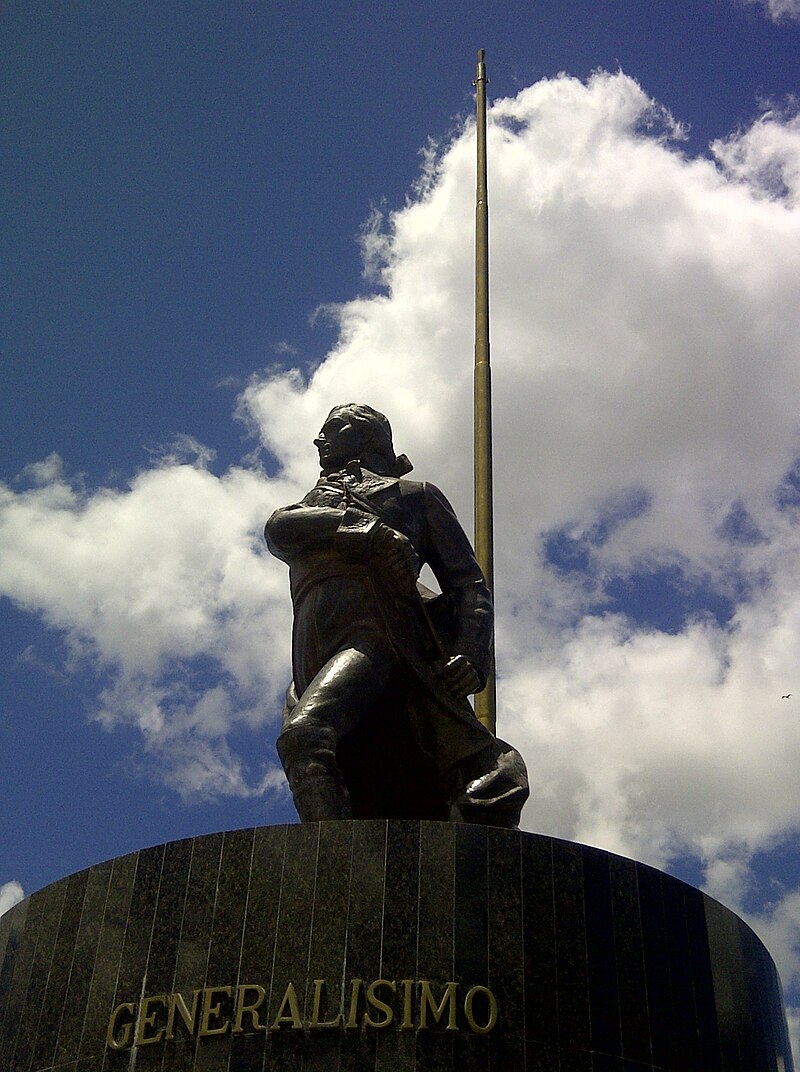
02 Generalissimo Francisco de Miranda Walkway and the Flag Monument
The yellow, blue, and red tricolour flag that today represents the national sovereignty of three independent South American nations—Venezuela, Colombia, and Ecuador—was raised for the very first time on South American soil on this exact beach of La Vela.
Please direct your eyes toward the sweeping oceanfront where the Generalissimo Francisco de Miranda Walkway extends along the Caribbean coastline, culminating in the bold Flag Monument and statue that stand against the vast horizon of the sea. …
03 Fortin de La Vela and the Coastal Defense
The very name of the town, La Vela, derives directly from the Spanish terms for keeping a continuous night watch or maintaining a vigilant guard, known as vigilia or puerto de vela, inspired either by the constant lookout for raiding pirates or by the terrifying era under the ruthless governor Juan de Carvajal, when frightened residents spent every night awake with weapons in hand. …
04 Antigua Aduana and the Dutch Caribbean Influence
Despite being constructed squarely within the administrative heart of Spanish colonial territory, the Old Customs House known as Antigua Aduana represents a complete and flawless architectural synthesis with Dutch design traditions imported from the nearby islands of Curacao and Aruba.
Please raise your eyes to admire the brilliant pastel blue facade and the elegantly contoured curved roofline that crowns the front elevation of the building. …
05 Traditional Mud Architecture and Earthen Techniques
Constructed entirely from locally sourced soil, timber, and woven bamboo, these modest mud walls have withstood centuries of coastal weathering, yet following unprecedented torrential rainstorms in late 2004 and early 2005, the site was placed on the UNESCO List of World Heritage in Danger in 2005, triggering an international rescue campaign. …
06 Plaza La Antillana and the Tradition of Los Locos de La Vela
Every December 28, this normally serene World Heritage plaza transforms into an explosion of vibrant color, wild music, and masquerade revelry during the legendary folk festival known as Los Locos de La Vela, or The Madmen of La Vela.
Please take a moment to look across the wide expanse of Plaza La Antillana, taking in the colorful public art installations and coastal amenities that decorate this historic gathering space. …
07 Closing
Our audio guide exploration of La Vela de Coro has now come to its conclusion. Today, we have journeyed through a remarkable historic landscape where the refreshing sea breeze of the Caribbean meets the centuries-old warmth of traditional earthen architecture. From the Generalissimo Francisco de Miranda Walkway where the South American tricolour flag was first unfurled, to the sturdy battlements of Fortin de La Vela, the striking Dutch-influenced facade of the Antigua Aduana, the narrow…