 Photo Wikimedia Commons
Contents
History & cultureBY TELLBY7 sections · numbered as on the map01 Orientation
Welcome to the sacred Kasubi Hill located approximately five kilometers northwest of the bustling city center of Kampala in Uganda. This historic site represents the spiritual heart and cultural center of the Baganda people who form the largest traditional kingdom in the nation. Recognized by UNESCO as a World Heritage site in December two thousand one this extraordinary location stands as one of the most remarkable architectural achievements made entirely from vegetal materials in the entire region of sub Saharan Africa. Spanning approximately twenty six point eight hectares of land the site preserves an enduring connection to royal ancestors through living cultural practices that have been passed down for centuries. The boundary of this sacred realm was established in eighteen eighty two on the hilltop and was delineated by planting traditional bark cloth fig trees known scientifically as Ficus natalensis. These living markers have played a vital role in protecting the sanctuary from urban expansion and residential development on all sides while supplying the raw materials for traditional craft making. The site originally served as a royal palace constructed in eighteen eighty two by Muteesa the First who was the thirty fifth Kabaka of the Buganda Kingdom replacing an earlier palace built by his father Ssuuna the Second in eighteen twenty. Following his death in eighteen eighty four the grand palace was converted into a sacred royal burial site. In traditional Baganda custom practiced since the thirteenth century the body of a deceased king was buried in one location while his jawbone which was believed to contain his immortal soul was placed in a separate shrine. However this site broke with long standing tradition by housing the royal tombs of four consecutive Kabakas within a single sanctuary. Most of the surrounding land continues to be farmed using traditional agricultural techniques ensuring that the landscape retains its authentic historical character. As you walk through this tranquil environment you are entering a space where communication with the spiritual realm remains continuously active through sacred rituals and ancestral reverence.
02 Bujjabukula Gatehouse
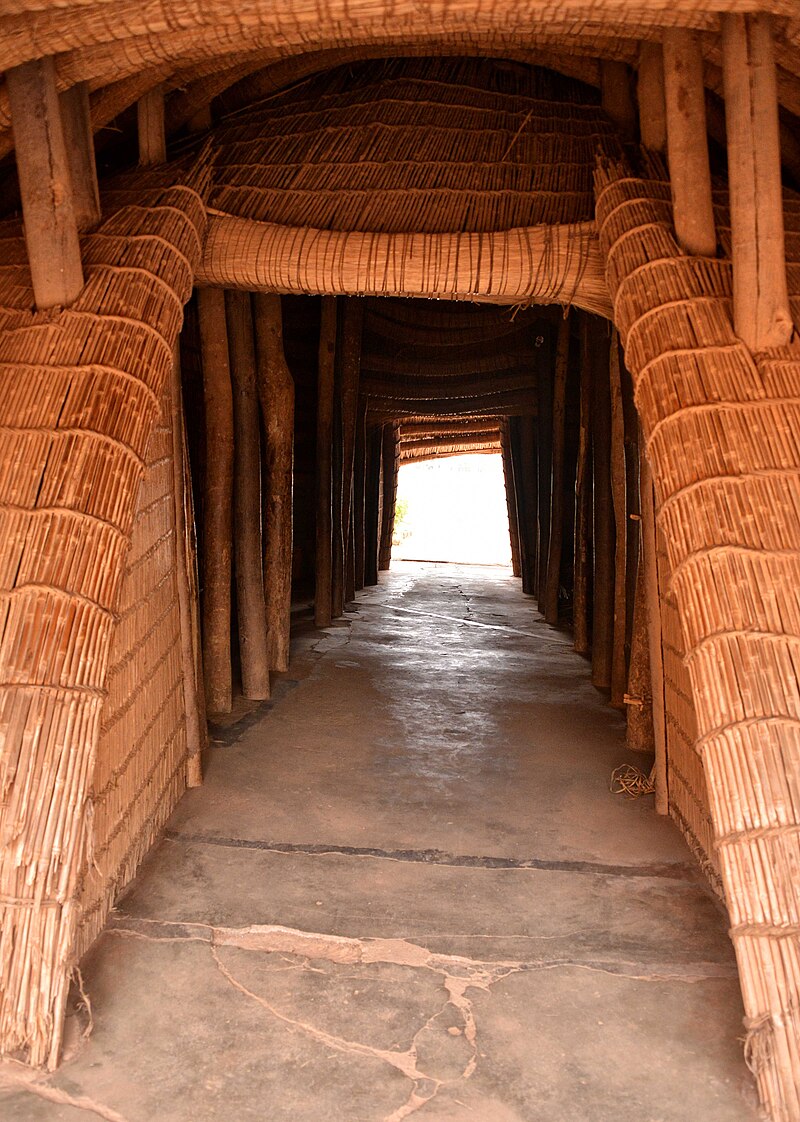
As you step toward the entrance of this sacred royal sanctuary you are standing before a structure that holds a truly fascinating secret. This unassuming building known as the Bujjabukula gatehouse is not merely a simple doorway or a decorative entrance to the grounds. In reality it serves as an indispensable spiritual shield and an unyielding sentinel that completely isolates the sacred inner realm of the kings from the chaotic influences of the outside world. …
03 Ndoga-Obukaba Drum House
Passing through the gatehouse and crossing the small inner yard you arrive before a small yet profoundly sacred structure known as Ndoga Obukaba. Standing before this sanctuary you are looking at the building that houses the most vital spiritual voice of the Buganda Kingdom. You might be surprised to learn that the drums kept inside this traditional building are far more than mere musical instruments used for artistic performance or entertainment. …
04 Olugya Central Courtyard
Stepping into the broad open expanse of the Olugya courtyard you are entering the very physical and spiritual center of royal life at Kasubi Hill. You might find it remarkable that this vast circular yard surrounded by traditional reed fencing served two completely distinct purposes across time. During a Kabaka's living reign this open courtyard functioned as the supreme venue for state governance royal audiences and kingdom council meetings where crucial political decisions were made. …
05 Muzibu Azaala Mpanga Main Dome
Standing before the towering entrance of Muzibu Azaala Mpanga you are looking at the absolute masterpiece of indigenous African organic architecture. You will be astonished to learn that this immense dome structure which stands over seven point five meters tall and spans thirty one meters in circumference was traditionally constructed entirely from natural wooden poles grass reeds and wattle. …
06 Kibira Sacred Forest Inner Sanctum
Standing inside the tranquil depths of Muzibu Azaala Mpanga before the heavy hanging fabric you have arrived at the ultimate spiritual climax of Kasubi Hill. You will be deeply moved to learn that to the Baganda people the four great kings buried behind this partition are not considered dead in the Western sense. …
07 Closing
As we complete our journey across the grounds of Kasubi Hill we stand in a place that has demonstrated extraordinary strength and cultural resilience. In March two thousand ten a tragic fire broke out that almost completely destroyed the magnificent main dome of Muzibu Azaala Mpanga causing immense heartbreak across the kingdom and leading UNESCO to place the site on the List of World Heritage in Danger in July two thousand ten. However the spirit of the Baganda people proved unyielding. …