 Photo Wikimedia Commons
Contents
History & cultureBY TELLBY7 sections · numbered as on the map01 Orientation
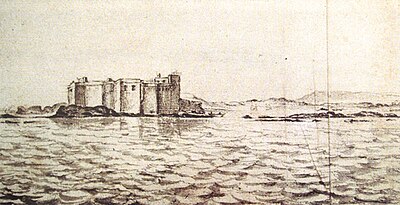
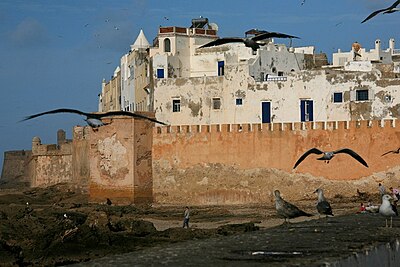
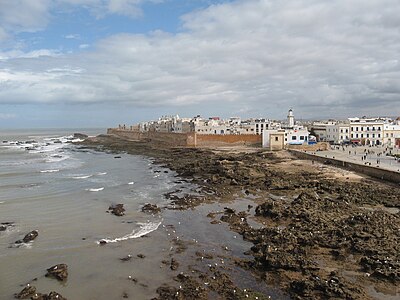
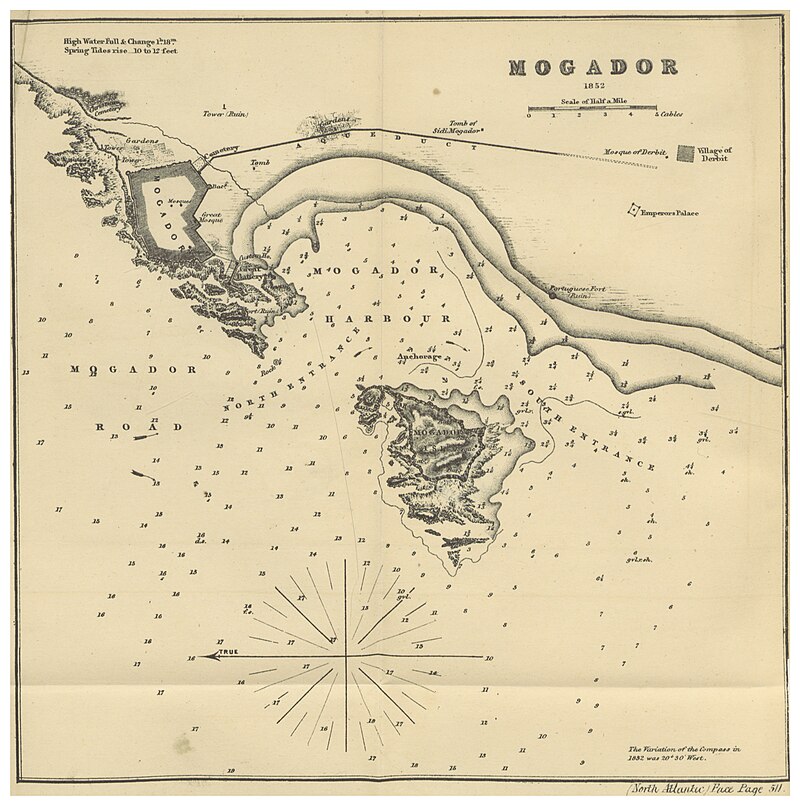
Welcome to Mogador Island the vibrant centerpiece of the historic Iles Purpuraires archipelago where rich human heritage and timeless maritime winds converge along the Atlantic coast of Morocco. This exceptional coastal sanctuary represents an extraordinary synthesis of traditional North African urbanism and late eighteenth century European military architecture. Recognized internationally as an outstanding cultural landmark the island served as a pivotal commercial gateway connecting the interior Saharan caravan routes with the vast Atlantic shipping networks linking Africa to Europe and the Mediterranean. The fortified medina of Essaouira on the adjacent mainland was masterfully re-designed under the Alaouite Sultan Sidi Mohamed Ben Abdallah with guidance from European military engineers who adapted the famous Vauban fortification models of Saint Malo into a North African coastal environment. From a geological perspective Mogador Island is composed entirely of calcified Pleistocene sand dunes known as aeolianite which solidified over approximately two million years. Around seven hundred BC sediment carried by the Oued Ksob river created a natural sand spit or tombolo that physically linked the island directly to the mainland. This unique geographical arrangement produced a well protected inner lagoon between Mogador and the shoreline providing a safe natural harbor along an otherwise treacherous Atlantic coast exposed to intense ocean swells and gale winds. Ancient mariners navigating these dangerous waters sought shelter in this calm haven transforming it into a major center for international exchange. Although postglacial sea level rises eventually severed the land connection isolating Mogador once again the physical remnants of its ancient inhabitants remain exceptionally well preserved across the terrain. Today our audio guide journey begins at the ancient Phoenician trading outpost where early merchants smelted iron and conducted trans-Saharan commerce. From there we will explore the impressive Roman garum processing vats and the great underground storage cistern that sustained industrial operations on a freshwater deficient island. We will then examine Room Seven of a Roman structure where prehistoric marine fossils were deliberately preserved inside a buried storage amphora. Continuing upward to the highest elevation at the Tetre Mound we will inspect a Roman refuse layer containing Early Cretaceous fossils carried from the mainland High Atlas mountains. Finally our tour concludes along the dramatic wave swept cliffs where ancient terrestrial snail fossils remain embedded within calcified dune rock. Please take a moment to absorb the solemn atmosphere as we walk together toward our first destination at the Phoenician trading outpost.
02 The Phoenician Trading Outpost
It is truly astonishing that as early as the seventh century BC Phoenician mariners navigated all the way from the eastern Mediterranean Levant to the very edge of the Atlantic Ocean to establish an iron smelting base and trading post on this remote island. Look closely at the ancient pottery fragments and iron smelting ceramic nozzle traces buried in the sandy soil right beneath your feet. …
03 Roman Garum Vats and the Great Cistern
It is truly remarkable that on this isolated rocky island completely lacking natural freshwater springs Roman inhabitants managed to mass-produce garum a highly prized fish sauce exported across the vast expanse of the entire Roman Empire. Point directly to the plaster-coated square vats and the massive cistern entrance resting nearby on the ground surface. …
04 The Hidden Fossils inside the Roman Amphora
It is deeply fascinating that buried deep beneath the mosaic floor of a Roman residential building archaeologists discovered four ancient marine fossils belonging to a species over one hundred and thirty million years old carefully stored together inside a single buried terracotta amphora. Lower your head slightly and gaze toward the quiet corner of the structure where well-preserved fragments of geometric mosaic flooring remain visible on the ground. …
05 The Roman Refuse Deposit at the Tetre Mound
It is truly mind-boggling that fossilized sea creatures dating back one hundred and thirty million years to the era of dinosaurs were transported fifty kilometers across land and sea by human hands to be buried in an island refuse layer. Follow with your eyes the exposed soil cross-section over one meter thick strewn with ancient glass shards and ceramic fragment layers. …
06 Pleistocene Dune Cliffs and Fossil Snails
It is an astonishing natural revelation that this entire island is not composed of solid ancient bedrock but rather of calcified wind-blown sand dunes that solidified two million years ago. Look directly at the white round shells embedded firmly on the surface of the wave-beaten cliff rocks right before you. The dramatic coastal cliffs standing before you represent a clean vertical section through calcified Pleistocene sand dunes continually eroded by Atlantic waves and salty ocean winds. …
07 Closing
Thank you for joining this comprehensive audio guide exploration of Mogador Island within the historical Iles Purpuraires archipelago. Today we have traveled across extraordinary dimensions of time from the bold arrival of Phoenician mariners in the seventh century BC to the industrious Roman settlers who produced garum fish sauce and harvested rainwater in massive underground cisterns. …