 Photo Wikimedia Commons
Contents
History & cultureBY TELLBY8 sections · numbered as on the map01 Orientation
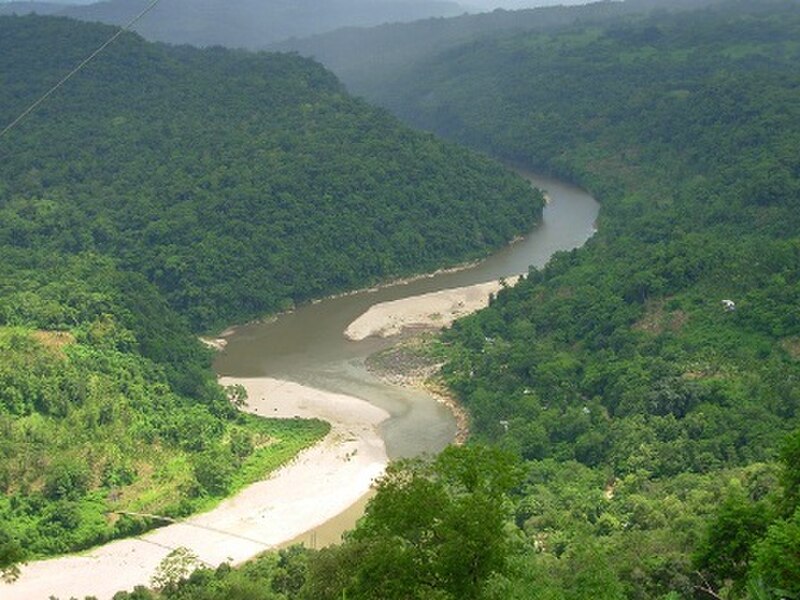
Welcome to the Garo Hills, located in the western part of Meghalaya state in northeastern India. Bordering Assam and Bangladesh, this highland region forms a vital segment of the Garo Khasi range and the Patkai hill range. Recognized as one of the wettest places on earth, the Garo Hills belong to the Meghalaya subtropical forests ecoregion, nurturing dense rain forests and extraordinary biodiversity. According to official census records, the region accommodates a total population of 1,103,542 people distributed across five administrative districts: East Garo Hills, North Garo Hills, South Garo Hills, West Garo Hills, and South West Garo Hills. The indigenous inhabitants who have lived here for centuries refer to themselves as the Achik or Achik Mande, which translates locally to the Hill People. While neighboring indigenous groups like the Khasi trace their roots to the ancient Austroasiatic language family, the Garo people possess Tibeto Burman roots, having migrated into these forested hills centuries ago. Their native language is Garo, also known as Achikku, which is spoken by approximately 76.8 percent of the population and preserves their oral history and cultural identity. Linguistically and culturally diverse, the region also includes Bengali speakers at 12 percent, Hajong at 3.12 percent, Koch at 2.03 percent, Rabha at 1.91 percent, Assamese at 1.89 percent, and Hindi at 1.18 percent. Religiously, Christianity represents 73.6 percent of the population, followed by Hinduism at 13.3 percent and Islam at 10.1 percent.
To understand Garo society, one must explore their traditional matrilineal kinship system, which governs descent, inheritance, marriage, and clan identity. In Garo culture, the matrilineal clan is known as the machong. Every individual permanently belongs to the mother clan from birth. Major clans such as Marak, Sangma, Momin, and Sira function as exogamous units, meaning marriage within the same machong is strictly prohibited. Inheritance of ancestral property, including the family home called the nokmong and clan lands, passes through the female line to the youngest daughter, known as the nokna. The nokna carries the solemn duty of caring for aging parents, managing the household, and maintaining ancestral rituals.
However, Garo matriliny is not a matriarchy. It operates on a complementary framework of shared responsibility. While women act as custodians of lineage, property, and family continuity, men exercise authority in public, administrative, and ritual domains. The maternal uncle, known as the chra, is a pivotal figure. As the senior male member of the maternal lineage, the chra serves as a guardian and advisor, representing the clan in marriage negotiations, dispute resolutions, and legal matters. Additionally, the village headman, known as the Nokma, is a male representative of the dominant matrilineal clan owning the village land. The Nokma manages community affairs and leads land rituals. This harmonious balance between female inheritance and male leadership defines the enduring heritage of the Garo Hills.
02 Tura Town and Tura Peak
Welcome to Tura Town and Tura Peak, the central administrative, economic, and cultural heartland of the Garo Hills. Located in the West Garo Hills district at an altitude of 657 meters above sea level, Tura is the largest urban settlement in the region, boasting a population of approximately 74,858 people. …
03 Nokrek Peak and Biosphere Reserve
Welcome to Nokrek Peak and the Nokrek Biosphere Reserve, the highest elevation point and the ecological crown jewel of the Garo Hills. Rising to a majestic height of 1,412 meters, or 4,633 feet above sea level, Nokrek Peak stands as the grandest summit in the entire mountain range. Surrounding this dominant summit is Nokrek National Park, covering an area of 47 square kilometers. …
04 Siju Cave and Simsang River
Welcome to Siju Cave, an extraordinary underground wonderland situated alongside the scenic banks of the Simsang River in South Garo Hills. Known locally as Dobakkol Cave, or the Bat Cave, Siju Cave is recognized as one of the longest limestone cave systems in India and across the Asian continent. Formed over millions of years as underground water gradually dissolved the surrounding limestone strata, this subterranean network presents a labyrinth of winding passages, vast chambers, and…
05 Balpakram National Park and Sacred Legends
Welcome to Balpakram National Park, a sacred landscape where dramatic natural canyon geography intertwines with the deep spiritual folklore of the Garo people. Spanning an expanse of 220 square kilometers in South Garo Hills, Balpakram is reverently referred to by the Garo community as the Land of Spirits. According to indigenous Garo belief, this canyon plateau serves as the sacred abode where the souls of ancestors reside and rest after death before embarking on their final spiritual journey. …
06 Pelga Falls and Waterways of Garo
Welcome to Pelga Falls and the pristine watercourses of the Garo Hills, a tranquil sanctuary defined by gentle rivers, cascading waterfalls, and vibrant riparian ecosystems. Located near the Rongram River, Pelga Falls, locally known as Pelga Dare, cascades down gracefully from a height of 30 meters. Surrounded by dense green forest, the waterfall creates a peaceful environment where the rushing sound of water harmonizes with the quiet atmosphere of the woodland. …
07 Wangala Festival and Garo Life
Welcome to the cultural heartbeat of the Garo Hills, the vibrant Wangala Festival and the rich traditional culinary heritage of the A'chik people. Celebrated after the harvest season, typically in November, Wangala is globally renowned as the Festival of a Hundred Drums, or the 100 Drums Wangala Festival. This post harvest celebration is dedicated to Saljong, the Sun God, expressing gratitude for agricultural abundance and fertility. …
08 Closing
As we bring our journey through the Garo Hills to a close, we reflect on the meaning of community driven and sustainable travel in this unspoiled corner of northeastern India. As many travelers come to realize, while Shillong showcases the scenic beauty of Meghalaya, it is the Garo Hills that reveals how Meghalaya truly lives. Traveling here invites us to trade fast paced itineraries and crowded view points for genuine immersion, slow exploration, and meaningful human connections. …