Contents
History & cultureBY TELLBY8 sections · numbered as on the map01 Orientation
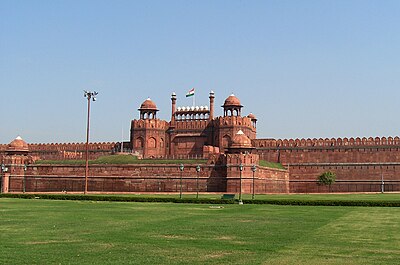
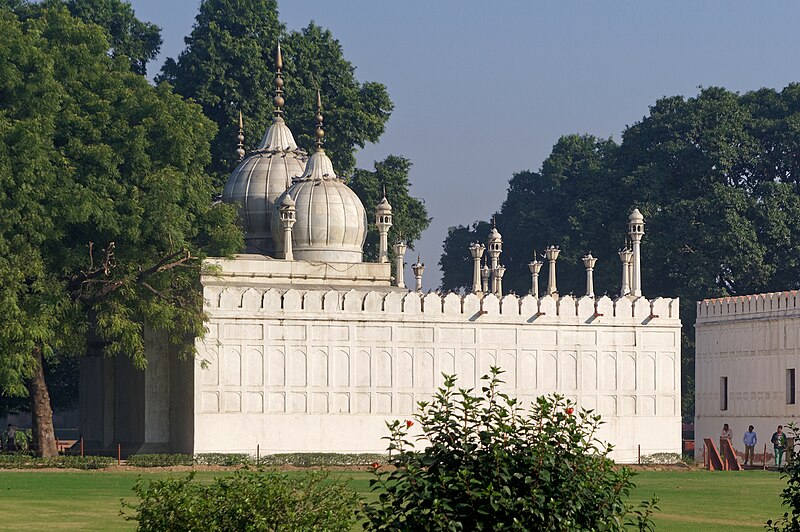
Welcome to the Moti Masjid, nestled deep within the royal sanctuary of the historic Red Fort complex in Old Delhi. You are currently standing near the royal baths, historically known as the hammam, towards the secluded inner quarter of the fort grounds. As you look around at your surroundings, you will observe that nearly all the monumental structures in this vast imperial palace complex are constructed from heavy, vibrant red sandstone. However, directly before you sits an extraordinary exception, an exquisite religious sanctuary built entirely from gleaming white marble. Known as the Moti Masjid, which translates evocative of the Pearl Mosque, its poetic title derives from the luminous, translucent quality of the pure white marble that defines its architectural character. When Emperor Shah Jahan originally designed and constructed the Red Fort in sixteen thirty eight, he deliberately omitted a private congregational mosque within the fort perimeter. Instead, Shah Jahan preferred to travel in a grand royal cavalcade comprised of decorated elephants, horses, and courtly attendants to perform his weekly Friday prayers at the colossal Jama Masjid located outside the fort walls. However, after Shah Jahan's son Aurangzeb ascended the Peacock Throne following a bitter and violent war of succession against his elder brothers Dara Shikoh and Moorad, imperial traditions shifted. Aurangzeb, renowned for his rigorous personal piety, found traveling to the distant Jama Masjid highly inconvenient for fulfilling his strict daily prayer schedule without delay. Consequently, he commissioned this intimate private place of worship directly adjacent to his personal sleeping quarters and the royal bathhouse. As noted by contemporary cultural commentary drawing upon John Ruskin's famous architectural analysis in The Stones of Venice, the Moti Masjid represents a rare, concentrated expression of marble craftsmanship within Delhi's predominantly red sandstone urban landscape. Today, in order to protect this delicate imperial jewel from physical deterioration, the Archaeological Survey of India keeps the entrance doors locked, leaving the inner courtyard silent and deserted. Nevertheless, as you stand before the threshold, you can gaze through the narrow aperture of the entryway to absorb its profound tranquility, its secluded quietness, and the timeless dignity of its untouched white marble.
02 Red Sandstone Enclosure Walls and the Eastern Bronze Gate
Let us first examine the outer architectural boundary of the Moti Masjid. Notice the unusually high enclosure walls built from local red sandstone that completely encircle the inner marble complex, serving to conceal the courtyard and prayer hall entirely from external view. As you ascend the small stone staircase leading up to the main entrance located on the eastern side, you encounter a remarkable architectural innovation that distinguishes this monument within Mughal heritage. …
03 White Marble Courtyard and the Ablution Pool
Step past the eastern entry portal in your imagination to behold the serene inner courtyard of the Moti Masjid. Enclosed entirely within high protective boundary walls, this intimate rectangular courtyard measures approximately nine by fifteen meters and is paved entirely with smooth, finely fitted slabs of pure white marble. Positioned precisely at the center of this pristine marble expanse is a recessed square water basin and central fountain known as the wuzu khana. …
04 Prayer Hall Façade and the Bangla Chhajja
Gaze across the western side of the courtyard to observe the elevated front façade of the main prayer hall. The floor of the prayer sanctuary is built upon a raised plinth higher than the courtyard pavement, physically elevating the sacred space set apart for divine worship. The front elevation consists of two structural bays divided internally and framed on the exterior by three graceful arched openings supported on solid marble piers. …
05 Three Domes and the Story of Restoration
Look up toward the roofline of the prayer hall to observe three bulbous domes set on constricted, narrow necks, ending in pointed finials. These three marble domes are aligned directly above the three arched openings of the front façade, establishing a harmonious vertical balance. However, the serene white marble domes visible today conceal a turbulent history of looting, severe rain damage, and subsequent nineteenth-century restoration. …
06 Interior Prayer Hall and Black Marble Musallas
Enter the main prayer hall in your mind to appreciate its internal architectural organization and remarkable floor design. The prayer sanctuary is divided internally into two parallel long bays or aisles running parallel to the front façade, lined entirely with polished white marble from floor to ceiling. The defining artistic highlight of this interior floor lies in the exquisite black marble inlays embedded directly into the white pavement. …
07 Floral Carvings, Mihrab, and Minbar
Examine closely the extraordinary relief carvings and stone inlays adorning the interior surfaces of the prayer hall. Every section of the interior, including the structural piers, arched spandrels, corner pendentives, and high ceiling vaults, is covered with dense floral patterns and leafy vine motifs executed in marble relief and pietra dura inlays. The sheer concentration of these carvings gives the white stone a rich texture reminiscent of a finely embroidered silk garment. …
08 Closing
As we conclude our tour of the Moti Masjid, take a final moment to gaze through the narrow gap in the locked brass-bound wooden gate. Although the Archaeological Survey of India keeps the entrance doors closed today to preserve its fragile marble surfaces from physical wear, the tranquil spirit of this Pearl Mosque remains powerfully palpable. …