 Photo Wikimedia Commons
Contents
History & cultureBY TELLBY7 sections · numbered as on the map01 Orientation
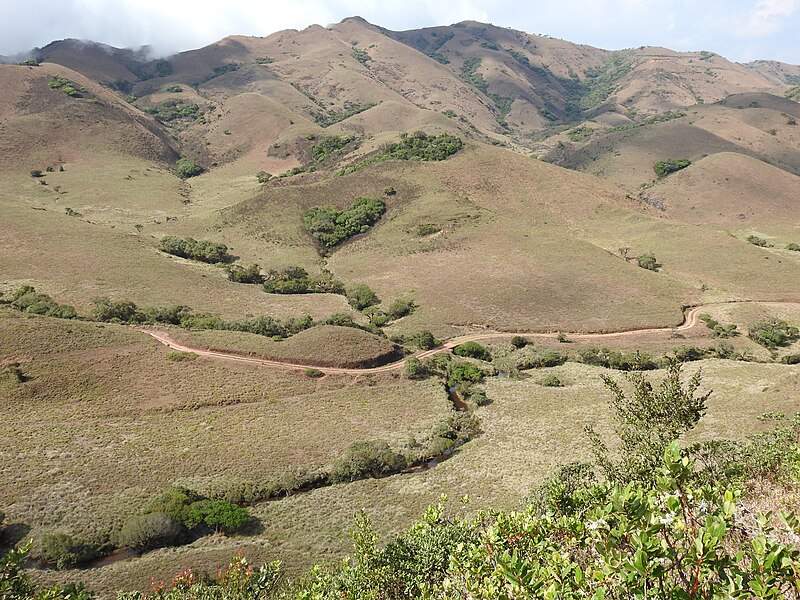
Welcome to Mukurthi National Park, a pristine protected area nestled in the western edge of the Nilgiri Hills within Tamil Nadu state in South India. As part of the Western Ghats, this spectacular landscape was inscribed as a UNESCO World Heritage Site in 2012. It serves as a vital component of the Nilgiri Biosphere Reserve, which holds the distinction of being India's first International Biosphere Reserve. The park is surrounded by a contiguous network of famous wildlife sanctuaries and national parks, including Mudumalai Wildlife Sanctuary, Bandipur National Park, Nagarhole National Park, Wayanad Wildlife Sanctuary, and Silent Valley National Park, together forming an immense, interconnected sanctuary for South Asian biodiversity.
Mukurthi National Park covers an expanse of seventy-eight point forty-six square kilometers. It was established primarily to safeguard its keystone species, the Nilgiri tahr, an endangered mountain ungulate endemic to the Western Ghats. The geography of the park is defined by an enchanting tapestry of rolling hills, deep valleys, sweeping montane grasslands, and isolated patches of evergreen shola forests. Ranging in elevation from fifteen hundred meters up to the high mountain crests, this high-altitude sanctuary endures a harsh mountain climate characterized by heavy annual rainfall, strong howling winds reaching up to one hundred and twenty kilometers per hour, and winter night temperatures that frequently drop near or below freezing. These extreme conditions have fostered a remarkably resilient ecosystem filled with rare and endemic species found nowhere else on earth, including Bengal tigers, Asian elephants, and unique montane flora.
As you embark on your visit today, please maintain a peaceful demeanor to avoid disturbing the sensitive wildlife. Every trail, rock, and stream forms a critical part of the habitat for the endangered Nilgiri tahr and countless rare birds and amphibians. Please remain on the designated paths and respect the sanctuary's strict conservation rules. Listen closely to the gentle rustle of high-altitude grasses and the distant calls echoing from the shola canopy. Let us now step forward into this ancient wilderness and discover the fascinating stories of nature, history, and survival that make Mukurthi National Park so extraordinary.
02 Mukurthi Peak and Pykara River
Rising dramatically to an elevation of twenty-five hundred and fifty-four meters, Mukurthi Peak is the iconic summit that proudly gave Mukurthi National Park its name, serving as the revered cradle where the majestic Pykara River begins its continuous journey. Cast your eyes upward to gaze at the sheer rocky summit of Mukurthi Peak piercing the mountain mist, or look down directly at your feet to follow the crystal-clear, icy streams of the Pykara River winding gracefully through the valley…
03 Shola Forest and Nilgiri Rhododendron
Stunted, dense, and tightly intertwined to withstand the relentless montane winds and near-freezing temperatures of the high altitudes, the shola forests present a remarkable testament to evolutionary survival strategies in harsh mountain environments. Observe the outer forest boundary with care, and look closely at those deep green leaves heavily draped with thick moss and the twisted trunks of ancient evergreen trees that have weathered centuries of mountain storms. …
04 Bangitappal Rest House and Sispara Pass
Constructed in eighteen thirty-two, the historic Sispara Ghat road served as a vital postal shortcut for postal runners delivering mail between Kozhikode and Ooty, while also functioning as a secretive mountain pass used by smugglers transporting cannabis, tobacco, and salt. Direct your gaze toward that picturesque, red-roofed forest rest house and trekkers shed standing at Bangitappal, right where two mountain streams converge at the head of the Sispara Pass. …
05 Wattle Plantation Restoration Zone
Introduced in the nineteenth century by British settlers seeking fuelwood, exotic acacia trees commonly known as wattles spread rapidly through root suckers, encroaching upon native montane grasslands and posing a severe threat to the ecosystem—a striking historical lesson in environmental management. Cast your eyes over that hill slope restoration zone, where commercial tree plantations have been cleared and fresh green grass is once again beginning to carpet the soil. …
06 Nilgiri Tahr Sighting Ridge
Endemic exclusively to the high-altitude montane environments of India's Western Ghats, the Nilgiri tahr possesses incredible cliff-climbing agility, utilizing its sturdy, specialized hooves to effortlessly navigate near-vertical granite rock faces. Quietly point your attention toward that rugged cliff edge in the distance where mountain mists drift across the open ridge. …
07 Closing
Today, we have journeyed together through the serene and majestic wilderness of Mukurthi National Park, located in the heart of Tamil Nadu's Western Ghats. From the grand height of Mukurthi Peak standing at twenty-five hundred and fifty-four meters and the crystal-clear origins of the Pykara River, to the ancient shola forests where Nilgiri Rhododendrons bloom against high-altitude winds, we have witnessed a truly extraordinary ecosystem. …