Contents
History & cultureBY TELLBY7 sections · numbered as on the map01 Orientation
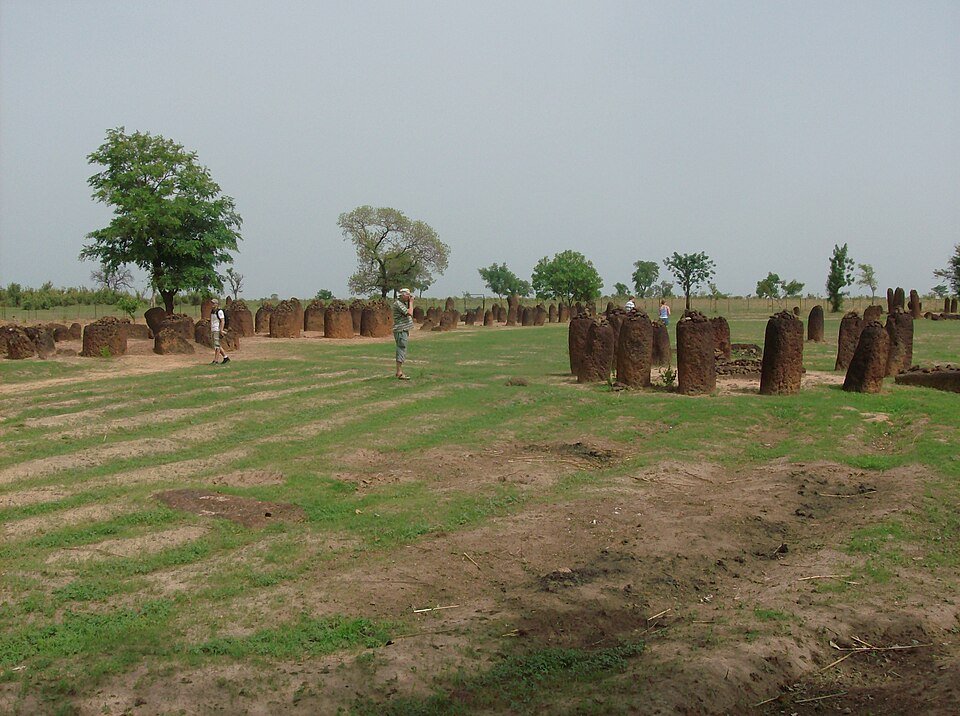
Welcome to the main entrance of the Wanar Stone Circles, a celebrated World Heritage site located in West Africa. The ground you stand upon today represents one of the most remarkable achievements of the ancient Senegambian megalithic tradition. Recognizing their outstanding universal value and profound cultural significance, these extraordinary stone monuments across the region were officially designated as a UNESCO World Heritage site in 2006. Among the four major complexes that form this prestigious inscription, which include Sine Ngayene and Wanar in Senegal as well as Wassu and Kerbach in the Gambia, the site of Wanar stands out as an exceptionally well-preserved center of ancient mortuary practices and stone architecture.
As you gaze across the landscape at the entrance of the Wanar necropolis, you are looking at much more than a simple collection of standing stones. This sacred ground served for centuries as a grand burial site and a focal point for ceremonial activities created by ancient Senegambian communities. The massive monoliths before you were quarried from local ferruginous laterite rock, carefully shaped, and erected in precise circular formations. Each stone ring surrounding a mortuary zone bears witness to the sophisticated engineering skills, social organization, and spiritual beliefs of the early inhabitants of this land. Your visit today will offer you a rare opportunity to explore the depths of African prehistoric archaeology and understand how these ancient populations honored their ancestors with enduring monuments.
Every stone column and subtle mound within this necropolis reveals a fascinating story about the social dynamics, burial rites, and daily life of the communities that built them centuries ago. The scientific rediscovery of Wanar has been made possible through meticulous archaeological research, international collaboration, and the dedicated efforts of local workers who have painstakingly uncovered and preserved these delicate features. As we step into the monument area, take a moment to absorb the silent dignity of this landscape and the timeless memory embedded in these red stones. We invite you to begin your journey through time as we guide you through the remarkable discoveries made at the Wanar Stone Circles, immersing yourself in the mysterious heritage of ancient Senegambia and reflecting on the profound human creativity that shaped this extraordinary World Heritage site.
02 Monolith Ring of Monument XIV
Welcome to Monument XIV, one of the most striking and meticulously documented structures within the Wanar necropolis. As you stand before this impressive arrangement, you are witnessing a masterpiece of West African megalithic architecture, defined by a series of massive laterite stones expertly quarried, shaped, and set into a precise circular ring. …
03 The Central Burial Pit of Monument XIV
Welcome to the central burial pit of Monument XIV, situated at the very heart of the monolith ring. Beneath the grand stone circle lies a complex, multi-phased subterranean pit structure that represents one of the most remarkable discoveries in Senegambian archaeology. Contrary to early assumptions that these stone circles were simple single-event graves, detailed scientific investigation has revealed that this central pit was constructed and used through an intricate series of sequential…
04 Monument XX and the Necropolis
Welcome to Monument XX and the expansive mortuary complex of the Wanar necropolis. As you stand before this impressive group of standing stones, you are observing a fundamental reality of West African prehistory: Wanar is not merely an isolated solitary grave, but a vast, highly organized collective necropolis developed over many centuries. …
05 The Eastern Frontal Stones and Grave Goods
Welcome to the Eastern Frontal Stones and Grave Goods location at the Wanar necropolis. Beneath the ground right beside these solitary eastern stones, archaeologists made a thrilling discovery: three copper arm-rings, one iron spearhead, one tortoise shell, and an additional iron artifact were found carefully buried in situ. …
06 Stone Quarry and Stratigraphic Soil Observation
Welcome to the Stone Quarry trace and Stratigraphic Soil Observation site at Wanar. One of the most revealing insights gained from the archaeological investigation of Wanar is that the massive laterite monoliths standing before you were not transported from distant regions, but were quarried directly from the ferruginous bedrock exposed right near the site. …
07 Closing
Welcome to the closing stop of our tour at the Wanar Stone Circles. Today, you have journeyed through the rich layers of West African prehistory, exploring the precise monolith rings, the forensic archeothanatology of the central burial pits, the prestigious metal grave goods of the eastern frontal stones, and the local quarrying techniques decoded through meticulous soil science. …