 Photo Wikimedia Commons
Contents
History & cultureBY TELLBY7 sections · numbered as on the map01 Orientation
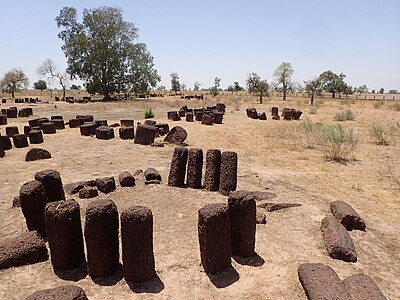
Standing on the vast savannas of West Africa stretching across Senegal and The Gambia, listen to the ancient winds rustling through the red earth. The Sine Ngayene Megalithic Site was inscribed as a UNESCO World Heritage property in 2006 as the premier sanctuary of the Stone Circles of Senegambia. Across a thirty-three thousand square kilometer zone between the Senegal and Gambia rivers, over one thousand stone circles and burial mounds form a three-hundred-and-fifty kilometer riverine landscape. Created over more than fifteen hundred years, this sacred site stands as testimony to a prosperous and highly organized ancient society whose spiritual traditions anchored generations to this land.
This megalithic realm was shaped by ancient communities who utilized the Petit Bao Bolon River for agriculture and trade. In contrast to the western province along the Grand Bao Bolon where earthen tumuli predominate, this eastern province became the center for carved laterite monolith circles. Ancient villagers dwelt in hamlets on river terraces, farming fertile soils and navigating dugouts to trade agricultural goods for dried fish and marine shells from the Saloum Delta. This economic wealth and social cohesion provided the foundation for mobilizing labor to extract, shape, and erect thousands of massive stone pillars across centuries.
Sine Ngayene is the largest and most dense Rank I sanctuary in Senegambia. Spanning over fifty hectares, this sacred ground contains one hundred and sixteen earthen tumuli and fifty-two monolith circles, including a unique double circle. In total, the site preserves one thousand one hundred and two carved laterite stones. These pillars were extracted from nearby quarries using iron tools and crafted into smooth cylindrical monoliths. By erecting these stone monuments, the living community built a visible mausoleum that bound their genealogy to the soil and legitimized ancestral land claims.
Our guided tour leads you through the heart of this sacred landscape to follow ancient paths of life and ancestorhood. We begin at the early warrior and noble tombs near the cemetery core, examining personal symbols and coastal trade goods. Next, we move to the central ceremonial plaza where mourners ignited funeral fires and performed public rites. We then inspect northern re-burial circles where selected ancestral bones were interred across generations, followed by the grand double circle, Monument SN-27. Finally, we conclude with the stonecraft techniques and solstice alignments that guided seasonal rituals.
02 Spot 1: The Tomb of the Ancient Mighty Warrior
Almost three thousand years ago, a formidable young military leader was interred deep beneath an eleven-meter earthen mound, surrounded by deadly iron weaponry and extraordinary metallic insignia of political command. Direct your gaze directly toward the central core of the cemetery, where you can see the imposing, gently sloping mound of Tumulus SN-T-01 rising above the surrounding savanna landscape. …
03 Spot 2: The Tomb of the Prestigious Lady
Centuries after the ancient warrior was sealed beneath his monumental mound, an elite noblewoman adorned with exquisite copper arm-rings and a rare string of fish vertebrae was laid to rest in a ten-meter earthen mound just a short distance away. Pause your footsteps and direct your gaze toward Tumulus SN-T-02, a gently rounded earthen structure sitting quietly in the central zone of the cemetery. …
04 Spot 3: The Sacred Gathering Place for Funeral Rites
Long before individual stone monoliths were erected or collective lineage tombs were sealed, ancient villagers constructed a fifty-meter semi-circular open plaza equipped with ritual fire pits, stone platforms, and offering vessels specifically designed for public funerals. Direct your gaze toward the open central area flanked by two short standing monoliths, opening broadly toward the south and southwest. …
05 Spot 4: The Northern Ancestral Circle of Re-Burial
Many of the most honored dead in ancient Senegambia were not buried just once; instead, their bodies were initially placed in temporary interim graves to allow the flesh to decompose before selected bones were carefully collected and brought to isolated stone circles for multi-stage re-burial. Walk approximately one hundred and fifty meters north away from the dense cluster of central monuments until you arrive before Monument SN-52. …
06 Spot 5: Monument SN-27 - The Grand Double Monolith Circle
Standing at the absolute center of Sine Ngayene is the grandest masterpiece of African megalithism: a double monolith circle containing thirty-two massive pillar stones that served as a sacred communal mausoleum for over forty individuals across seven hundred years. Position yourself directly in front of Monument SN-27, an awe-inspiring structure measuring nine and a half meters in diameter. …
07 Closing
As we conclude our audio guide tour of Sine Ngayene, take a final look across this breathtaking landscape of carved stone pillars and earthen mounds. The creation of this sacred cemetery required immense engineering skill, strategic labor mobilization, and specialized geological knowledge. Just one kilometer to the east of where you stand lies the ancient quarry where skilled stonecutters extracted these massive laterite monoliths. …