 Photo Wikimedia Commons
Contents
History & cultureBY TELLBY7 sections · numbered as on the map01 Orientation
Welcome to the extraordinary archaeological landscape of Qaryat al-Faw, located at the dramatic junction where the vast sands of the Empty Quarter Desert meet the red sandstone escarpment of the Jabal Tuwayq plateau. As you stand in this majestic desert environment, you are stepping into what was once a thriving oasis caravan metropolis and the proud capital of the ancient Kinda kingdom. Looking across the endless golden dunes today, it may seem difficult to imagine that a densely populated urban center flourished in this arid landscape. However, this relict cultural landscape contains an exceptional physical archive of continuous human occupation spanning from the Palaeolithic and Neolithic periods down to the late pre-Islamic era. Thousands of years ago, the interior of the Arabian Peninsula experienced a much wetter climate before gradually transforming into one of the driest deserts on earth. The archaeological site of Qaryat al-Faw serves as an outstanding testament to how successive human generations creatively adapted to this evolving natural environment through sophisticated water management and land use strategies. Ancient inhabitants excavated more than seventeen massive water wells deep into the bedrock, constructing subterranean aqueducts, storage reservoirs, and intricate irrigation canals to sustain extensive date palm plantations and agricultural fields. Recognizing its exceptional global value as a witness to human resilience and international cultural interchange, UNESCO inscribed this cultural landscape on the World Heritage List. The dry desert environment has naturally encapsulated these archaeological treasures, preserving them almost completely undisturbed since the city was abandoned. Situated as a vital caravan relay station along the major trade artery leading from Najran in southern Arabia toward eastern Arabia, Gerha, the Persian Gulf, Mesopotamia, and the classical Mediterranean world, Qaryat al-Faw functioned as a bustling international meeting place. Nomadic tribes, merchant caravans, and foreign travelers gathered here to exchange frankincense, spices, precious metals, artistic ideas, religious beliefs, and regional languages. As we begin our journey through this ancient capital, we will explore remarkably preserved stone markets, temples, royal reception halls, and monumental cliff inscriptions. Please walk with me as we step back through time to uncover the inspiring narrative carved into the stones and sands of this legendary oasis capital.
02 The Three-Story Market and Ancient Trade
It is truly astonishing to realize that in the middle of this vast arid desert, a monumental three to four story stone market complex supported by seven imposing storage towers once stood as the dominant architectural landmark of the region. This massive fortified commercial center served as the economic heart of the entire inland Arabian Peninsula, driving a vast regional and international trade network. …
03 The Central Sanctuary and Divine Worship
It is deeply impressive to discover that a grand rectangular temple constructed entirely from precisely cut limestone ashlars stood directly in the very physical center of the city, sharing its structural boundaries with both the royal palace and the fortified market castle. This strategic central placement demonstrates that religious faith, political governance, and international commercial trade were seamlessly integrated at the heart of this ancient desert metropolis. …
04 Royal Palace and Mediterranean Frescoes
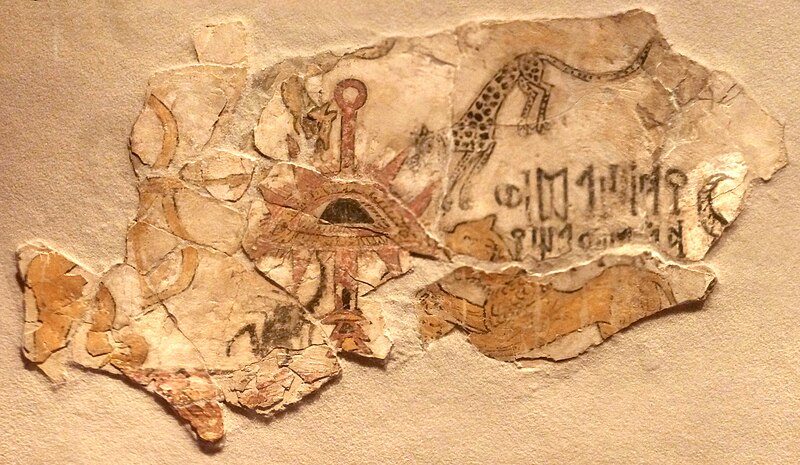
It is truly extraordinary to discover that the interior walls of a royal palace isolated deep within the Arabian desert were lavishly decorated with vibrant fresco paintings executed in classical Mediterranean and Egyptian Fayum Hellenistic styles. Uncovering such sophisticated artistic traditions in the heart of the desert reveals the remarkable cosmopolitan reach, artistic refinement, and open cultural exchange enjoyed by the capital of the Kinda kingdom. …
05 Tower Tombs and the Royal Necropolis
It is deeply fascinating to observe how the city clearly separated its burial grounds according to strict social hierarchy, placing the monumental tombs of warriors and elite nobles along the eastern periphery while setting the royal mausoleum completely apart in the northwest. This deliberate spatial organization reflects a highly structured society that maintained distinct class distinctions and mortuary traditions even in the realm of the afterlife. …
06 Rock Inscriptions of Khashm Qaryah
It is a breathtaking revelation to realize that thousands of rock inscriptions and ancient petroglyphs carved by travelers, scribes, and residents over millennia are preserved across the sheer red sandstone cliff face of the Jabal Tuwayq range. This immense natural rock wall functioned as an open air archive and monumental public gallery where successive generations etched their memories, prayers, and personal histories directly into the stone. …
07 Closing
Having flourished for centuries as a prominent trade hub and royal capital, Qaryat al-Faw met a quiet and abrupt end around the fifth century CE as local water resources became irreversibly depleted and regional climate aridity intensified. As the underground aqueducts and more than seventeen deep wells dried up and the lush agricultural palm groves succumbed to expanding desert sands, the citizens were forced to abandon their home and migrate to new regions. …