Contents
History & cultureBY TELLBY7 sections · numbered as on the map01 Orientation
Welcome to the Complex of Koguryo Tombs. Flourishing as a dominant regional power across northern Korea and Manchuria from the first century BCE to the seventh century CE, the ancient kingdom of Goguryeo created a brilliant cultural legacy that continues to resonate across the centuries. Inscribed as North Korea's first UNESCO World Heritage site in two thousand four, this extraordinary collection of subterranean stone tombs offers an irreplaceable window into the daily life, artistic mastery, spiritual cosmology, and sophisticated engineering of the Goguryeo civilization.
While more than ten thousand Goguryeo tombs are scattered across the Korean peninsula and northeast China, the UNESCO listing specifically protects sixty three premier tombs concentrated around Pyongyang, Nampo, and South Hwanghae Province. Among all discovered Goguryeo burial sites, fewer than ninety contain wall paintings, with the vast majority of these rare masterpieces preserved within this protected heritage property. These murals serve as vivid visual documents, depicting everything from elegant silk garments, culinary traditions, and grand architectural spaces to energetic hunting expeditions, martial arts, Buddhist rituals, Taoist symbols, and majestic cosmic guardian beasts.
Architecturally, Goguryeo tombs evolved over centuries from early riverside stone cairns into sophisticated subterranean stone chamber tumuli covered by massive earthen mounds. To construct these subterranean sanctuaries, Goguryeo engineers utilized carefully fitted granite and limestone slabs, establishing multi-chambered layouts supported by heavy stone pillars. They developed advanced corbelled ceiling structures, including the famous Laternendecke style where stone slabs overlap diagonally across corners to gradually enclose space. To protect these subterranean chambers from environmental decay, ancient builders mixed charcoal, clay, and lime mortar into protective waterproofing layers. Over recent decades, international preservation initiatives spearheaded by UNESCO, alongside local conservation teams, have introduced scientific piezometers, microclimate monitoring devices, and precise stabilization methods to safeguard these delicate fresco paintings against groundwater moisture and mineral encrustation.
As we embark on this audio journey, we will explore the monumental architecture, masterly paintings, and profound spiritual beliefs embedded within these stone chambers. We will observe how these subterranean monuments reflect both the worldly authority of Goguryeo elites and their firm conviction that earthly joy would continue eternally into the afterlife. Our tour begins at the sacred resting place of the kingdom's legendary founder, King Tongmyong. Let us step forward along the spirit way and enter the quiet sanctuary of Goguryeo's royal ancestors.
02 Tomb of King Tongmyong and the Spirit Way
The tomb area of King Tongmyong, the legendary founder of Goguryeo, stands in profound tranquility and clean order, heralding the majestic opening chapter of an ancient empire. Please stand at the entrance and look directly ahead at the neatly arranged spirit way flanked by stone statues, leading toward the grand earthen mound. This sacred ground honors King Tongmyong, also widely known as Jumong, who established the Goguryeo Kingdom around thirty seven BCE. …
03 Anak Tomb Number Three and the Wall Paintings
Inside this magnificent underground tomb, eighteen giant limestone columns and vivid depictions of noble life remain exceptionally preserved after more than sixteen centuries. Please look up toward the sturdy limestone pillars supporting the inner chamber and observe the grand figure painted on the wall holding a delicate feather fan. Anak Tomb Number Three represents one of the absolute pinnacles of Goguryeo stone architecture and mural artistry. …
04 Muyongchong Tomb of the Dancers and Hunting Scene
A thousand years ago, the dynamic dance moves and thrilling tiger hunts of the Goguryeo people unfold vividly as if painted just yesterday. Please look along one side of the chamber wall at the dancers standing in a line, wearing long-sleeved garments and raising their arms to perform a rhythmic dance. …
05 Susan-ri Tomb and Safeguarding the Murals
The elegant costumes of Goguryeo noblewomen that were once on the verge of vanishing under thick mud encrustations and moisture have been brought back to light thanks to extraordinary international conservation efforts. Please observe through the protective glass barrier the serene figures of a noblewoman and her attending maidservant standing gracefully on the chamber wall. …
06 Kangso Great Tomb and the Four Deities
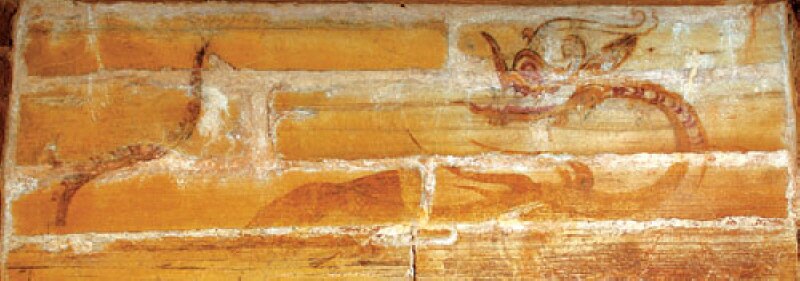
Across all four walls of this burial chamber, four monumental mythical beasts leap and twist across the stone surfaces, serving as celestial guardians to repel evil spirits. Please follow with your eyes the undulating curves and brilliant scales of the Azure Dragon breaking through cosmic clouds on the eastern wall. Kangso Great Tomb represents the absolute artistic zenith of late Goguryeo mural art. …
07 Closing
Today we have journeyed across centuries of history to explore the magnificent cultural legacy, architectural genius, and spiritual world of the Complex of Koguryo Tombs. Our exploration began at the tranquil sanctuary of the Tomb of King Tongmyong, reflecting on the reverence paid to the legendary founder of the Goguryeo Kingdom. …