Contents
History & cultureBY TELLBY7 sections · numbered as on the map01 Orientation
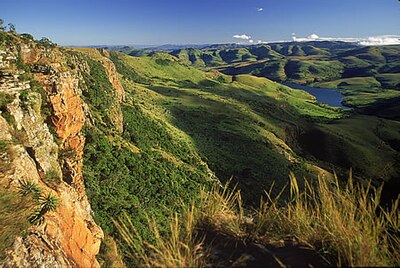
Welcome to the magnificent uKhahlamba Drakensberg Park, a breathtaking natural wonder and a priceless cultural sanctuary located in South Africa. This exceptional UNESCO World Heritage site stands as an extraordinary treasure where the ancient parietal rock art of the San people, preserved for thousands of years, harmonizes in complete perfection with soaring basaltic buttresses and dramatic geological formations forged by ancient volcanic eruptions. Situated in the scenic KwaZulu Natal province, this expansive wilderness is easily accessible, requiring just a two hour drive from the coastal city of Durban and approximately three and a half to four hours from Johannesburg. Stretching majestically along the international border between South Africa and the mountain Kingdom of Lesotho, this vast sanctuary joins with Sehlabathebe National Park in Lesotho to form the transboundary Maloti Drakensberg Park, which was officially inscribed as a UNESCO World Heritage Site in the year two thousand. The name Drakensberg originates from Afrikaans, translating romantically to Dragon Mountains, while the indigenous Zulu name uKhahlamba means Barrier of Spears. These vivid titles reflect the soaring, jagged basaltic cliffs that resemble the spine of a sleeping mythological dragon or a formidable fortress of sharp spears standing proudly against the open sky. Geologically, this astounding landscape began its formation approximately one hundred and eighty million years ago when a massive mantle plume beneath the ancient supercontinent of Gondwana caused the continental crust to bulge dramatically upward. Over the following twenty million years, deep rift valleys opened and intense, continuous erosion carved out the steep, breathtaking escarpments that captivate our eyes today. Reaching elevations of up to three thousand four hundred and seventy five meters, these mighty summits represent the highest mountain range in southern Africa and serve as the vital watershed for the entire country, giving birth to the great Orange River and the roaring Tugela River. Encompassing an extraordinary expanse of over two hundred and forty thousand hectares, this protected sanctuary was recognized as a Ramsar Wetland of International Importance in nineteen ninety seven. The park spans across four distinct regions, extending from Bergville in the north through Winterton and Giant Castle in the central section to Himeville and Underberg in the south. Within hundreds of ancient caves and sandstone rock shelters lies the largest and most concentrated collection of San rock art south of the Sahara Desert. Created over a span of four thousand years, more than thirty five thousand individual painted images depict spiritual trance rituals, rainmaking ceremonies, and animal species such as the sacred eland antelope. As we embark on our journey together today, we will explore golden sandstone ramparts, vertical basaltic peaks, high altitude wetland meadows, and crystal clear river basins. Please watch your step carefully along the mountain pathways, and prepare to immerse yourself in the profound spiritual atmosphere and timeless natural beauty of this extraordinary World Heritage landscape.
02 Section 1
The astonishing reality that the most concentrated and artistically remarkable collection of tens of thousands of ancient parietal rock paintings in all of sub Saharan Africa is preserved right under this unassuming sandstone rock overhang fills every traveler with profound reverential awe. For thousands of years, this massive sandstone rock shelter within the Giant Castle region provided a natural sanctuary protecting ancient inhabitants from harsh mountain storms, while functioning as a…
03 Section 2
The astonishing fact that these rugged sandstone layers stretching endlessly beneath your feet are the hardened crystalline remains of a vast ancient lake basin and sand dunes from hundreds of millions of years ago offers a breathtaking glimpse into the immense depth of Earth history. Long before the ancient supercontinent of Gondwana experienced intense mantle uplifting and continental rifting, this region was covered by expansive river systems, quiet lake basins, and rolling sand dunes. …
04 Section 3
The astonishing fact that these enormous, dark basaltic peaks blocking out the sky were formed by the immense cooling and hardening of red hot lava flows that once blanketed the Earth surface reveals the staggering power of ancient volcanic forces. Approximately one hundred and eighty million years ago, as the continental crust of Gondwana fractured, successive floods of molten basalt erupted from deep within the earth, cooling into massive layers hundreds of meters thick. …
05 Section 4
The surprising reality that these soft, peaceful looking high altitude grasslands serve as the vital lifeblood for major South African rivers and the sole remaining sanctuary for globally threatened bird species invites a profound appreciation for this ecosystem. Acting like a colossal natural sponge, this high elevation wetland catches mountain rain and cloud mist, filtering the water and slowly releasing a steady, clean supply to downstream communities even during severe droughts. …
06 Section 5
The exhilarating realization that this crystal clear stream flowing gently before us marks the very starting point of a heroic journey spanning hundreds of kilometers to become the great Orange River before reaching the Atlantic Ocean is truly awe inspiring. Originating from the high basaltic peaks and sponge like wetlands of the Drakensberg, these pure spring waters gather into rushing mountain torrents that flow westward across the entire southern African subcontinent. …
07 Closing
We have reached the final scenic ridge where our extraordinary tour through uKhahlamba Drakensberg Park, a realm preserving thousands of years of San parietal rock art and hundreds of millions of years of geological history, comes to a gentle conclusion. Today we have marveled at the majestic basaltic peaks and glowing golden sandstone ramparts forged by the continental drift of ancient Gondwana and immense volcanic eruptions millions of years ago. …