 Photo Wikimedia Commons
Contents
History & cultureBY TELLBY8 sections · numbered as on the map01 Orientation
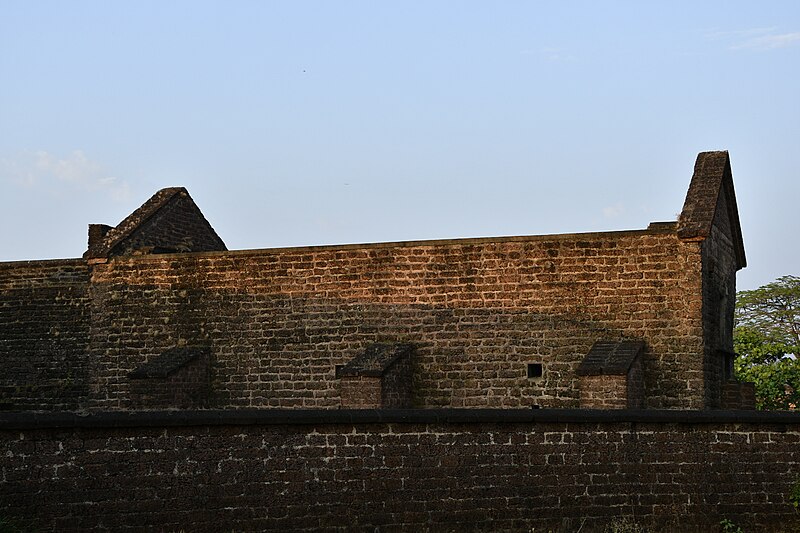
A very warm welcome to the scenic shores of the Arabian Sea, located just three kilometers from the heart of Kannur city in North Kerala. Standing majestically before you is St. Angelo Fort, also affectionately known by locals as Kannur Fort or Kannur Kotta. In colonial times, this historic citadel was widely known as Cannanore Fort, with Cannanore being the old colonial name for modern-day Kannur. For over five centuries, this massive stone bastion built from rich red laterite has guarded the crucial maritime trade routes of the Malabar Coast. More than just a military fortification, St. Angelo Fort stands as a living monument to the dramatic era of European expansion in Asia. Its formidable walls have witnessed the rise and fall of several great powers, transitioning from Portuguese rule to Dutch control, passing through the hands of the indigenous Arakkal royal dynasty, serving as a vital British military station inside the Cannanore Cantonment, and finally becoming a treasured heritage site preserved by the Archaeological Survey of India.
The storied origins of this fortress date back to the historic arrival of Vasco da Gama in India in fourteen ninety-eight, which opened direct sea routes between Europe and Asia. Recognizing the strategic importance of this coastline, the ruler of Kolathiri granted land to the Portuguese to establish a settlement. In fifteen hundred and five, Dom Francisco de Almeida, the very first Portuguese Viceroy of India, initiated the construction of the initial fortification to secure the lucrative spice trade. In sixteen sixty-three, the Dutch captured the fort, completely modernizing its defenses and rebuilding the structures into the formidable triangular stronghold you see today. Later, in seventeen seventy-two, the Dutch sold the fortress to King Ali Raja of the Arakkal family, the sole Muslim royal dynasty in Kerala. By seventeen ninety, British forces seized control, establishing their primary military station in Malabar until Indian independence in nineteen forty-seven. Today, the Archaeological Survey of India painstakingly maintains this monument, with six Tourism Policemen stationed on duty to ensure its preservation.
As you step inside this triangular fortress facing the ocean, you are greeted by fresh sea breezes, thick laterite walls with narrow ventilation slits, ancient iron cannons, a restored chapel, and the remains of an early oil lamp lighthouse. Kannur was historically renowned as a global hub for exporting black pepper and cardamom. This audio tour will guide you through six key historic spots in a smooth walking sequence. We will begin at the massive Entrance Gate, proceed to the army barracks and stables, visit the restored chapel with Dutch tombstones, examine the Dutch bastions and cannons, ascend the elevated watchtower, and finish at the western sea wall overlooking Mappila Bay. Most visitors spend one to two hours exploring these grounds. Take a moment to absorb the peaceful atmosphere where history and nature meet before moving to our first station at the main gate.
02 The Fort Gate and Massive Laterite Fortifications
You are now standing before the formidable Entrance Gate and the massive red stone walls that encircle St. Angelo Fort. This historic gateway marks the exact location where European colonial power established its very first permanent stronghold on Indian soil more than five centuries ago. Stand for a moment before these soaring ramparts and listen to the rhythmic crashing of the Arabian Sea waves, reflecting on the brave mariners who traversed endless oceans to reach this coast. …
03 Army Barracks, Horse Stables, and Historical Sieges
We have now arrived at the central courtyard area, home to the historic army barracks and former horse stables. Constructed from thick laterite blocks to withstand continuous siege warfare, these rugged structures once housed the garrisons that maintained a tight grip over the Malabar Coast. Throughout the colonial period, this site was known as Cannanore, which was the historic colonial designation for modern-day Kannur. …
04 Restored Fort Chapel and Dutch Commandments Tombstones
You are now standing before the historic Fort Chapel and the adjacent courtyard containing carefully preserved Dutch tombstones. Tucked away in a tranquil corner of the fortress, this sacred area offers a solemn contrast to the massive defensive ramparts surrounding it. A monumental shift in the history of St. Angelo Fort took place on February fifteen, sixteen sixty-three, when the Dutch East India Company captured the stronghold from the Portuguese after a protracted siege. …
05 Dutch Bastions and Colonial Cannon Battery
You are now standing along the elevated seaward ramparts, home to the three iconic Dutch bastions and the impressive colonial cannon battery of St. Angelo Fort. Following their takeover in sixteen sixty-three, Dutch military engineers completely redesigned the fortress's perimeter, constructing three massive, angular stone bastions to maximize artillery coverage over both land and sea. …
06 Elevated Watchtower and Ancient Oil Lamp Lighthouse
We have now reached the highest point of St. Angelo Fort, home to the elevated stone watchtower and the historic brick base of the ancient oil lamp lighthouse. Standing atop this commanding observation platform, visitors are rewarded with a breathtaking three-hundred-and-sixty-degree panoramic view stretching across the vast expanse of the Arabian Sea and the winding Malabar coastline. …
07 Sea Wall Bastion, Mappila Bay Harbor, and Arakkal Royal Legacy
We have arrived at our final stop within the fortress grounds: the Western Sea Wall Bastion, overlooking the serene waters of Mappila Bay. From this vantage point, you can watch the powerful waves of the Arabian Sea crash directly against the fort's thick laterite foundations. This sea wall was engineered not only to repel naval attacks but also to protect the fort's structural integrity against centuries of intense coastal erosion. …
08 Closing
Thank you for joining us on this audio guide journey through five centuries of maritime history at St. Angelo Fort. From its Portuguese origins in fifteen hundred and five to Dutch modernization, Arakkal royal ownership, British military occupation, and modern preservation by the Archaeological Survey of India, these red laterite walls stand as enduring guardians over the Arabian Sea. …