Contents
History & cultureBY TELLBY8 sections · numbered as on the map01 Orientation
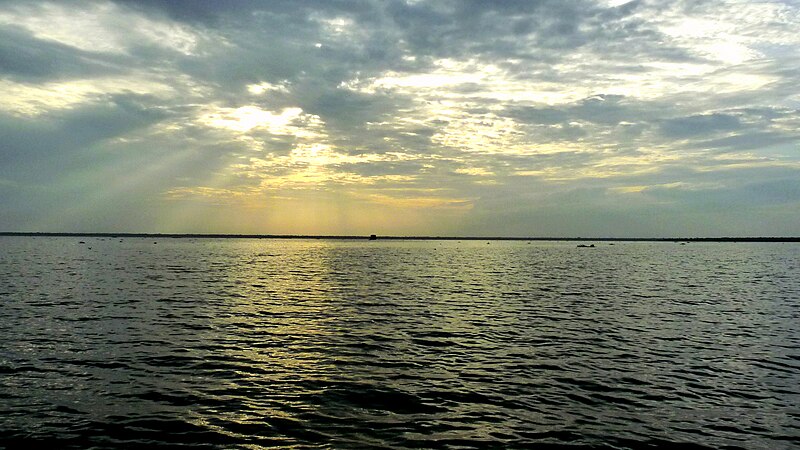
Welcome to Vembanad Lake, the majestic heart of the Kerala backwaters and the longest lake in all of India. The tranquil blue expanse stretched out before you is far more than a simple body of water, it is a vast coastal wetland ecosystem that accounts for more than fifty percent of the total backwater area in Kerala State. Spanning an area of over two hundred twenty seven point five square kilometers, this vibrant aquatic world touches three major districts, Ernakulam in the north, Kottayam in the east, and Alappuzha in the south. Geographical coordinates show that the lake extends between north latitudes nine degrees twenty eight minutes and ten degrees ten minutes, and east longitudes seventy six degrees thirteen minutes and seventy six degrees thirty one minutes. For thousands of years, these rich channels have sustained human life, providing a direct livelihood for over twenty thousand local fishermen who harvest more than seven thousand tons of fish and shellfish every year, valued at over one hundred million rupees from its nutrient wealthy waters.
When we look back at the history of Vembanad Lake, we uncover a fascinating geographical story shaped by natural forces. According to geological investigations, the origins of this lake date back five thousand to six thousand years ago during the post glacial era when many of the world coastal systems first took shape. Originally, this area was a shallow bay of the Arabian Sea, but as major rivers draining from the mountains to the east deposited vast quantities of silt, a brackish lagoon was formed along the coast. Geologists note that the lake attained its modern structural configuration around the fourth century AD, but its most dramatic transformation occurred during a catastrophic deluge in the year thirteen forty one AD. This historic flood caused the Periyar River to alter its path through Varappuzha into the Cochin channel, depositing alluvium that separated parts of the Alappuzha and Ernakulam regions from the open ocean and creating a distinct water body connected to the sea through channels at Cochin, Thottappally, and Andhakaranazhi.
Running parallel to the Arabian Sea for ninety six point five kilometers from Azhikode in the north to Alappuzha town in the south, the lake maintains direct connections to the ocean at two primary openings at Azhikode and Kochi. Historically, the water body north of Aroor was situated in former Cochin State and known as the Cochin backwaters, while the southern expanse from Aroor to Alappuzha belonged to former Travancore State. While the northern reaches are narrow and winding, the southern section broadens dramatically to a width of up to fourteen point five kilometers. As our audio guide journey unfolds, we will navigate through this intricate network of natural and man made waterways. We will witness iconic floating houseboats, explore ancient agricultural dikes operating below sea level, visit serene bird sanctuaries, and discover the complex ecological history of the Thanneermukkom barrage. Prepare to immerse yourself in the rich water world of Vembanad as we begin our unforgettable exploration.
02 Punnamada Lake - Kettuvallam Houseboats and the Snake Boat Race
Welcome to the bustling Punnamada Lake jetty, the definitive gateway where the famous Alleppey backwater journey truly begins. Punnamada Lake serves as the central hub for local water transport and logistics, and is world renowned as the primary launch point for the iconic kettuvallam houseboats. As you gaze across the shimmering water, you will see magnificent wooden vessels gliding gracefully along the broad channels. These floating homes have a rich historical heritage. …
03 Kuttanad Waterways - Farming Below Sea Level in the Rice Bowl
As our journey guides us into the narrower village channels where large houseboats cannot enter, we arrive in the extraordinary water realm of Kuttanad, celebrated throughout India as the golden rice bowl of Kerala. Kuttanad is home to one of the most remarkable agricultural systems on earth, distinguished by a world famous feature, farming practiced below sea level. …
04 Thanneermukkom Barrage - The Barrier Partitioning Fresh and Salt Water
As our voyage continues twenty four kilometers north of Alappuzha town, we encounter one of the most impactful engineering structures in South India, the Thanneermukkom Barrage. Spanning four thousand five hundred feet across the narrowest waist of the lake, this massive barrier physically splits Vembanad into two distinct environmental zones. …
05 Pathiramanal Island - Bird Sanctuary in the Heart of the Lake
Steering our boat into the wide, shimmering central basin of Vembanad Lake, we approach a serene green jewel rising gently from the water, Pathiramanal Island. In the local Malayalam language, the name Pathiramanal translates evocatively to the Sands of Midnight. Legend says that a young Brahmin saint performed religious austerities here, causing the island to rise magically from the water in the middle of the night. …
06 Thottappally Spillway - The Flood Discharge Passage to the Sea
Located twenty kilometers south of Alappuzha town lies the Thottappally Spillway, an impressive civil engineering structure designed to serve as the primary flood discharge outlet for the southern backwaters. This critical passage plays a vital role in regulating the hydraulic volume of the entire wetland system by diverting excess river runoff directly into the Arabian Sea. …
07 Alappuzha Canals and Beach Pier - Eastern Venice and Spice Trade Heritage
As our backwater journey nears the coast, we arrive in the historic canal town of Alappuzha, where quiet inland waterways meet the vast expanse of the Arabian Sea. During the British colonial era, visitors were so enchanted by the intricate network of town canals, stone bridges, and bustling waterside godowns traversing the urban center that they famously bestowed upon Alappuzha the title Venice of the East. …
08 Closing
We have traveled together along the serene blue waterways of Vembanad Lake, the longest lake in India and the nurturing mother of the Kerala backwaters. Shaped by thousands of years of geological evolution and historic natural deluges, this vast coastal wetland is far more than a scenic travel destination, it is a living ecosystem where nature and human tradition exist in continuous harmony. …