Contents
History & cultureBY TELLBY7 sections · numbered as on the map01 Orientation
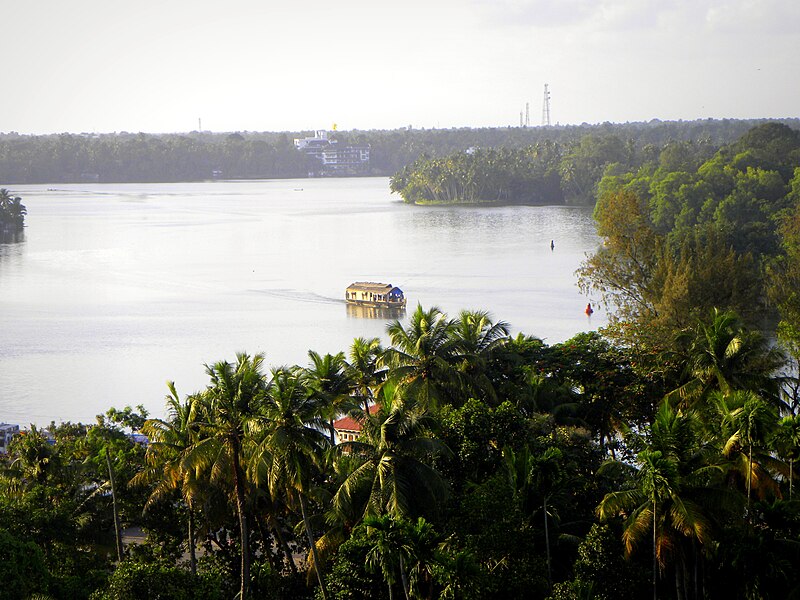
Welcome to the magnificent Ashtamudi Lake located in the historic Kollam district of Kerala India. The name Ashtamudi originates from the local Malayalam language where Ashta means eight and mudi means peaks or branches. This descriptive name highlights the astonishing geography of this massive estuarine water body which features eight distinctive arms radiating outward in a shape reminiscent of a giant octopus or a lush palm frond. From the eastern side of the lake these eight estuarine arms branch out into Thevally, Kureepuzha, Kandachira, Thekkumbhagam, Peruman, Kanjirottu, Kallada, and Kumbaluthu. Ranked second in overall surface area only to the Vembanad estuarine system, Ashtamudi Lake covers a surface area of sixty one point four square kilometers and has a total drainage catchment area of seventeen hundred square kilometers. Universally recognized as the scenic gateway to the backwaters of Kerala, this lake holds the prestigious title of being the absolute deepest estuary in the entire state of Kerala. At its dynamic confluence zone where the lake meets the Arabian Sea, the maximum water depth reaches six point four meters while the average depth throughout the central estuary is around one point eight meters. The primary freshwater supply for this immense estuarine basin comes from the revered Kallada River. Originating near Ponmudi in the Kulathupuzha hills of the Western Ghats, the Kallada River is formed by the convergence of three separate mountain streams named Kulathupuzha, Chenthurnipuzha, and Kalthuruthipuzha at an altitude of three hundred meters. After flowing for a distance of one hundred twenty one kilometers through virgin tropical forests and pristine countryside, the river empties into Ashtamudi Lake at Peringalam to the west of Munroe Island. The Kallada River pours over two thousand one hundred forty million cubic meters of freshwater into the lake annually, accounting for eighty eight percent of its total freshwater inflow. On August nineteenth two thousand two, Ashtamudi Lake was officially designated as a Ramsar Wetland of International Importance under the Ramsar Convention due to its ecological significance and unique bio reserve potential. Geological studies reveal that during the early Holocene epoch around ten thousand years ago, the estuary possessed twelve creeks and was known as Dhwadesamudi. At that time, Sasthamkotta Lake was directly connected to Ashtamudi, but it became isolated around seven thousand years ago and took roughly one thousand years to completely lose its estuarine salinity to become a freshwater lake. Today Ashtamudi Lake remains a vibrant brackish system with salinity levels ranging between thirteen and thirty three point five parts per thousand, expanding to cover an inundated surface area of five thousand seven hundred hectares during peak monsoon months. Stretching approximately sixteen kilometers in length with backwater channels connecting dozens of historic villages all the way toward Alappuzha eighty kilometers away, this lake serves as a crucial natural flood storage basin protecting the densely populated city of Kollam. Prepare to embark on an unforgettable journey along these tranquil waters.
02 Ashramam Biodiversity Heritage Site
Welcome to the Ashramam Biodiversity Heritage Site, an ecologically significant sanctuary situated along the eastern waterfront of Ashtamudi Lake in Kollam. Spanning an expansive area of more than fifty hectares, this protected preserve holds the distinguished honor of being the very first officially designated Biodiversity Heritage Site in the state of Kerala. …
03 Thevally Palace and Bridge
Welcome to the scenic waterfront of Thevally Kayal and the impressive Thevally Bridge. Thevally Kayal represents one of the eight major estuarine arms of Ashtamudi Lake. This historical waterway weaves past notable landmarks including the Kollam KSRTC Bus Stand, Kollam Boat Jetty, Asramam Link Road, Yathri Nivas, the Adventure Park, Asramam West and North, Uliyakovil, Thevally Fort, and Olayilkadavu. …
04 Kureepuzha Kayal and Sambranikodi Island
Welcome to Kureepuzha Kayal and the captivating Sambranikodi Island, one of the most vibrant and busy sections of Ashtamudi Lake. Kureepuzha Kayal is affectionately referred to as the Loch Lomond of Kerala due to its striking scenic resemblance to the famous Loch Lomond in Scotland. As a key component of National Waterway 3, Kureepuzha Kayal is the busiest arm within the entire estuarine system, serving as the primary navigable water route connecting Neendakara to Kollam town. …
05 Perumon Bridge
Welcome to the historic Perumon Bridge and Remembrance Point, situated over the tranquil Perumon Kayal arm of Ashtamudi Lake. Perumon Kayal represents one of the eight distinctive estuarine branches of Ashtamudi Lake. Spanning across this wide channel is the critical Perumon Railway Bridge, which carries the main railway line connecting Kollam and Kayamkulam and links the mainland of Perumon to Pezhumthuruthu Island. …
06 Thekkumbhagum and Village Backwaters
Welcome to Thekkumbhagum Kayal and the peaceful village backwaters of Ashtamudi Lake. Thekkumbhagum Kayal forms one of the serene eastern arms of Ashtamudi Lake, offering visitors an authentic glimpse into the rustic lifestyle of rural Kerala. This historic village holds a legendary status in Malayalam literature as the birthplace of the esteemed poet Azhakath Padmanabha Kurup, who composed Ramachandravilasam, the very first epic poem written in the Malayalam language. …
07 Closing
As our audio guide tour comes to a conclusion, we bid a fond farewell to the serene backwaters of Ashtamudi Lake. Exploring its eight winding estuarine channels has revealed not only breathtaking scenery and historical depth but also the delicate balance between human activity and nature. However, Ashtamudi Lake faces serious environmental challenges that demand urgent conservation action. …