Contents
History & cultureBY TELLBY7 sections · numbered as on the map01 Orientation
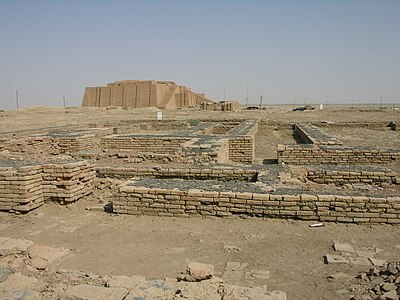
Welcome to the Ahwar Wetlands of Southern Iraq, an extraordinary realm where ancient human civilization and natural biodiversity merge into a unified biocultural landscape. In July two thousand sixteen, this vast Mesopotamian delta was formally inscribed as a UNESCO World Heritage site in recognition of its outstanding universal mixed value. The property encompasses a rare union of three ancient Sumerian urban ruins and four major wetland areas nurtured by the historic Tigris and Euphrates river system. The urban archaeological remains include the legendary Sumerian cities of Ur, Uruk, and Tell Eridu, which served as foundational cradles of human urbanism, writing, and monumentality. Intertwined with these ancient cities are the four major freshwater marsh systems known as Hawizeh, Central, East Hammar, and West Hammar. Biblical scholars and historians have frequently associated this lush aquatic delta with the legendary Garden of Eden due to its incredible ecological productivity amidst surrounding desert sands. You are currently standing at the threshold of the Chibayish marshlands, looking out across shimmering, sunlit waterways framed by dense thickets of giant green reeds. For thousands of years, dating continuously back to the prehistoric Ubaid and Sumerian eras, the indigenous Marsh Arabs, known locally as the Ma'dan, have made these interconnected water channels their home. They cultivated a highly specialized, sustainable lifestyle tied intimately to the natural rhythms of the marshlands, utilizing indigenous reeds for architectural construction, harvesting native finfish, and raising water buffalo herds. As you begin this journey, you are stepping directly into a living cultural landscape that has endured through centuries of extreme environmental fluctuations and political turbulence. This audio tour will guide you through the structural marvels of traditional reed guest houses, lead you along muddy shores where water buffalo submerge in cooling shallows, and carry you aboard wooden boats down narrow navigation canals cut through giant reed beds. You will witness firsthand how construction traditions depicted on ancient Mesopotamian seals continue to be practiced by local master builders today. Though the region suffered catastrophic artificial drainage during late twentieth century conflicts, community-led dike breaching and ecological restoration have restored life to these historic waterways. As gentle desert breezes rustle the tall reed leaves and water laps rhythmically against the bank, reflect on the profound resilience of both the marsh ecosystem and its indigenous human stewards. Please follow the marked earthen path along the water edge to begin your exploration of this timeless sanctuary.
02 The Grand Reed Arch: The Traditional Mudhif
Remarkably, the massive cathedral-like hall standing directly before you contains no wooden beams, metal nails, or iron fasteners, being constructed entirely from living marsh reeds bound tightly together. Direct your eyes upward to the thick curved reed pillars that span overhead in a continuous, elegant arching tunnel. This extraordinary structure is a traditional mudhif, the communal guest house and tribal gathering hall that has anchored Marsh Arab culture for thousands of years. …
03 The Water Edge: Lifeblood of the Water Buffalo
In this extreme aquatic environment, the ownership of a single water buffalo family unit directly defines the wealth, social status, and ultimate survival of a Marsh Arab household. Point your attention toward the shallow, muddy water directly ahead, where the dark, sweeping horns of water buffalo emerge smoothly above the shimmering surface. …
04 Navigation Canal through the Phragmites Reed Beds
Astonishingly, the vast majority of these fertile wetlands were systematically drained and turned into scorched, dusty desert during the late nineteen nineties before being dramatically reflooded by local citizens. Raise your eyes to the towering wall of giant marsh reeds flanking both sides of the narrow wooden boat as it glides smoothly along the water channel. …
05 The Weaving Shelter: Preserving Ancient Handicrafts
Astonishingly, the intricate technique used to weave these durable reed mats and pigeon houses has been transmitted orally from mother to daughter for over five thousand years without a single line of written instruction. Look at the elderly woman sitting on the woven floor mat inside this shaded courtyard, her nimble fingers swiftly interlacing split palm fronds and dried marsh reeds with practiced rhythm. …
06 Conservation Lookout: The Future of Ahwar
Remarkably, modern eco-tourists can now stay overnight in solar-powered reed cabins situated right where environmentalists once feared the wetlands were permanently extinguished. Look out across the vast panorama where shimmering open water meets the distant desert horizon. You are standing on the conservation lookout platform of an eco-camp, established to demonstrate how sustainable travel can revitalize both the fragile aquatic environment and the local marsh economy. …
07 Closing
As the warm golden rays of sunset settle gently across the Mesopotamian horizon, our audio guide journey through the Ahwar of Southern Iraq comes to its reflective conclusion. Today, we have walked beneath the majestic reed arches of the traditional mudhif, constructed without a single metal nail in keeping with Bronze Age Sumerian building techniques. …