Contents
History & cultureBY TELLBY7 sections · numbered as on the map01 Orientation
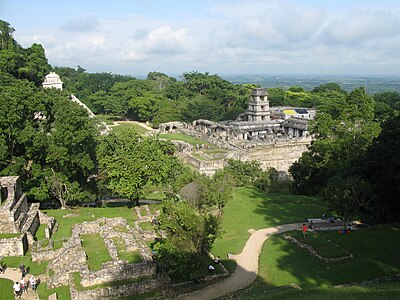
The archaeological site of Palenque, rising dramatically from the verdant tropical rainforest of Chiapas, Mexico, stands as an incomparable UNESCO World Heritage sanctuary that bears witness to the extraordinary creative genius and architectural sophistication of the Classic Maya civilization. Situated within the fertile basin of the Usumacinta River, this ancient city-state reached its cultural zenith between the sixth and eighth centuries, giving birth to an architectural legacy defined by unprecedented structural lightness, artistic harmony, and spiritual depth. At the center of this sacred landscape rises the Temple of the Inscriptions, known in Classic Maya as B'olon Yej Te' Naah, or the House of the Nine Sharpened Spears. This majestic stepped pyramid was commissioned in the seventh century as the monumental funerary repository for King K'inich Janaab' Pakal, whose legendary reign spanned nearly seventy years and ushered in a golden age of power, art, and dynastic prestige. Recent state-of-the-art three-dimensional geospatial research, combining airborne Light Detection and Ranging and terrestrial laser scanning, has revealed that the Temple of the Inscriptions was not conceived as an isolated architectural element. Rather, it constituted the central anchor of an ambitious, unified tripartite mausoleum project. Initiated by King Pakal during his lifetime, this monumental master plan integrated the Temple of the Inscriptions with the adjacent Temple XIII—which housed the magnificent burial of his royal consort, Lady Tz'akbu Ajaw, known as the Red Queen—and an intervening stepped platform building that physically connected both temples along an elevated natural terrace standing two point seventy-five meters above the main plaza level. Today, this audio guide will lead you through this immortal architectural ensemble. We will begin at the sweeping central plaza, examine the vivid stucco-relief piers of the upper portico, explore the sacred hieroglyphic tablets housed within the inner sanctuary, navigate the concept of the hidden internal vaulted stairway and psychoduct, and finally contemplate the sublime subterranean crypt where the great king lay unmolested in his monolithic stone sarcophagus for over twelve centuries. As you walk through these sacred grounds, allow the ambient sounds of the rainforest to transport you back to the golden era of the Maya.
02 The Nine Levels of Xibalba and King Pakal
It is an astounding archaeological revelation that this towering stone monument, standing over twenty-two point eight meters in height, was not constructed as a communal civic venue or a standard temple, but was engineered specifically to enshrine the mortal remains and immortal soul of a single Maya sovereign. …
03 Stucco Reliefs: God K and the Royal Lineage
It is a fascinating artistic revelation that these weathered limestone piers were not originally drab gray stone, but were once ablaze with brilliant pigments of cinnabar red, earthy yellow, and the luminous, celestial Maya blue. Direct your attention to the six monolithic piers forming the front portico, designated sequentially as Piers A through F, and examine Piers B and D with particular care. …
04 The Inscription Tablets: 617 Glyphs of Eternity
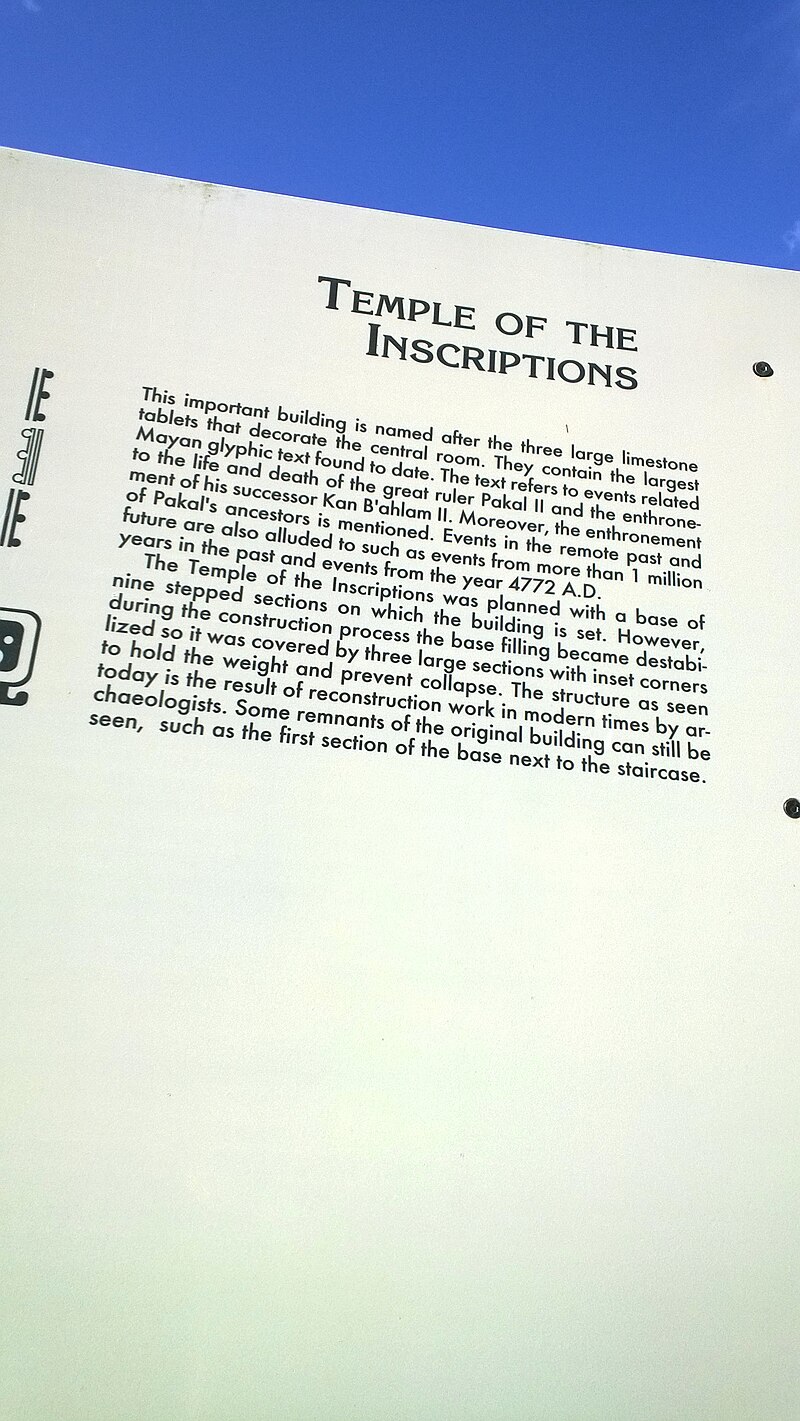
It is an extraordinary epigraphic fact that the inner sanctuary of this structure houses one of the most extensive and impeccably preserved written accounts in the entire Pre-Columbian Americas, comprising precisely six hundred seventeen hieroglyphic glyph blocks. As you step inside the cool, shaded central chamber of the upper temple, observe the three massive limestone panels fixed against the rear wall, known to archaeologists as the East Tablet, the Central Tablet, and the West Tablet. …
05 The Hidden Stairway and the Psychoduct
It is a monumental engineering revelation that hidden deep within the solid limestone core of this pyramid lies a secret, two-ramp vaulted internal stairway descending directly from the upper sanctuary floor into the subterranean bedrock. Gaze down into the dark, rectangular opening on the temple floor, where a descending vaulted tunnel constructed with expertly dressed corbelled limestone arches disappears into the cool shadows of the earth. …
06 Pakal's Crypt: The Sarcophagus and the Jade Mask
It is an extraordinary engineering marvel that to support the immense vertical crushing load of the overlying pyramid, Maya master architects constructed this subterranean crypt using reinforced cross-vaulting and stone buttresses to house a single, colossal monolithic limestone sarcophagus. Envision the atmosphere of this sacred vault, situated beneath the main plaza level, where the room is dominated by a monolithic stone sarcophagus covered by a exquisitely carved rectangular limestone lid. …
07 Closing
This concludes our audio guide tour of the Temple of the Inscriptions at Palenque. As you stand before this majestic stone pyramid rising against the lush rainforest canopy, take a moment to reflect upon the reality that this site represents far more than an ancient royal tomb. It stands as an enduring monument to the Maya worldview, demonstrating an exceptional synthesis of cosmological doctrine, advanced mathematics, structural engineering, and royal ideology. …