 Photo Wikimedia Commons
Contents
History & cultureBY TELLBY8 sections · numbered as on the map01 Orientation
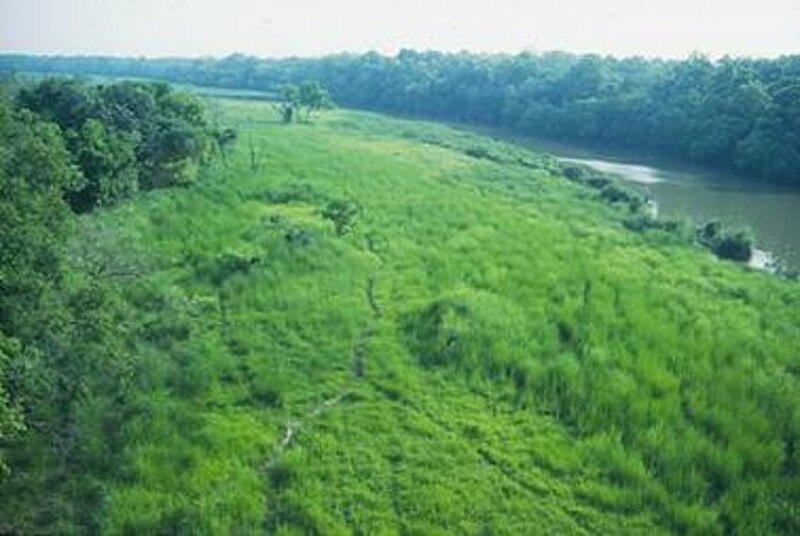
Welcome to Dudhwa National Park, located in the Lakhimpur Kheri district of Uttar Pradesh near the international border between India and Nepal. As you step onto this remarkable sanctuary, you are standing in the premier national park representing the Terai-bhabar biogeographic subdivision of the Upper Gangetic Plains 7a province. This magnificent landscape features a striking mosaic of dense Sal forests, vast alluvial floodplains, and clay-rich marshy grasslands. Situated across an undulating plain with elevations ranging gently from 150 meters in the southeast to 182 meters in the north, the sanctuary is continuously nourished by the pristine waters of the Mohana and Suheli rivers, creating an indispensable haven for rare and endangered species.
The formal conservation lineage of this fertile region dates back to the mid-nineteenth century. Following an extensive ecological survey conducted by Sir D. V. Brandis in 1860, a forest area of 303 square kilometers lying between the Mohana and Suheli rivers was officially declared a reserved forest under the British Indian administration in 1861. Originally managed as part of the North Kheri Forest Division, these timber reserves gained increasing ecological significance over the decades. In 1958, a focused area of 15.9 square kilometers was designated as the Sonaripur Sanctuary to safeguard the dwindling populations of northern swamp deer. This sanctuary expanded to 212 square kilometers in 1968 under the name of Dudhwa Sanctuary. Following the government declaration of intent in October 1975, final settlement notifications were completed on January 21, 1977, leading to the official establishment of Dudhwa National Park on February 1, 1977.
The preservation and eventual national recognition of these forests owe a profound debt to the legendary conservationist Billy Arjan Singh. Residing directly on the forest edge, Billy Arjan Singh mounted a tireless lifelong campaign against illegal poaching, timber smuggling, and habitat encroachment. His pioneering hands-on efforts, including the hand-rearing and reintroduction of zoo-born big cats such as the tigress Tara into the wild, brought international attention to Dudhwa. His passionate advocacy persuaded government authorities to elevate the park status, culminating in 1987 when Dudhwa National Park was merged with the Kishanpur Wildlife Sanctuary and Katarniaghat Wildlife Sanctuary to create the comprehensive Dudhwa Tiger Reserve under Project Tiger.
Today, covering a core national park area of 490.3 square kilometers complemented by an extensive 190 square kilometer buffer zone, Dudhwa remains the finest surviving sanctuary of North Indian Moist Deciduous Sal forest. As you begin your journey today, listen to the gentle rustle of the canopy and prepare to explore an extraordinary living monument of ecological restoration.
02 Visitor Center and Main Entrance
Welcome to the Visitor Center and Main Entrance of Dudhwa National Park. As you stand here near the decorative main gate, take a moment to look around. You will see safari jeeps lined up, eager guides sharing field notes, and the formidable front guard of giant Sal trees marking the threshold of this vast Indian wilderness. …
03 Tharu Cultural Village and Forest Rest House
You are now exploring the Tharu Cultural Village and Forest Rest House complex, a site where indigenous tribal tradition meets historic forest administration. Look around as you walk through this tranquil clearing. You will see charming mud-and-thatch structures built in the style of traditional Tharu dwellings standing alongside elegant, timber-framed colonial rest houses shaded by grand forest trees. …
04 Sakhu Tree House and Avian Canopy
Welcome to the Sakhu Tree House and Avian Canopy viewpoint. As you step onto the wooden viewing platform, look up into the towering greenery above you. You are looking at the impressive canopy of majestic Sakhu trees, the local regional name for the Sal tree, which forms the core foundation of North Indian Moist Deciduous forests. …
05 South Sonaripur Rhino Reintroduction Area
You are now standing at the South Sonaripur Rhino Reintroduction Area, home to one of the most triumphant wildlife restoration stories in modern conservation history. Look across the boundary fence toward the lush marshlands ahead. You will see specialized solar-powered security fences and elevated monitoring posts guarding a vast protected enclosure of tall alluvial grass and clay wallows. …
06 Suheli River Aquatic Ecosystem
Welcome to the Suheli River Aquatic Ecosystem trail, located along the tranquil banks of the river widely recognized as the lifeblood of Dudhwa National Park. As you walk along the riverbank path, look down at the gently flowing, silt-rich water meandering through sandy shoals and lush riverine thickets. …
07 Barasingha Grasslands and Safari Trail
Welcome to the Barasingha Grasslands and Safari Trail observation platform. Stand upon this elevated wooden machan and look out over the sweeping expanse before you. You are gazing across a magnificent alluvial floodplain blanketed in dense, towering grass species often referred to as elephant grass. Interspersed with seasonal marshy pools, this vast grassland ecosystem represents one of the final remaining strongholds for the northern swamp deer, known locally as the Barasingha, making Dudhwa…
08 Closing
As your journey through Dudhwa National Park comes to a conclusion, we bid you a warm and heartful farewell. Walking beneath the soaring canopy of ancient Sal forests, gazing across the expansive Terai grasslands, and encountering iconic wildlife such as the Royal Bengal tiger, Great Indian One-Horned Rhinoceros, and Barasingha stags has hopefully left an indelible mark upon your heart. …