Contents
History & cultureBY TELLBY7 sections · numbered as on the map01 Orientation
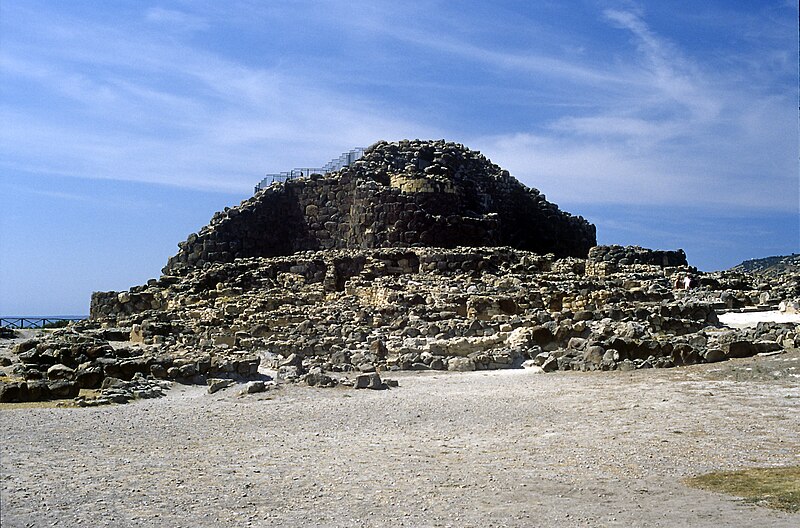
Welcome to Su Nuraxi di Barumini, the ultimate symbol of Sardinia ancient prehistoric heritage situated in the fertile undulating countryside near the municipality of Barumini. The designation Su Nuraxi translates directly to The Nuraghe in Campidanese, the southern regional dialect of the Sardinian language. This extraordinary archaeological complex stands as the most preeminent, complete, and exceptionally preserved monument of the ancient Nuragic civilization. Continuously occupied across more than two millennia from its initial Bronze Age construction in the seventeenth century BC down through Carthaginian, Roman, and early medieval periods, this site achieved worldwide recognition for its outstanding universal value when UNESCO designated it as a World Heritage site in 1997.
At the architectural heart of Su Nuraxi lies a monumental defensive citadel built entirely of dry stone masonry using heavy local basalt blocks. Ancient Sardinian builders engineered these towering structures without relying on mortar, cement, or any chemical binding agents. Instead, they stacked massive hand-cut basalt blocks with absolute geometric precision, utilizing gravity and internal balance to achieve exceptional vertical stability. Over successive historical eras, as the surrounding tribal society became increasingly structured and hierarchical, this central stronghold expanded. A complex quadretower fortification was built, which was later encircled by a protective outer defense wall and an extensive residential village composed of circular stone dwellings.
Our audio tour will lead you through the chronological and architectural layers of this prehistoric citadel. We will begin at the outer defense wall, walk through the ancient residential village with its paved pathways, inspect the grand circular assembly hut where tribal councils convened, enter the central fortress courtyard centered around its deep freshwater well, and culminate inside the soaring corbel-vaulted tholos chamber of the central tower. As you navigate these ancient pathways, please watch your step on the uneven stone surfaces and stay on designated visiting routes to preserve this irreplaceable monument. Now, let us begin our journey by moving toward our first stop, the outer defensive wall.
02 Outer Defensive Wall and Entrance
It is truly mind boggling to realize that thousands of years ago, ancient builders erected these massive defensive outer walls by stacking huge blocks of raw basalt without using a single drop of mortar or cement. Built entirely with dry stone techniques, these heavy basalt barriers have successfully withstood centuries of environmental weathering and military conflicts, remaining today as a powerful testament to the physical mastery and architectural engineering of Sardinia prehistoric…
03 Nuragic Circular Village and Drainage System
It is truly extraordinary to learn that as early as the ninth and eighth centuries BC, this ancient village featured stone-paved streets and a fully integrated drainage sewerage network running beneath the entire settlement. Reflecting an advanced understanding of civil engineering, this subterranean drainage system proves that prehistoric islanders possessed sophisticated concepts of urban planning and public health long before classical antiquity. …
04 Meeting Hut for Inhabitants and Sacred Space
It is truly remarkable to discover that this large circular hut, distinctly broader and more carefully built than surrounding family dwellings, functioned as a communal assembly hall and council chamber for prehistoric society. Long before written constitutions, the local population gathered inside this dedicated structure to discuss shared affairs, settle internal disputes, and make collective decisions for their community. …
05 Central Fortress Courtyard and Ancient Well
It is genuinely remarkable to discover that right at the center of this enclosed inner courtyard sits a deep freshwater well, providing the vital water supply that enabled defenders to endure prolonged military blockades. Positioned inside the core of the quadretower citadel, this reliable water source was the ultimate strategic lifeline that guaranteed survival during periods of siege and conflict. …
06 Central Tower Tholos Chamber
It is genuinely awe-inspiring to realize that this central keep, constructed during the seventeenth century BC with three superposed internal chambers reaching 18.6 meters in height, continues to stand remarkably intact after more than three thousand five hundred years. As one of the oldest surviving megalithic towers in human history, this structure stands as a triumph of prehistoric engineering that has successfully defied the erosion of millenia. …
07 Closing
Ladies and gentlemen, we have reached the conclusion of our audio tour through Su Nuraxi di Barumini, the paramount symbol of Sardinian prehistoric heritage. From the monumental central keep constructed in the seventeenth century BC to the massive heptalobate defense walls, the circular residential village, the sacred assembly hut, and the inner courtyard well, you have walked through the living layers of an ancient world that spanned more than two thousand years of human history. …