 Photo Wikimedia Commons
Contents
History & cultureBY TELLBY7 sections · numbered as on the map01 Orientation
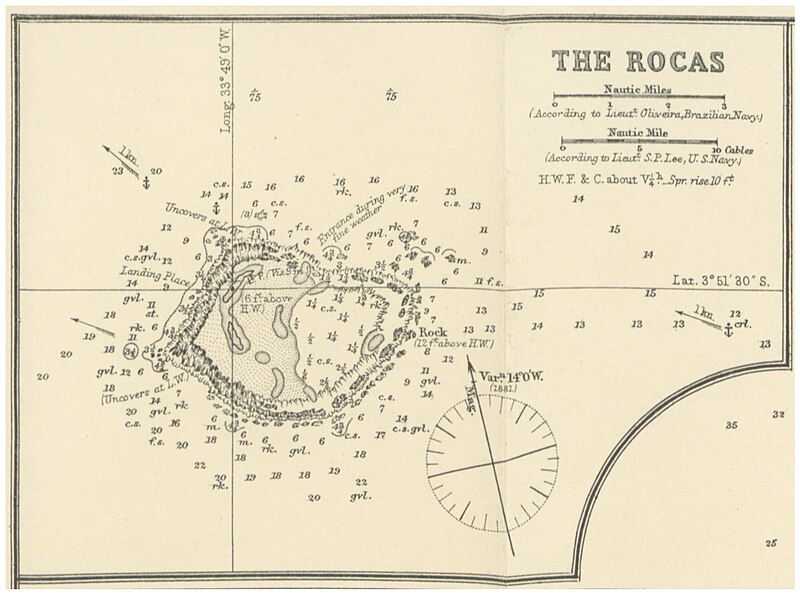
Welcome to the Rocas Atoll Biological Reserve, a pristine marine sanctuary rising gracefully above the vast horizons of the South Atlantic Ocean. Located approximately two hundred and sixty-seven kilometers off the northeastern coast of Natal in Brazil, this remote oceanic treasure stands as an indispensable biological oasis within a surrounding expanse of open ocean. Geologically, the atoll represents an extraordinary marine formation resting atop a submerged volcanic seamount rising from a sea depth of four thousand meters. As the only true atoll in the entire South Atlantic Ocean, it holds an exceptional status in global marine geography, providing essential shelter, feeding grounds, and breeding habitats for countless species of tropical wildlife, migratory seabirds, and marine mammals. Looking out across the vibrant turquoise waters surrounding this isolated cay, one immediately senses the sublime solitude and ecological importance of this unique oceanic haven.
Designated as a prestigious UNESCO World Heritage property alongside the nearby Fernando de Noronha archipelago, this ecological refuge owes its existence to the intricate, millenary building work of coralline algae, encrusting organisms, and corals. Over immense periods, the combined forces of sea level fluctuations and biological calcification have shaped an elliptical reef structure that buffers incoming oceanic waves and traps nutrient-rich waters. The result is an extraordinary engine of marine biodiversity where pelagic fish, sea turtles, migratory seabirds, and marine mammals thrive in remarkable abundance. Because public access is strictly restricted to scientific research, the ecosystem retains an exceptionally high degree of natural integrity and ecological purity. Completely shielded from commercial exploitation, it serves as a vital sanctuary for the entire South Atlantic marine ecosystem.
Our audio guide tour will lead you through the fascinating story of how this living fortress was constructed and how its diverse inhabitants endure in the open sea. We will examine the outer algal ring that tirelessly resists the powerful ocean swell, explore the history and biogenic sands of Ilha do Farol where iconic nineteenth-century lighthouse ruins stand, and visit the serene nesting grounds of green turtles and tropical seabirds on Ilha do Cemitério. Furthermore, we will discover the magical tidal pools exposed during low tide and observe the strictly protected reef passes where marine researchers continuously monitor this delicate sanctuary. Immersed in the natural rhythms of the winds and waves, please follow the guided path as we unfold the living history of the South Atlantic.
02 Spot 1: The Outer Reef Ring and Bioconstructors
This massive marine barrier is surprisingly not the creation of traditional reef corals, but a resilient biological masterpiece built layer upon layer by hard pinkish-red algae and tiny shell-building organisms over thousands of years. Look directly at the solid rock surface beneath your feet and toward the outer reef margin where incoming oceanic waves break into white cascading foam. …
03 Spot 2: Ilha do Farol and the Historic Lighthouse Ruins
A perilous reef that once claimed countless vessels in shallow, treacherous waters eventually transformed into the solitary home of an isolated lighthouse keeper and a living monument to maritime history. Look up at the prominent lighthouse structure standing near the center of the island and observe the surrounding ancient stone ruins. …
04 Spot 3: Ilha do Cemitério and the Seabird Sanctuary
Every single year, thousands of tropical seabirds and hundreds of endangered green turtles return to this small sandy cay for the sole purpose of laying their eggs and perpetuating their species. Direct your gaze toward the brilliantly white biogenic sand beach before you and trace the intricate turtle tracks carved into the shore. …
05 Spot 4: Tidal Pools and the Natural Aquarium Lagoon
The moment the ocean tide recedes, a crystal-clear natural aquarium emerges, brimming with colorful tropical fish and vibrant marine life. Look down into the shallow, gently rippling water and observe juvenile sharks and schools of reef fish swimming effortlessly above the pink coralline algae floor. As low tide exposes the outer reef rim, trapped seawater remains within shallow depressions up to five or six meters deep, creating a spectacular network of natural tide pools that shimmer like…
06 Spot 5: The Reef Pass and REBIO Research Station
This location marks the entrance to one of the most strictly protected marine sanctuaries on Earth, where unauthorized public access, recreational diving, and commercial fishing are entirely prohibited. Look toward the northwestern reef pass where powerful outer ocean waves channel directly into the tranquil interior lagoon. …
07 Closing
Our journey through the Rocas Atoll Biological Reserve, a magnificent marine sanctuary sculpted by coralline algae and living organisms in the open South Atlantic, has now come to a close. Together, we have traced the biological engineering of the pink outer reef ring resisting the heavy ocean swell, explored the historical memory and biogenic sands of Ilha do Farol, and observed the tranquil nesting grounds of endangered green turtles on Ilha do Cemitério. …