Contents
History & cultureBY TELLBY7 sections · numbered as on the map01 Orientation
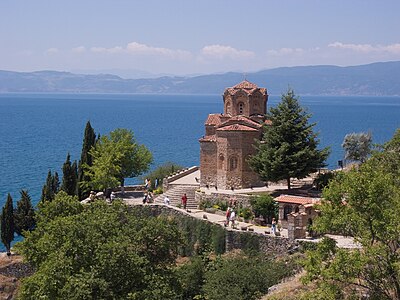
Welcome to the high scenic observation deck overlooking the breath taking expanse of Lake Ohrid, a place where millions of years of natural evolution and ancient human history reside in complete harmony. The shimmering blue waters stretching across the horizon before you represent far more than a simple lake. Formed by ancient tectonic earth movements millions of years ago, this remarkable basin stands today as a living ecological sanctuary housing rare endemic aquatic species and an irreplaceable UNESCO World Heritage site preserving the living traces of prehistoric human existence from the fifth millennium before the common era. Reaching impressive depths of two hundred and ninety meters, these crystal clear waters conceal a long forgotten prehistoric pile dwelling settlement beneath their tranquil surface waves. The sheltered bay you are currently gazing down upon is the renowned submerged archaeological site of Ploca Micov Grad. Recognized as a world heritage site in nineteen eighty, this extraordinary location speaks directly to our imagination without the need for dry historical dates or complex academic jargon, illustrating how ancient human communities once lived in remarkable balance with their natural environment. Rather than clearing and destroying the surrounding mountain slope woodlands, the Neolithic inhabitants chose to erect sturdy wooden posts directly into the lake floor, establishing a thriving village elevated safely above the water. The oxygen free mud at the bottom of the lake has miraculously preserved these massive structural timbers, alongside uncharred crop remains and wild fruit shells discarded thousands of years ago. Today, as we walk along the wooden deck bridge, we will step directly into the daily lives of the people who inhabited this shoreside world six thousand years ago. As we embark on this journey to uncover the secrets of the submerged wooden pile village, you will experience the timeless beauty and profound heritage of Lake Ohrid. Feel the gentle breeze sweeping across the water and begin your path toward the entrance bridge of the reconstructed pile dwelling settlement.
02 Entrance Bridge to Reconstructed Pile Dwellings
The astounding discovery of six thousand five hundred year old crop seeds alongside one hundred and fifty perfectly preserved wooden structural piles buried deep within the oxygen free lakebed sediment continues to awe archaeologists worldwide. Please pause for a moment on this wooden walkway and look directly down at the deck bridge beneath your feet and the crystal clear, shimmering waters of Lake Ohrid flowing below. …
03 Wooden Pile Structure and Central Platform
The realization that prehistoric builders completely bypassed split timber processing to employ whole, unsplit oak and juniper trunks exceeding thirty centimeters in diameter as structural piles reveals the astonishing scale and technical confidence of ancient architecture. Please look up slowly at the thick oak posts standing firmly in front of you and the thatched reed roof they so sturdily support overhead. …
04 Woodland Edge and Wild Fruit Foraging Path
The ecological paradox that human land clearance and timber felling actually triggered an explosive expansion of sun loving rosaceous fruit trees including wild almonds, blackberries, raspberries, wild apples, pears, and rosehips presents a fascinating chapter in environmental history. Please turn your eyes slowly toward the lush woodland stretching along the right side of the trail, where the steep slopes of the Galicica mountain range meet the lakeshore. …
05 Neolithic Arable Crop Plot Viewpoint
The revelation that agricultural communities practiced autumn sowing of cereal crops six thousand years ago to overcome harsh winter frosts in this upland wetland environment fundamentally reshapes our understanding of prehistoric farming adaptability. Please direct your eyes toward the cozy, flat terrace situated between the tranquil shoreline and the rising mountain slopes. …
06 Underwater Cultural Stratum and Midden Layer
The astonishing preservation of uncharred prehistoric fruit skins, nut shells, and delicate cereal husks sealed without oxygen within a one and a half meter thick sediment layer beneath the lake floor for six thousand years stands as a bioarchaeological miracle. Please look down attentively at the dark sediment layer visible through the crystal clear lake water beneath the surface waves. …
07 Closing
The serene blue waters of Lake Ohrid and the submerged prehistoric pile dwelling settlement we have explored together stand as a timeless testament to the enduring harmony between humanity and nature across millennia. The sparkling sunlight dancing upon the lake surface and the ancient timber posts resting beneath the crystal clear water softly testify to how Neolithic inhabitants wisely engaged with their environment six thousand years ago, nurturing a sustainable biocultural landscape through…