Contents
History & cultureBY TELLBY7 sections · numbered as on the map01 Orientation
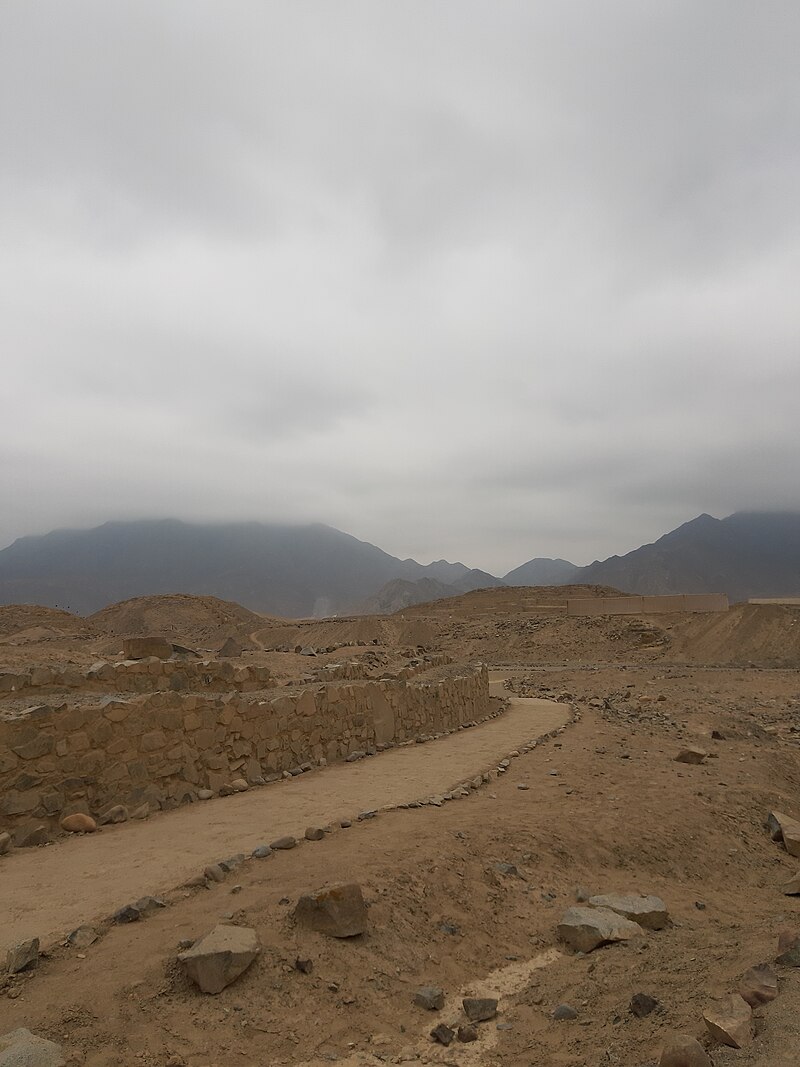
Welcome to the Sacred City of Caral-Supe, a monumental sanctuary resting in the breathtaking arid Supe Valley of Peru. As you stand near the entrance of this magnificent ancient complex, you are stepping back five thousand years in time to the very cradle of civilization in the Western Hemisphere. Officially recognized as a UNESCO World Heritage site in two thousand nine, this sprawling urban complex is celebrated as the oldest known city in the entire American continent, having flourished contemporaneously with the construction of the Great Pyramids of Egypt. What makes this ancient metropolis truly astounding to historians and archaeologists alike is that it developed in complete geographical isolation, without any interaction or borrowing from other continental cultures, yet it established a complex, highly organized society without relying on warfare, military fortifications, or defensive structures. Located twenty-three kilometers inland from the vast waters of the Pacific Ocean and rising three hundred fifty meters above sea level, Caral sits dramatically in a well-defined fertile corridor wedged between windswept desert slopes and the vibrant green floor of the river valley. As you look out across this ancient landscape, you will observe that the metropolis was intentionally designed and organized into two primary urban sectors known as the Upper Half and the Lower Half, divided naturally by civic functions and social stratification. The Upper Half served as the grand ceremonial and administrative core for the ruling elite, defined by six monumental terraced pyramid complexes, vast open sunken plazas, and expansive, comfortable residential quarters reserved for high priests and administrators. Conversely, the Lower Half accommodated smaller civic structures, functional workshops, and modest residential units for the skilled artisans, specialized craftspeople, and dedicated agricultural laborers whose daily efforts sustained the urban center. This metropolis thrived through a mutually beneficial economic network, exchanging valley-grown cotton and agricultural produce with the coastal fishing city of Áspero for marine protein such as dried anchovies and sardines. Our spoken audio walking journey will guide you step-by-step through five essential landmark stops across this sacred ground, uncovering the extraordinary engineering resilience, artistic brilliance, and spiritual devotion that defined the dawn of American civilization. Please take a moment to absorb the vast desert horizon and the soothing valley breeze before we begin our walk into the monumental heart of Caral.
02 Main Pyramid: The Monumental Heart
Prepare to behold an architectural masterpiece that completely transformed the world's understanding of ancient American civil engineering. Rising dramatically before you in Sector E of Upper Caral is the Main Pyramid, known locally as Pirámide Mayor, a stupendous monument that covers a footprint equal to four football fields—measuring one hundred fifty meters long by one hundred ten meters wide—and reaches nearly thirty meters into the desert sky. …
03 Quarry Pyramid and the Sacred Monolith
Five thousand years ago, long before the emergence of formal modern astronomy, the brilliant minds of the Supe Valley were already reading the movement of celestial bodies across the desert sky to govern their societal rhythm and agricultural survival. You are standing before Sector B of Upper Caral, home to the Quarry Pyramid—named for the natural rocky outcrop utilized during its initial construction—and its adjacent monumental ceremonial plaza. …
04 Gallery Pyramid: Secrets of Communication
Welcome to Sector H of Upper Caral, home to the Gallery Pyramid, a monument that holds the revolutionary secret of how a complex prehistoric civilization managed extensive trade networks and administrative governance without ever developing a written alphabet. Uncovered within the inner chambers of this structure was the oldest known quipu in the Americas, pushing the documented origins of complex Andean string-recording technology back thousands of years before the rise of the Incan Empire. …
05 Temple of the Amphitheater: The Sound of Peace
Step into Sector L of Lower Caral, home to the Temple of the Amphitheater, the architectural masterpiece where music, social cohesion, and spiritual art converged. Across this expansive one hundred fifty hectare city, exhaustive archaeological excavations spanning decades have uncovered zero defensive walls, zero weapons of war, and zero battle-inflicted casualties. …
06 The Desert Geoglyph: An Ancient Face
Standing here at the western desert perimeter of the city, you are gazing upon a colossal artwork etched into the earth centuries before the world-famous Nasca Lines were ever created. Spread across the stony desert floor before you is the Geoglyph of Chupacigarro, a giant ground design formed entirely through the deliberate placement of dark angular stones against the pale desert sand. …
07 Closing
As our guided audio walking tour comes to an end, please pause here at this elevated departure viewpoint to take one last breathtaking look across the Sacred City of Caral-Supe. Spread out before you in the warm sunlight is the ancient cradle of Andean civilization, a place where valley cotton farmers, ocean fishermen from coastal Áspero, and rainforest merchants from the distant Amazon gathered in peace five thousand years ago to build a prosperous and harmonious society. …