Contents
History & cultureBY TELLBY7 sections · numbered as on the map01 Orientation
Welcome to the historic inner city of Paramaribo, the capital of Suriname located gracefully along the left bank of the Suriname River on the northeastern coast of South America. This remarkable urban center represents an exceptional historical meeting point where European architectural traditions merged harmoniously with tropical environments and native craftsmanship. Declared a UNESCO World Heritage site, the inner city stands out as an outstanding example of a colonial riverfront settlement created during the peak era of European colonization in the seventeenth and eighteenth centuries. The urban design uniquely combines classical Dutch grid planning with the practical use of indigenous South American timber and localized construction techniques that have endured for centuries.
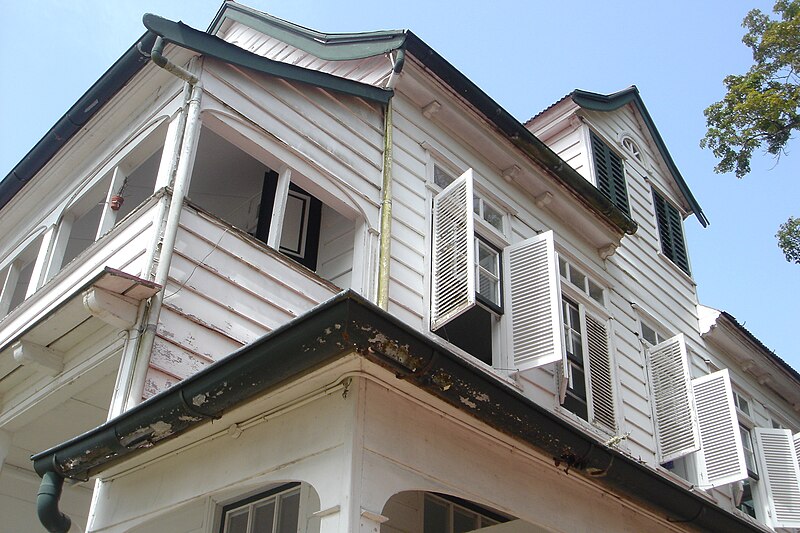
When stepping into these historic streets, one immediately notices the prevailing use of wood as the primary building material across nearly every structure. This distinctive character earned Paramaribo its famed local title as De Houten Stad, or The Wooden City. The foundation of this unique settlement traces back to sixteen eighty-three, when colonial planners laid out a structured grid pattern extending northwest from the early river fortress. Rather than imposing a rigid geometric plan over the marshy tropical terrain, the engineers smartly aligned the primary avenues along natural shell ridges. These raised geological formations provided a naturally drained base that allowed stable construction amidst the surrounding wetlands and protected foundations from rot.
Over time, master carpenters and local Creole artisans refined timber construction into a sophisticated architectural style capable of enduring the humid tropical climate. The resulting townscape demonstrates how European classicist layout concepts were continuously adapted to local tropical materials, climatic needs, and a vibrant multicultural society along the riverbanks.
As you begin your walk through Paramaribo today, you will experience a living urban landscape defined by wide tree-lined avenues, generous open public squares, and elegant white wooden facades. The architectural heritage here reflects not only Dutch influences, but also subtle elements from Creole craftsmanship and broader Atlantic trade networks that shaped the Caribbean rim. Though facing various modern challenges, environmental pressures, and preservation needs, the town maintains its authentic historic layout and evocative atmospheric qualities. This audio guide will take you on an inspiring journey through the most significant landmarks of this riverfront capital, revealing how imported European ideas were continuously transformed into a distinct local legacy.
02 Fort Zeelandia: Citadel on the Suriname River
Did you know that this historic citadel standing before you has served sequentially as an English outpost, a Dutch military stronghold, a prison, and now the Surinaams Museum over its long lifecycle? Fort Zeelandia, established in sixteen sixty-seven, stands as the foundational birthplace of modern Paramaribo and remains one of the most prominent colonial defensive structures along the northern coast of Tropical South America. …
03 The Presidential Palace and Palmentuin
As you step toward the northern side of Independence Square, you are greeted by one of the most remarkable administrative residences in South America. Did you know that the grand Presidential Palace, constructed in seventeen thirty, cleverly combines a heavy stone foundation and brick structure on its ground floor with a completely timber-built upper level? …
04 Ministry of Finance: Brick Monument of Independence Square
As you stand before the western boundary of Independence Square, your eyes are immediately drawn to an imposing brick structure. Did you know that the Ministry of Finance building, constructed in eighteen forty-one, stood out as a rare and massive monumental brick edifice in an urban landscape almost entirely dominated by timber? …
05 Waterkant: Historic Riverside Street
As you arrive at the wide promenade overlooking the flowing waters, you are standing on Waterkant, the oldest and most famous waterfront street in Paramaribo. Did you know that when colonial engineers laid out the town grid, they intentionally rotated a series of street blocks along Waterkant by forty-five degrees relative to the main internal city grid? …
06 Saint Petrus and Paulus Cathedral: Wooden Gothic Marvel
As you step into the bustling inner city street, you arrive before the indisputable architectural masterpiece of Suriname. Did you know that the Saint Petrus and Paulus Cathedral, completed in eighteen eighty-five, holds the prestigious title of being the largest wooden building in all of South America? While monumental cathedrals across Europe and the Americas were traditionally constructed from stone, this vast Roman Catholic sanctuary was built entirely out of native tropical timber. …
07 Closing
As our walking tour of the historic inner city of Paramaribo comes to a close, we reflect on the exceptional cultural tapestry of this UNESCO World Heritage site. Paramaribo stands as a remarkable living monument where European colonial urban planning met indigenous South American crafts, Creole timber artistry, and a vibrant multicultural society along the Suriname River. …