Contents
History & cultureBY TELLBY7 sections · numbered as on the map01 Orientation
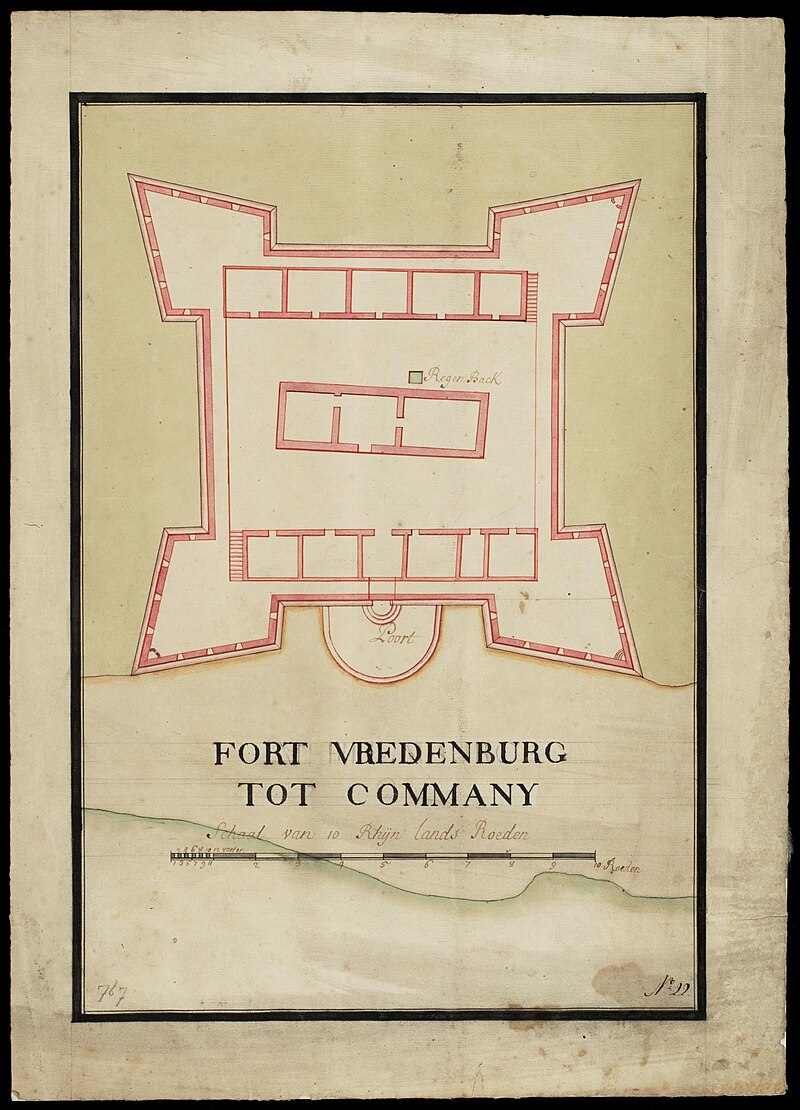
Welcome to Fort Vredenburgh, situated on the historic coast of Komenda in Ghana. This location stands as an extraordinary historical monument within the West African coastal landscape. The preserved ruins of this fort form an integral part of the UNESCO World Heritage site recognized under the designation of Forts and Castles, Volta, Greater Accra, Central and Western Regions. Inscribed on the World Heritage List in 1979, this UNESCO designation highlights the profound testimony these coastal structures offer regarding European economic and colonial expansion in West Africa, as well as their decisive role in the history of transatlantic trade networks that transformed global history across several centuries.
As you stand here at the orientation path, take a moment to absorb the surrounding landscape and visualize the spatial layout of this remarkable shore. To your left, you can observe the gentle flow of the Komenda River as it meanders toward the Atlantic Ocean. Directly before you lies the sweeping sandy beach where ocean waves continuously break against the coastline. On the elevated ground on the left bank of the river stand the weather-worn stone remains of Fort Vredenburgh, established by the Dutch West India Company in 1682. Just across the narrow riverbank, on the opposite side, lie the remains of Fort Komenda, erected by the British in 1694.
What makes this specific stretch of beach completely unique along the entire Gold Coast is the astonishingly close proximity of these two rival European strongholds. Built literally within gunshot range and shouting distance of one another, these two fortresses embodied the fierce commercial and geopolitical competition that consumed European mercantile powers during the seventeenth and eighteenth centuries. However, the story of this location reaches far deeper than a simple narrative of European conflict. The true dynamics of power on this beach were shaped continuously by the African rulers of the Eguafo Kingdom and influential local merchants, such as the famous trader John Cabess, who dictated the terms of trade and controlled access to the interior trade routes.
As we walk through this site together, this audio guide will lead you through the layers of history preserved in these quiet ruins. You will discover how an outpost named after peace became the flashpoint for the Komenda Wars, and how African leadership exercised genuine sovereignty over these coastal exchanges. Please follow the pathway toward the riverbank to begin our tour at the site of the early trading post.
02 The Komenda River Bank and Early Trading Post
The name Fort Vredenburgh translates from the Dutch language directly as the Fort of Peace. Yet, in one of the most striking paradoxes of West African history, this romantic designation of tranquility was bestowed upon a structure that sat at the absolute epicenter of violent commercial competition and bloody military conflict. …
03 The Western Wall and the French Post Conflict
A single month is an astonishingly brief period in the lifespan of an international empire, yet on the grounds just beyond this western wall, a fully functioning French commercial post was erected, operated, and reduced to smoldering ashes in merely thirty days. This dramatic and violent episode highlights the ruthless speed with which commercial rivalries escalated into military destruction on the Gold Coast during the late seventeenth century. …
04 The Central Courtyard and Merchant John Cabess
The popular assumption that European colonial powers dominated the West African coast through sheer military force and imposing stone fortresses is a profound historical misconception. The shocking historical reality of this coast was precisely the opposite. European survival, safety, and commercial operations at Fort Vredenburgh depended entirely on the permission, cooperation, and protection of influential African merchants and local traditional rulers. …
05 The Eastern Battery and the Komenda Wars
Behind the smoldering conflict between these two fortresses staring at each other across cannon range lies one of the most astonishing ironies in global diplomatic history. While the Dutch garrison inside Fort Vredenburgh and the British garrison inside Fort Komenda traded artillery fire and deadly insult, both nations were ruled at that exact moment by the very same head of state: King William III of Orange. …
06 Inner Stone Ruins and the Final Departure
It is a sobering historical reality that a massive stone fortress—which once served as a prime conduit for vast quantities of African gold and the tragic commerce in enslaved human beings—was permanently abandoned to ruin by the simple stroke of a pen on a paper treaty signed thousands of miles away in Europe. …
07 Closing
As we conclude our tour here on the elevated shore overlooking the Atlantic Ocean, listen to the rhythmic sound of the waves crashing against the Komenda beach. The weather-worn ruins of Fort Vredenburgh and its British neighbor across the river offer a profound historical lesson that extends far beyond conventional historical narratives. Visitors to the West African coast often view these stone fortresses through a simplified lens of unilateral European colonial domination. …