 Photo Wikimedia Commons
Contents
History & cultureBY TELLBY7 sections · numbered as on the map01 Orientation
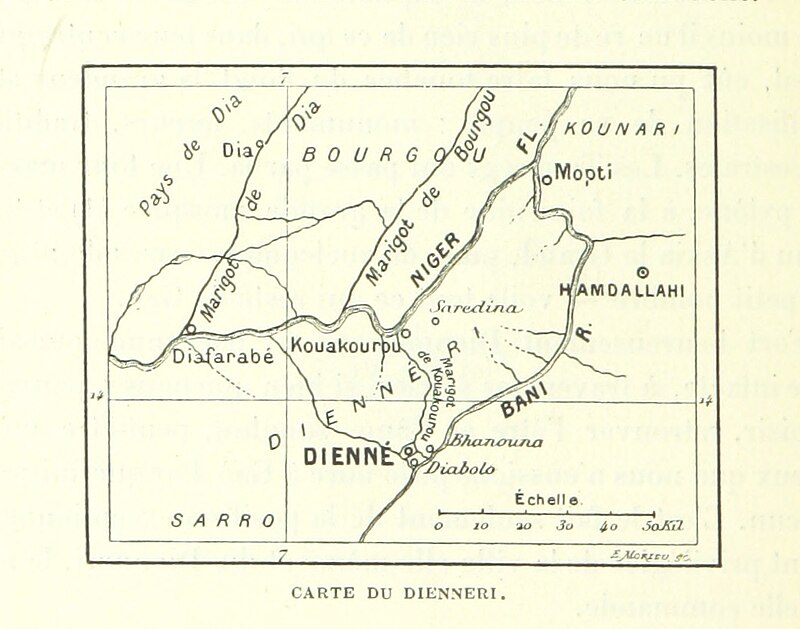
Welcome to Djenné, a legendary earthen island city nestled at the southern edge of the Inland Niger Delta in central Mali. Situated in the fertile floodplain formed by the convergence of the Niger and Bani rivers, this historic settlement undergoes an extraordinary seasonal metamorphosis. Every year as the summer rains begin, the volume of the river channels expands dramatically, reaching maximum inundation in the autumn months. During this high water season, the surrounding landscape is transformed into a vast sheet of gleaming water, leaving Djenné perched as an isolated, protected island atop a raised artificial earth mound known locally as a toggué. Historically accessible only by river ferries and causeways, this natural water barrier provided essential defense against hostile invasions while fostering a resilient community intimately attuned to the hydro-ecological rhythms of the delta. For centuries, Djenné flourished as a pivotal commercial hub within the vast trans-Saharan trading network, inextricably tied to the northern desert port of Timbuktu. Saharan caravans arriving from northern salt mines brought heavy slabs of rock salt, which merchants in Djenné exchanged for gold, ivory, and agricultural produce brought up from the southern forest regions. Beyond its immense commercial wealth, the town developed into an esteemed center of Islamic learning and spiritual devotion, earning the sacred title Town of Three Hundred Thirteen Saints. Djenné was inscribed as a UNESCO World Heritage site in recognition of its remarkable urban ensemble and its vibrant, enduring earth building tradition. In an arid landscape almost devoid of structural timber and quarry stone, local master masons developed a sophisticated architectural language using only sun-baked adobe bricks, alluvial river clay, straw, and durable rônier palm timber. Rather than standing as an inert museum artifact, Djenné endures as a dynamic living city where ancestral masonry techniques are continuously practiced and preserved by the entire community through regular maintenance and seasonal replastering rituals. As you navigate through the labyrinthine earthen passages of this historic island, feel the radiant thermal warmth emitted by the thick adobe walls and breathe in the subtle, grounding aroma of river clay. Please follow the guided itinerary at a relaxed pace, allowing yourself to be fully immersed in the timeless atmosphere and rich historical tapestry of this West African earthen sanctuary.
02 Djenné-Jeno: Tracing the Origins of Sub-Saharan Urbanism
Did you know that Djenné-Jeno, located just a short distance southeast of the modern town, stands as one of the oldest known urban centers in sub-Saharan Africa, thriving continuously from two hundred BC until fourteen hundred AD? While it was long assumed by early historians that complex urbanization in West Africa developed primarily in response to trans-Saharan trade with North Africa, archaeological discoveries at Djenné-Jeno proved beyond doubt that an advanced, indigenous urban…
03 Kanafa Gate: The Sacred Sacrifice for City's Prosperity
Have you heard the tragic and deeply moving legend that a young maiden was buried alive inside the rising city ramparts to appease the water spirits and secure the eternal prosperity of Djenné? Beneath the brilliant commercial success and architectural majesty of this earthen island lies a narrative of profound human sacrifice and spiritual devotion. Look toward the humble, unpretentious earthen tomb situated quietly beneath the left side of the historic city wall. …
04 Algasba Quarter: The Elegance of Toucouleur Architecture
Is it not astonishing that in an arid Sahelian environment entirely lacking quarry stone and timber forests, master masons engineered imposing two-story residential mansions using nothing more than alluvial river mud, straw, and rônier palm wood? As you step into the historic Algasba district on the eastern side of town, you witness firsthand how humble earth was elevated into architectural grandeur through centuries of refined craftsmanship. …
05 Monday Market: Crossroads of Trans-Saharan Trade
Did you know that for many centuries, this very square served as one of the most critical commercial crossroads in West Africa, where pure rock salt from northern Saharan mines was exchanged weight-for-weight for gold brought up from southern forest regions? The expansive plaza before you has witnessed the arrival of endless camel caravans and river barges carrying immense wealth across trans-Saharan routes. …
06 Great Mosque: The World's Largest Mud-Brick Wonder
Is it not extraordinary that this monumental sanctuary, supported internally by one hundred massive earthen pillars, stands as the largest mud-brick structure in the world, crafted entirely from sun-dried adobe bricks and mud plaster? The Great Mosque of Djenné represents the absolute pinnacle of Sudano-Sahelian architecture and remains an unmatched masterpiece of human craftsmanship and spiritual dedication. …
07 Closing
Thank you for joining us on this audio guide journey through Djenné, a magnificent West African city where mud and memory intertwine to create an enduring living legacy. The earthen streets, historic mansions, ancient archaeological mounds, and monumental Great Mosque you have explored today are far more than static relics of a bygone era. They represent a dynamic, continuously renewed cultural tradition that lives and breathes through the hands of its community. …