Contents
History & cultureBY TELLBY7 sections · numbered as on the map01 Orientation
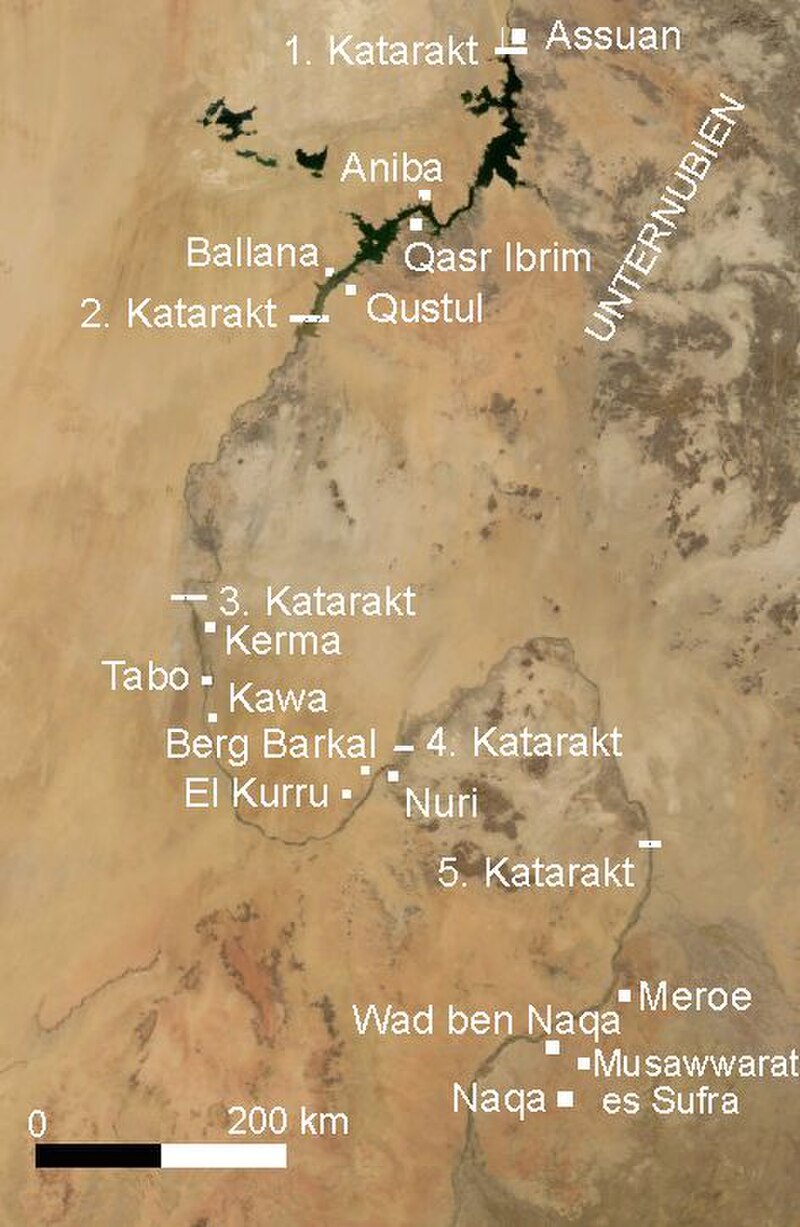
Welcome to the El-Kurru Royal Cemetery, a foundational sanctuary of the ancient Kingdom of Kush and a prominent UNESCO World Heritage site included within the inscription of Gebel Barkal and the Sites of the Napatan Region. Situated in the Northern State of Sudan, approximately one and a half kilometers west of the Nile River between the Third and Fourth Cataracts, El-Kurru served as the primary burial ground for Nubian royalty for over two centuries, spanning from roughly 860 BC down to 650 BC. This sacred landscape represents the ancestral heartland of the Napatan Dynasty and the cradle of Egypt's Twenty-Fifth Dynasty, preserving the final resting places of early Kushite monarchs, their royal queens, and their honored forebears.
As you stand upon this elevated sandstone plateau, observe how the physical terrain is naturally divided into three main field sectors by two dry riverbeds known as wadis. These natural erosion channels separate the necropolis into a central field, a northern field, and a southern field. Across these distinct fields, El-Kurru preserves an extraordinary architectural record of political and cultural evolution. It chronologically documents the transformation of Napata from a localized tribal chiefdom following the decline of New Kingdom Egyptian administration into a unified, powerful state that ultimately established an empire encompassing the entire Nile Valley.
The scientific exploration of El-Kurru began in late 1918 when American archaeologist George Reisner conducted the first systematic excavations at the site. Following Reisner's death, his assistant Dows Dunham meticulously analyzed the excavation records and published the definitive monograph on the cemetery in 1950. Their groundbreaking work revealed that the architectural progression at El-Kurru directly mirrors the rise of Kushite power. The earliest rulers were interred in simple circular gravel mounds known as tumuli, reflecting deeply rooted indigenous Nubian mortuary practices. As local authority consolidated, these modest earthworks evolved into stone-faced horseshoe enclosures, square masonry structures, and eventually monumental stone pyramids built over rock-cut vaulted burial chambers.
This self-guided audio tour invites you to trace this historic evolution across the cemetery plateau. You will explore the earliest ancestral tumuli, the revolutionary stone pyramid of King Piye, the exquisitely painted underworld tomb chambers of King Tantamani and Queen Qalhata, and the remarkable standing horse burials near the northern boundary. Please follow the marked walking trail heading toward the western upper ridge to reach our first stop.
02 Spot 1: Early Royal Tumuli of the Kushite Ancestors
It is a striking historical revelation that the formidable Kushite monarchs who eventually marched north to conquer the entire Egyptian Empire began their royal mortuary tradition not under towering stone pyramids, but beneath modest circular gravel mounds deeply rooted in ancient local Nubian customs. Direct your eyes toward the top of the sandstone ridge on your left, situated on the highest western elevation of the central field. …
03 Spot 2: Pyramid of King Piye
King Piye was the legendary Kushite ruler who famously marched north along the Nile to conquer the whole of Egypt around 750 BC, establishing the formidable Twenty-Fifth Dynasty and reunifying the Nile Valley under Nubian pharaonic rule. Direct your attention to the deep rock-cut trench leading underneath the ruined masonry directly ahead of you. …
04 Spot 3: Painted Tomb of King Tantamani
Deep underground, beneath the arid desert sands of El-Kurru, lies a brilliantly preserved subterranean underworld adorned with vivid plaster frescoes that have survived virtually untouched for more than twenty-six centuries. As you descend the steep rock-cut staircase of tomb Ku 16 and step into the cool subterranean air, gaze at the vibrant plaster murals that line the walls of the outer burial chamber. …
05 Spot 4: Tomb of Queen Qalhata
In ancient Kushite society, royal queen mothers and principal wives held immense political legitimacy and religious authority, granting them magnificent underground painted tombs that matched the scale and artistic splendor of the ruling pharaohs themselves. Direct your focus to the arched subterranean doorway leading into the inner burial chamber of tomb Ku 5. …
06 Spot 5: The Royal Horse Burials
Located roughly one hundred and twenty meters northwest of the royal pyramids lies one of the most remarkable and unexpected discoveries in world archaeology—a dedicated royal horse cemetery where four consecutive Kushite pharaohs were buried alongside twenty-four of their prized battle horses, all interred standing proudly upright in their graves. …
07 Closing
As our tour of the El-Kurru Royal Cemetery comes to a close, we hope you have gained a profound appreciation for the extraordinary history of the Kingdom of Kush and Egypt's Twenty-Fifth Dynasty. Standing here upon this ancient sandstone plateau, you have walked through the physical landscape that witnessed the dramatic rise and transformation of a continental empire. …