 Photo Wikimedia Commons
Contents
History & cultureBY TELLBY7 sections · numbered as on the map01 Orientation
Welcome to Great Zimbabwe National Monument, the most monumental and historically profound ancient stone city in Southern Africa. In nineteen eighty six, this extraordinary site was officially inscribed as a UNESCO World Heritage Site in recognition of its outstanding cultural significance. Constructed between the eleventh and sixteenth centuries by the Bantu speaking ancestors of the Shona people, this expansive city was built without a single drop of mortar or binding adhesive. Instead, skilled ancient masons carefully dressed and stacked locally quarried granite blocks, interlocking them to create the largest dry stone structure in precolonial Southern Africa. The name Zimbabwe derives from the Shona language, translating to large houses of stone or venerated houses. This name not only describes these magnificent ruins but also serves as the historical root for the modern independent nation of Zimbabwe, standing as a powerful symbol of African civilization and enduring cultural pride.
This ancient metropolis was far more than an impressive architectural feat, serving as a flourishing hub of regional and international trade. The cultural foundations of its people were deeply rooted in the earlier Gokomere culture, which flourished in this region from as early as two hundred AD. The Shona rulers and artisans, particularly from the Karanga subgroup, possessed advanced skills in gold working and processing, transforming raw gold from local fields into intricate wire, beads, and decorative ornaments. Through extensive trade networks that extended across the Save and Runde rivers to the Swahili coast, Great Zimbabwe exported gold, ivory, and cattle across the Indian Ocean trading system. In exchange, the kingdom acquired luxury goods from distant lands, including Longquan green glazed stoneware and blue and white porcelain from China, Persian ceramics, Arabian coins, and imported glass beads. The ruling elite demonstrated their authority and spiritual legitimacy through thick earth walls and massive granite enclosures, creating sacred spaces that linked the king, royal ancestors, and the creator god Mwari. This thriving community supported a peak population of up to ten thousand residents who engaged in agriculture, cattle herding, and specialized craftsmanship.
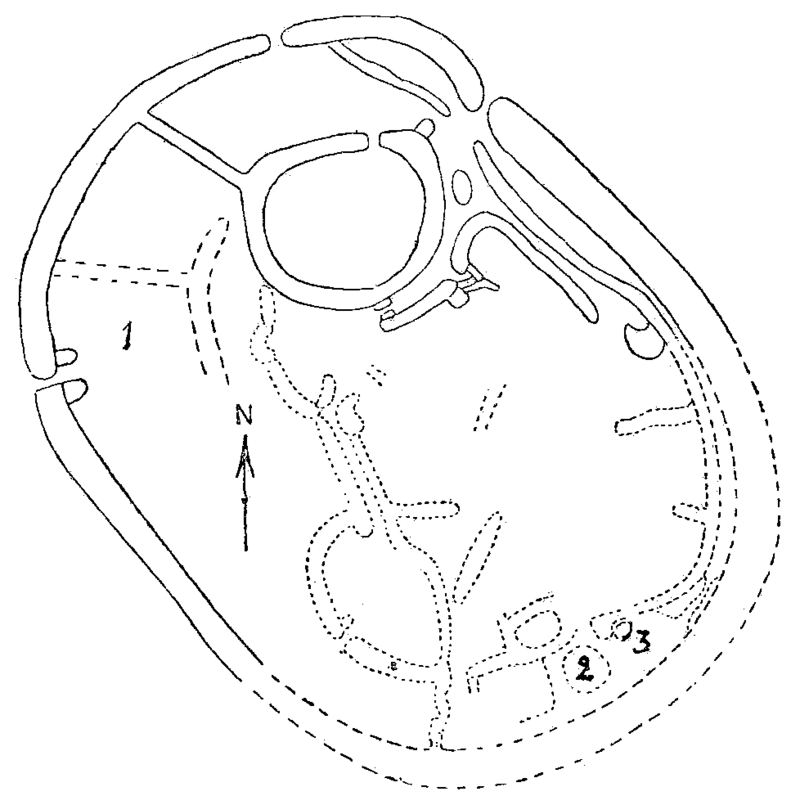
Your guided tour follows a logical itinerary through the three main architectural complexes of the monument. You will start at the Hill Complex, the oldest section dating from the eleventh century, which sits atop a steep rocky cliff and served as a royal residence and ceremonial shrine. Next, you will proceed to the Great Enclosure, constructed during the thirteenth and fourteenth centuries, famous for its massive eleven meter high boundary wall and mysterious solid Conical Tower. Finally, you will explore the Valley Complex, expanded between the fourteenth and sixteenth centuries, featuring the remains of clay residential huts and vast dhaka water reservoirs capable of holding over eighteen thousand cubic meters of water. Please respect the fragile nature of these mortarless structures, refrain from climbing the walls, and enjoy your journey through the legacy of ancient Southern Africa.
02 Hill Complex Western Enclosure Wall
We begin our tour with a breathtaking engineering revelation, the six meter high Western Enclosure Wall of the Hill Complex, which appears to defy gravity as foundation settlement at its base has caused the lower granite blocks to tilt forward by up to fifteen degrees to the horizontal, creating a precarious structure that narrowly avoids total collapse. …
03 Eastern Enclosure and Zimbabwe Birds
We stand at the Eastern Enclosure of the Hill Complex, where an extraordinary historical fact unfolds, for it was precisely on the stone pedestals of this elevated enclosure that all eight legendary soapstone Zimbabwe Birds were originally discovered, sculptures that today grace the national flag and coat of arms of Zimbabwe. …
04 Great Enclosure West Entrance
Welcome to the Western Entrance of the Great Enclosure, the largest ancient stone structure in Southern Africa, where we open with an astounding architectural truth, that this monumental enclosure, boasting eleven meter high dry stone walls and extending over two hundred and fifty meters in circumference, was constructed without using a single bucket of mortar, cement, or binding adhesive. …
05 Conical Tower
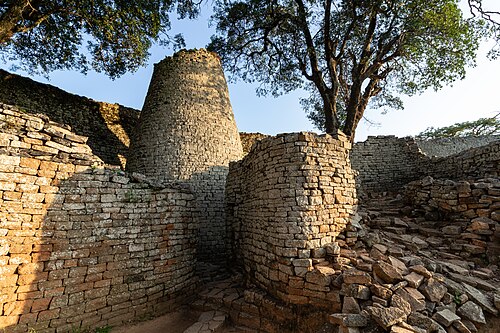
Standing before the majestic Conical Tower, which rises nine meters high with a base diameter of five point five meters between the double walls of the Great Enclosure, we open with an incredible architectural fact, that this massive structure contains no inner chambers, stairs, or hidden passages whatsoever, being entirely solid stone filled from top to bottom. …
06 Valley Complex and Dhaka Pits
Entering the expansive open area of the Valley Complex, we open with a remarkable hydrology fact, that this ancient metropolis, supporting thousands of urban inhabitants in a seasonally dry climate, engineered a water management system centered around artificial dhaka pits capable of storing over eighteen thousand cubic meters of water. …
07 Closing
As we conclude our audio tour of Great Zimbabwe National Monument, we reflect upon the magnificent heritage of the largest ancient stone city in Southern Africa, which flourished continuously from the eleventh to the sixteenth centuries. For over five hundred years, this extraordinary metropolis served as the political, spiritual, and commercial heart of the Shona civilization, dominating Indian Ocean trade networks and achieving unrivaled mastery in mortarless dry stone architecture. …