 Photo Wikimedia Commons
Contents
History & cultureBY TELLBY8 sections · numbered as on the map01 Orientation
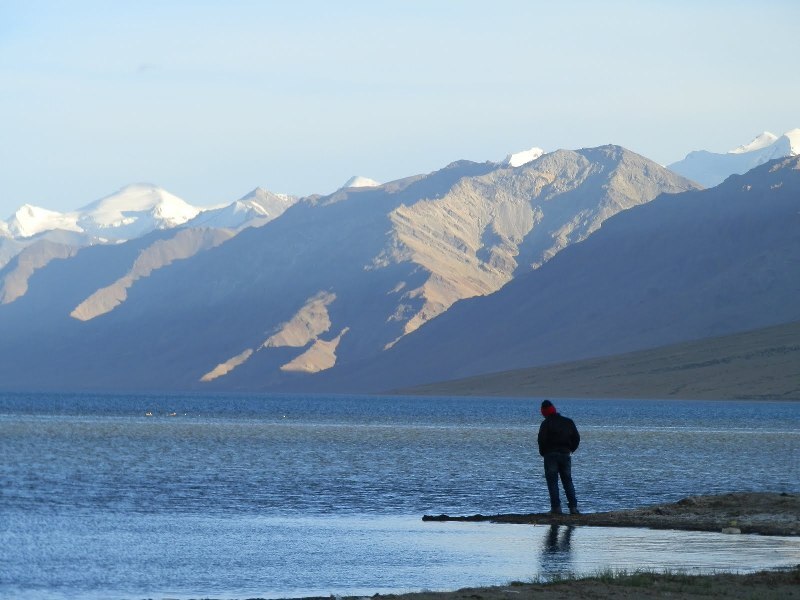
Welcome to Tso Moriri, a majestic high-altitude wetland in the Trans-Himalayan biogeographic region and the crowning jewel of the Changthang plateau in Eastern Ladakh. Architecturally positioned within the Nyoma block of Leh district, approximately two hundred and fifteen kilometers southeast of Leh, this serene basin rests along the historic trade route that traditionally linked Spiti to Rupshu. Situated at an average altitude ranging between four thousand four hundred and four thousand five hundred meters above sea level, the Changthang landscape represents one of the most extraordinary cold desert environments on Earth. Defined by harsh climatic conditions, severe sub-zero winter temperatures, intense solar radiation, and low annual precipitation, the region features rolling gravel plains and soaring glaciated peaks. Amidst this vast Trans-Himalayan desert lies Tso Moriri, an expansive landlocked brackish water lake stretching approximately twenty-five kilometers in length and five to seven kilometers in width. Recognized globally for its outstanding hydrology and exceptional biological diversity, Tso Moriri was designated as a Wetland of International Importance under the Ramsar Convention in 2002. It holds immense conservation significance as the only known breeding ground for the Bar-headed Goose in India outside China, while providing a critical breeding sanctuary for the globally threatened Black-necked Crane and dozens of migratory waterbird species. The surrounding marshy meadows and alpine stepes also support rare high-altitude mammals, including the Kiang or Tibetan Wild Ass, Tibetan Argali, Snow Leopard, Tibetan Wolf, Eurasian Lynx, and Himalayan Marmot. For centuries, this fragile ecosystem has maintained a harmonious balance with the pastoral Changpa nomads, who graze their mixed herds across these high pastures and produce world-renowned pashmina wool. However, recent infrastructure development and the rapid growth of regional tourism have introduced severe ecological pressures, including off-track vehicular driving, unmanaged camping, and waste accumulation near sensitive feeder streams. To protect these irreplaceable natural and cultural assets, the Department of Wildlife Protection in collaboration with local communities enforces strict conservation guidelines. As you embark on your audio journey around Tso Moriri, we kindly ask all visitors to strictly adhere to environmental regulations. Please remain exclusively on designated roads and established vehicular tracks, maintain a respectful distance from nesting birds and grazing wildlife, and carry all waste out of the basin. Your responsible presence helps preserve the pristine beauty and sacred peace of this Trans-Himalayan haven for future generations.
02 Mahe Bridge & Entry into the Lake Basin
Departing from the historic town of Leh, passing through Upshi, and crossing the swift currents of the Indus River at Mahe Bridge, travelers arrive at the northern gateway leading into the high-altitude basin of Tso Moriri and Tsokar. Situated immediately adjacent to the bridge, the Department of Wildlife Protection operates an essential check post. …
03 Korzok Village & The Changpa Nomadic Heritage
Nestled on the rugged western shore of Tso Moriri at an astonishing altitude of 4,572 meters above sea level, Korzok Village stands as one of the highest permanent human settlements and cultivated agricultural lands on planet Earth. Comprising approximately 149 households, the local population represents a fascinating blend of settled villagers and migratory pastoralists. …
04 Korzok Monastery of Drukpa Lineage
Perched elegantly on a gentle slope in the center of Korzok village, Korzok Monastery is an ancient spiritual sanctuary belonging to the Drukpa Lineage of Tibetan Buddhism. Established approximately three hundred years ago, this revered gompa serves as the permanent home for around seventy Buddhist monks who devote their lives to monastic discipline, scriptural study, and high-altitude meditation. …
05 Wetland Shorelines & Avian Breeding Sanctuary
The shoreline marshes and shallow margins of Tso Moriri represent an avian sanctuary of global conservation significance, providing essential breeding, staging, and feeding habitats for rare Trans-Himalayan migratory waterbirds. Geographically, Tso Moriri is a massive landlocked high-altitude lake stretching twenty-five kilometers in length and five to seven kilometers in width, reaching a maximum breadth of eight point six kilometers and covering a total surface area of approximately 148.8…
06 Alpine Meadows & Trans-Himalayan Wildlife
The undulating gravel slopes and expansive alpine meadows encircling Tso Moriri represent a vital high-altitude sanctuary for some of the rarest Trans-Himalayan mammal species on planet Earth. The immediate moist margins of the lake feature dense Kobresia marsh meadows, dominated by sedge species that hold high soil moisture and rich organic carbon content. …
07 Thukjay Settlement & Tsokar Salt Lake Connection
Journeying northwest from the Tso Moriri basin across high mountain passes, visitors encounter the extraordinary Tsokar basin and the historic settlement of Thukjay. Located approximately one hundred and fifty kilometers southeast of Leh, the Tsokar basin presents a fascinating hydrological system where a freshwater lake and a hypersaline salt lake operate within a contiguous drainage basin. …
08 Closing
As our audio guide journey around the breathtaking high-altitude landscape of Tso Moriri comes to a conclusion, we hope this experience has enriched your appreciation for one of the world's most unique Trans-Himalayan wetland ecosystems. Standing at an elevation exceeding four thousand five hundred meters, surrounded by soaring snow-capped peaks, azure waters, and golden pasturelands, Tso Moriri is far more than a scenic wonder. …