Contents
History & cultureBY TELLBY7 sections · numbered as on the map01 Orientation
Standing here on the elevated access road looking down toward the coast, a truly captivating panorama unfolds before your eyes. You are gazing upon the tranquil settlement of San Juan, nestled within the commune of Dalcahue on the eastern shores of Chiloé Island. At the very center of this seaside community, aligned parallel to the shoreline, stands the noble Church of San Juan Bautista, an architectural masterpiece crafted entirely of local timber. This historic sanctuary is acclaimed worldwide as a UNESCO World Heritage site because it represents the purest traditions of the Chilota School of Religious Architecture on Wood. For centuries, native craftsmen utilized the natural abundance of the surrounding forests to build extraordinary sacred structures without relying on iron fasteners, using ingenious joinery techniques passed down through generations.
The surrounding natural setting is defined by a serene inlet cove where local estuaries, formed by the San Juan and Quillaico streams, flow into the historic Tenaún sea passage. Surrounded on three sides by lush forested hills and gentle slopes, this sheltered bay offers natural protection against the rough open sea and biting coastal winds. Long before European navigators ever sailed into these waters, this coastal haven was home to the indigenous Mapuche-Williche people. Before Spanish colonization, the region was organized into a traditional indigenous community structure known as a caví, led by a local chieftain or lonko. In their native language, this entire area was called Coquihuil, a name referring to the gentle rivers and estuaries draining into the bay. Historical maps and colonial archives record this native toponymy in various phonetic spellings such as Cuchihuil, Foquihuil, and Chuquihuil.
The course of local history shifted dramatically in 1793 when Spanish naval officers led by the explorer Moraleda anchored off these shores, entering the settlement into Western records for the very first time. In 1833, as the local community constructed its first modest wooden chapel dedicated to Saint John the Baptist, the hamlet gradually adopted its present name of San Juan. From this vantage point, notice how thoughtfully the village is laid out along the curving shoreline road. As the access road winds down from the hills, it passes essential civic landmarks, including the former basic school building that now serves as the rural health clinic, as well as the local volunteer fire station, before reaching the waterfront dwellings. The longitudinal alignment of the church parallel to the shore ensured that mariners navigating the coastal channels could clearly identify the sanctuary facade from far out at sea. The daily rhythm of the village has always been tied to the dramatic tides, which periodically transform the bay from a deep blue mirror into wide gravel flats. As you take in this breathtaking combination of natural beauty and deep cultural legacy, begin walking slowly down the slope toward the village plaza situated right in front of the church.
02 The Village Plaza
Replacing the traditionally bare dirt explanada found almost universally across the Chiloé archipelago, the charming public square of San Juan introduces a remarkable spatial departure. Throughout Chiloé, historic church forecourts almost exclusively consist of wide, unpaved open expanses of plain earth, known as the explanada. Historically, these expansive dirt grounds were kept clear to accommodate thousands of pilgrims gathering for major patronal religious festivals and civic assemblies. …
03 Church Facade and Octagonal Tower
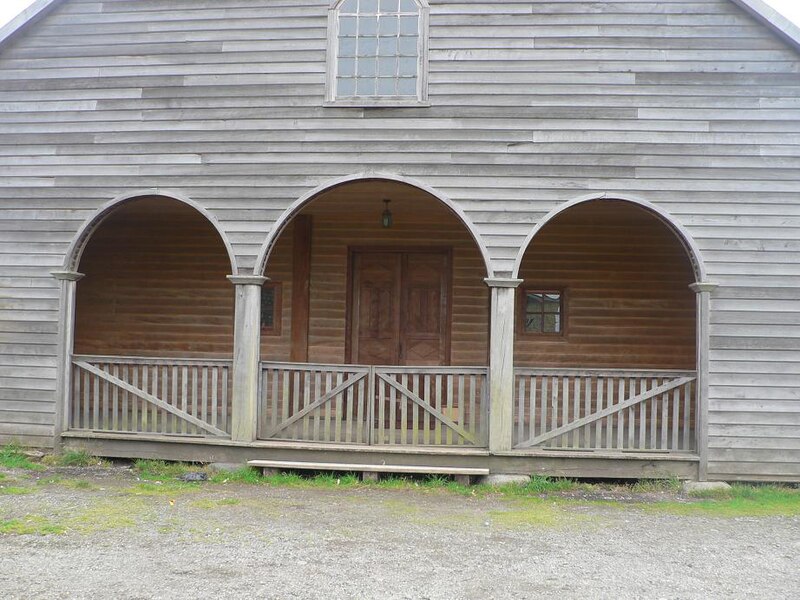
Standing under the sheltered front porch of the church, take a moment to look closely at the three wooden arches that support the entrance facade. While these arches appear perfectly integrated into the historic structure today, they conceal a remarkable story of destruction and restoration. In 1960, the most powerful earthquake ever recorded struck southern Chile, inflicting catastrophic structural damage across the Chiloé archipelago. …
04 Interior Vault and Religious Statuary
As you step down the central aisle of the sanctuary, take a moment to look at the wide timber floorboards beneath your feet. Beneath this solid wooden floor lies a remarkable layered record of human devotion. During a comprehensive conservation project to reinforce the building foundation, archaeologists carefully excavated 35 test pits beneath the nave floor. Their excavations unveiled historical burial remains and grave goods dating from the seventeenth through nineteenth centuries. …
05 Traditional Coastal Shipyards
As you step onto the gravel shore next to the church, you enter the open-air grounds of San Juan's traditional boatbuilding shipyards. This coastal workspace relies on a truly astonishing natural phenomenon dictated by the region's dramatic tidal range. When the tide recedes, the bay empties completely of water, transforming the wide gravel beach into a vast natural dry dock that boatbuilders have utilized for well over a century. …
06 The Historic Coastal Cemetery
Stepping into the historic coastal cemetery at the edge of the shoreline, visitors are immediately struck by its intimate proximity to the ocean waves. This sacred burial ground conceals a dramatic history shaped by catastrophic natural forces. In 1960, the powerful earthquake and resulting tsunami that devastated southern Chile hit this narrow beach terrace with immense force. …
07 Closing
As we stand along the quiet shoreline where the San Juan River flows into the sea, take a final moment to absorb the extraordinary synthesis of natural beauty and human heritage that defines this settlement. Before you lies a peaceful estuary where elegant black-necked swans glide effortlessly across calm waters, framed by lush forested hills and gentle green pastures. …