Contents
History & cultureBY TELLBY7 sections · numbered as on the map01 Orientation
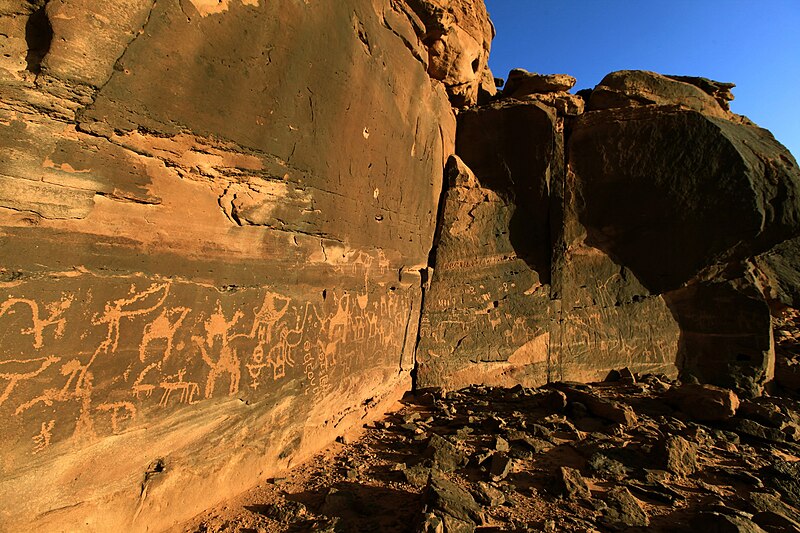
Welcome to the foot of Mount Umm Sinman, a majestic sandstone mountain rising dramatically amidst the sweeping sand dunes of the Great Nafud Desert. Although the region of Jubbah surrounding you today is defined by a vast sea of arid red sands, this very landscape was once a thriving, fertile oasis centered around a massive freshwater lake. At its height during the early Holocene, this paleolake measured up to 20 kilometers long and 5 kilometers wide, sitting at an elevation of 1,264 meters above sea level and towering 450 meters above the surrounding desert floor. Sustained by abundant water and flourishing vegetation, early human ancestors gathered along these shores, founding vibrant communities. On the enduring surfaces of the towering red sandstone cliffs, they painstakingly carved the chronicle of their lives, spiritual beliefs, and the gradual transformation of their environment. This extraordinary sanctuary stands as a profound testament to 10,000 years of human resilience, reflecting how ancient societies adapted to dramatic environmental shifts and progressive desertification across the Arabian Peninsula. The sheer volume and artistic sophistication of these petroglyphs reveal the extraordinary creative genius of these early inhabitants. As you follow the designated walking trail along the base of the mountain, this audio guide will lead you through a series of significant rock art panels that chronicle the shifting epochs of human history. Early artists utilized dense quartzite hammerstones to meticulously pound the hard sandstone, creating vivid bas-relief depictions of majestic animals, human figures, and sacred symbols that expressed their deepest desires for survival and prosperity. Over millennia, as the climate grew drier, the great lake eventually evaporated, and the lush grasslands gave way to rolling dunes. Yet, the engravings on these rocks remained remarkably preserved, offering an unparalleled visual archive of a lost ecosystem. As you begin your journey, take time to observe the delicate textures, micro-weathering details, and rich patinas of the rock surface. The survival of these ancient images through thousands of years of harsh desert winds serves as a moving connection between past generations and present visitors. This sanctuary of stone invites us to reflect on the delicate relationship between humanity and the natural world. Walking beside these towering cliffs allows us to appreciate the dedication of generations who viewed this mountain as both a sacred sanctuary and an enduring repository of memory. Please proceed thoughtfully along the path to experience the timeless legacy carved into the heart of the desert.
02 Spot 1: The Massive Neolithic Bovid and Early Ancestors
About 8,000 years ago, this location was not a barren desert, but a lush and thriving grassland centered around a vast, sparkling freshwater lake. Instead of the rolling red sand dunes you see today, gentle breezes swept across expansive water surfaces where herds of wild beasts gathered along the fertile shoreline. Now please turn your gaze to the center of the rock wall on your right. …
03 Spot 2: The Early Hunters and Domesticated Dogs
Engraved upon this sandstone rock face are the oldest depictions of leashed hunting dogs known in human history. This extraordinary artwork offers rare archaeological evidence of the ancient partnership between humans and domesticated canines as they cooperated to track wild game during the early Neolithic era. Now, please raise your head slightly to view the smooth, rounded rock panel situated at mid-height on the cliff. …
04 Spot 3: Desiccation and the Rise of the Camel
From 3,000 years ago, as the ancient freshwater lake completely evaporated, the dominant subject carved upon these sandstone rocks shifted entirely from cattle to camels. As the once fertile lake shores gradually receded and the surrounding environment transformed into an unforgiving sand desert, profound changes occurred in the lifestyle of the inhabitants, directly reflected in the evolving imagery of their rock art. …
05 Spot 4: The Symbol of Life and Ancient Inscriptions
The date palm carvings found upon these sandstone rocks were far more than simple depictions of trees; they served as vital beacons of life, signaling the existence of a fresh water oasis in the heart of the desert. The cooling shade of lush palm fronds and the nutritious date fruits provided essential sustenance, shade, and refuge for tired travelers, merchants, and pilgrims seeking relief from the scorching desert heat. …
06 Spot 5: Caravan Paths and Early Islamic Inscriptions
This site served not only ancient merchants but also countless pilgrims traveling toward holy sanctuaries, transforming these sandstone rock faces into a timeless desert guestbook. Situated along a major trade route and pilgrimage path traversing the Arabian Peninsula, this location remained a vital crossroads of human passage for millennia, stretching from the prehistoric Neolithic era into the early Islamic period. …
07 Closing
Today, we have journeyed together through 10,000 years of history carved into the majestic sandstone canvas of Mount Umm Sinman. Looking out across the sweeping sand dunes of the Great Nafud Desert below, we have listened to the voices of early human ancestors echoing through time. The thousands of petroglyphs and ancient inscriptions etched into these red sandstone cliffs represent far more than historical relics; they stand as a testament to the resilience, creativity, and spiritual depth of…