Contents
History & cultureBY TELLBY7 sections · numbered as on the map01 Orientation
Welcome to the Citadel of Erbil, a magnificent World Heritage site standing proudly at the ancient heart of Erbil in the Kurdistan Region of Iraq. In 2014, UNESCO designated this extraordinary fortress as a World Heritage site, recognizing its exceptional universal value as a surviving model of an ancient urban settlement and an autonomous fortified tell. Rising dramatically above the vast surrounding plain, this oval-shaped mound represents the oldest continuously occupied human settlement on Earth, boasting an unbroken line of human habitation that stretches back over six thousand years.
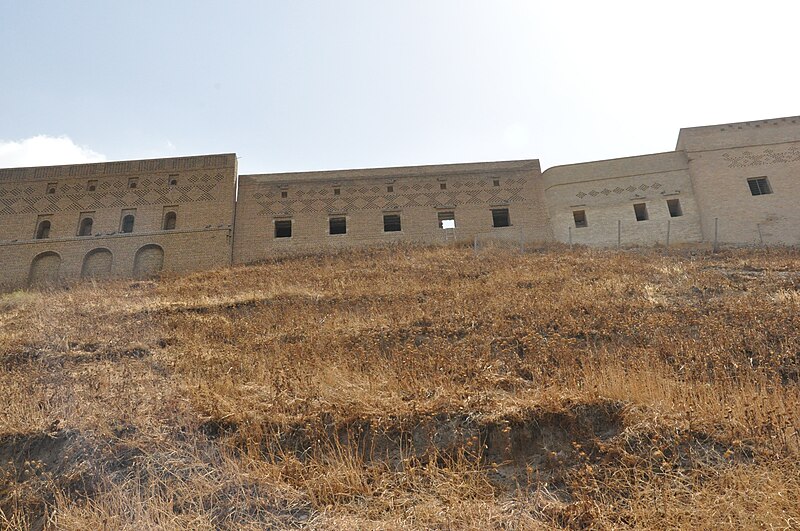
As you stand near the main approach, look at the sheer scale of the massive mound beneath the citadel. This landmark was not formed by nature. Instead, over millennia, successive generations built their homes out of ochre-coloured mud and sun-dried brick. As older structures collapsed over centuries, new homes were constructed directly on top of the debris, layer after layer. This continuous process formed a monumental archaeological mound, known as a tell, which reaches a height between 25 and 32 metres above the surrounding plain, ascending at a steep forty-five-degree slope. The expansive oval summit measures 430 metres by 340 metres, encompassing a total area of 102,000 square metres. Geological soundings reveal that natural, undisturbed soil lies thirty-six metres below the current surface.
Archaeological investigations indicate that human occupation here began as early as the Neolithic and Chalcolithic eras, with pottery sherds matching the ancient Ubaid and Uruk cultures. The city first appears in historical written records around 2300 BC in the Ebla tablets as Irbilum. King Shulgi of the Ur III Dynasty recorded conquering Urbilum in his forty-third regnal year. During the Neo-Assyrian Empire, the city was known as Arbi-Ilu, meaning 'Four Gods', and served as a major religious center rivaling Babylon and Assur. Here stood the famous sanctuary of Ishtar of Erbil, repaired by Assyrian kings Shalmaneser I, Esarhaddon, and Assurbanipal, who recorded oracular dreams granted by the goddess. The plain surrounding this tell served as the backdrop for the fateful Battle of Gaugamela in 331 BC between Alexander the Great and Darius III, and in 1258 the citadel endured a famous six-month siege by the Mongol forces of Hülegü. As you begin your ascent along the historic pathway, prepare to walk through six thousand years of living history where dozens of civilizations have left their indelible marks.
02 The South Gate: Historic Portal and Modern Reconstruction
In 1960, modern urban planners cut a wide vehicular road directly through the historical center of the ancient citadel to connect its northern and southern gates, completely destroying over sixty historic traditional houses, a local school, and a neighborhood mosque. This drastic intervention severed the organic urban fabric that had evolved naturally over six millennia, leaving a permanent scar across the historic town. …
03 Mulla Afandi Mosque: The Sole Surviving Religious Structure
During the early twentieth century, the citadel housed three active mosques, two dervish lodges, and even a historic Jewish synagogue that remained active until 1957, yet today the Mulla Afandi Mosque stands as the sole surviving religious structure on top of the tell. This remarkable survival highlights the deep layer of spiritual heritage that defined community life within these ancient walls for thousands of years. …
04 Sheikh Jamil Afandi House: Masterpiece of Traditional Courtyard Architecture
This grand late-Ottoman mansion was intentionally engineered with an entirely inward-looking architectural structure, featuring a bent-access entrance corridor that completely blocks any direct line of sight from the public alleyway into the private central courtyard. This traditional bent entry, known as a bent-access corridor, preserved absolute family privacy and served as a vital climate buffer against harsh desert winds and intense summer radiation. …
05 Kurdish Textile Museum: Woven Traditions and Living Crafts
The vibrant flat-woven carpets and traditional Klash shoes displayed inside this museum have been crafted for over a century without electricity or modern machinery, created entirely by hand and by repeatedly beating tight layers of white cotton cloth on small metal anvils with heavy wooden hammers. The sheer amount of physical labor and patient dedication required to produce a single pair of these breathable mountain shoes is truly astonishing. …
06 Traditional Hammam: The Historic Public Bath of 1775
Built in 1775, this historic public bathhouse operated for nearly a century and a half using its own independent subterranean water heating system, long before a 15-metre high steel water tank was erected on the citadel summit in 1924. Maintaining a fully functioning public bath with hot water and steam circulation on top of a elevated tell without modern plumbing was a masterstroke of Ottoman civil engineering. …
07 Closing
As our tour comes to an end here at the Northern Wall Lookout, take a moment to look out across the ancient brick walls and admire the sweeping view before you. Observe how approximately one hundred historic house facades are joined continuously against one another along the steep forty-five-degree slope of the tell, creating a formidable fortified wall that has encircled the settlement for centuries. …