Contents
History & cultureBY TELLBY7 sections · numbered as on the map01 Orientation
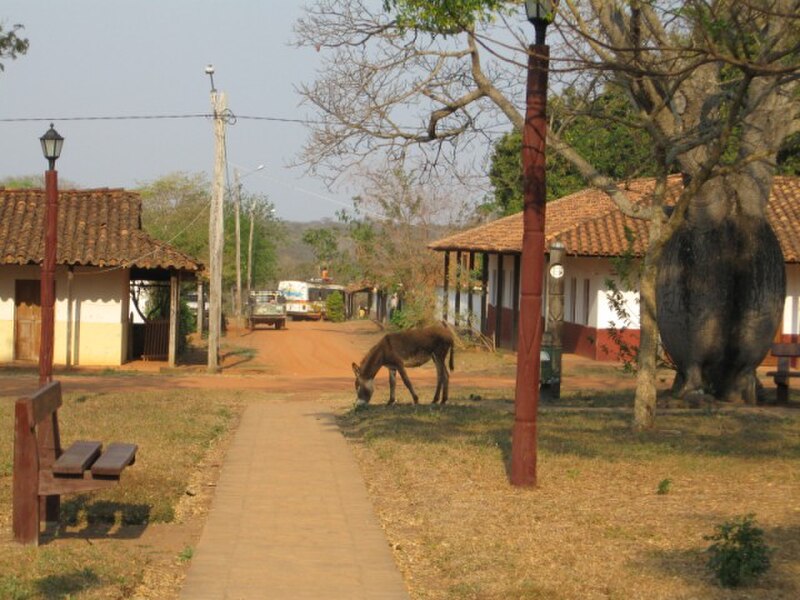
Welcome to Santa Ana de Velasco, an extraordinarily tranquil and deeply moving cultural sanctuary nestled in the lush tropical lowlands of eastern Bolivia. Recognized internationally as an essential constituent of the UNESCO World Heritage Jesuit Missions of Chiquitos, this secluded village holds a uniquely inspiring position in the grand tapestry of South American history. When visitors envision the famous historical reduction settlements of the Chiquitania, they frequently imagine grand architectural monuments designed and directed exclusively by European Jesuit fathers. However, Santa Ana de Velasco presents a radically different and astonishing narrative of indigenous resilience and creative sovereignty. Following the initial founding of the settlement in 1755 by the Austrian Jesuit missionary Father Julian Knogler, the community experienced a sudden and traumatic historic turning point. In 1767, the Spanish Crown issued a swift royal decree expelling all members of the Society of Jesus from the Americas. While many other reduction settlements plunged into decline following the departure of their European supervisors, the indigenous Chiquitano people of Santa Ana refused to let their spiritual and communal home collapse into oblivion. Operating entirely without European architects, master builders, or foreign financial subsidies, the indigenous elders and artisans organized their own labor, mobilized local forest resources, and applied their native woodworking traditions to construct and complete this magnificent mission church in 1770. Consequently, Santa Ana de Velasco stands not as a rigid museum piece imposed by colonial authority, but as a vibrant, living monument born from indigenous faith, self-reliance, and artistic independence. As you follow this audio guide today, you will step beyond mere sightseeing to immerse yourself in an intimate, multi-sensory journey through time and sacred space. Our walking itinerary begins in the spacious central village square, surrounded by traditional indigenous dwellings defined by thick palm-thatched roofs and wide timber verandas. From the square, we will approach the majestic front portico of the church to admire its massive hand-carved tree-trunk columns. We will then step into the cool, contemplative atmosphere of the interior nave, where warm wall murals crafted from local earth clays and shimmering mica dust illuminate the sanctuary. Looking up toward the choir loft, you will discover the famous 1730s pipe organ crafted by Father Martin Schmid—the only original, fully operational organ surviving across all the Chiquitos missions. Finally, we will gather before the gilded main altar, where a sacred archive of three thousand manuscript pages was secretly preserved for centuries, giving birth to the living musical traditions performed today by local youth orchestras. Carefully restored through international conservation partnerships, Santa Ana de Velasco warmly welcomes you to experience its eternal resonance.
02 The Village Square and Straw-Roofed Houses
The peaceful central square where you are currently standing holds one of the most remarkable historical secrets in South America: unlike every other famous mission town where European architects dictated urban planning, this entire village was constructed, organized, and sustained strictly by the indigenous Chiquitano community following the abrupt expulsion of the Jesuits in 1767. …
03 Portico and Wooden Columns of Santa Ana Church
As you stand directly before the main entrance portico of the Santa Ana Church, pause your steps and lift your eyes to take in the dignified and rustic presence of this sacred facade. Here lies one of the most remarkable architectural truths in South America: while famous mission sanctuaries in neighboring towns were meticulously engineered and supervised by European Jesuit master builders, the Santa Ana Church was constructed in 1770 entirely by local indigenous craftspeople using purely…
04 The Nave and Indigenous Murals
The moment you step across the threshold into the interior nave, you are immediately embraced by a tranquil, cool atmosphere that provides instant relief from the humid tropical heat outside. Take a moment to pause and absorb this sacred sanctuary: created entirely without the supervision of professional European architects or academic painters, this nave represents the purest, most genuine expression of indigenous South American Baroque art anywhere on the continent. …
05 Martin Schmid's Original 1730s Organ
Look up toward the second-floor choir loft situated directly above the main entrance, where one of the most astonishing musical treasures in the entire Western Hemisphere resides. Preserved within this gallery is an original pipe organ constructed in the 1730s by Father Martin Schmid—and as incredible as it sounds, this is the only original missionary organ surviving across all ten Chiquitos reductions that remains in flawless, fully operational working order today. …
06 The Main Altar and Living Musical Tradition
You are now standing before the main altar at the far end of the sanctuary. Here, in this sacred space, unfolds one of the most astonishing cultural continuity stories in the Americas: today, local indigenous youth choirs and orchestras still gather before this very altar to perform three-hundred-year-old baroque compositions during religious liturgies, keeping an unbroken musical lineage vibrant and alive. …
07 Closing
As we step back into the quiet central square and take a final look at the church facade, our journey through Santa Ana de Velasco comes to a thoughtful conclusion. This mission is far more than a preserved historic monument; it stands as a glowing testimony to indigenous self-reliance, spiritual devotion, and cultural sovereignty. …