 Photo Wikimedia Commons
Contents
History & cultureBY TELLBY7 sections · numbered as on the map01 Orientation
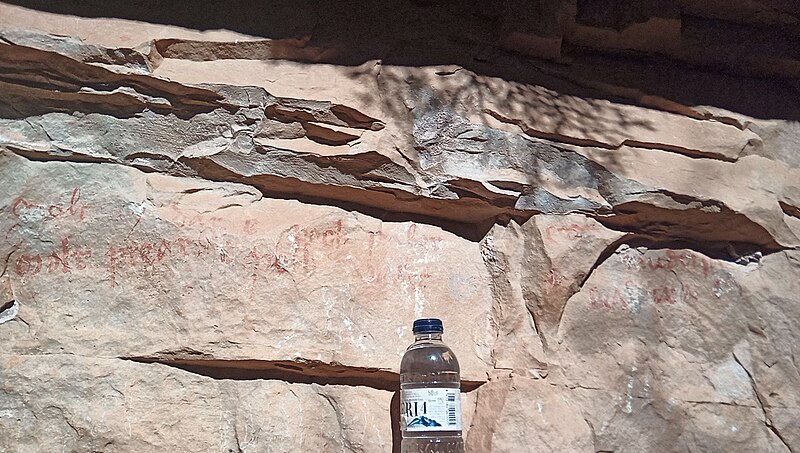
Stand under the gentle shade of the rock overhang where warm sunlight filters through, and listen closely to the faint echo of human activity echoing across thousands of years. This historic location serves as a peaceful sanctuary for the ancient rock art scattered broadly across the eastern region of the Iberian Peninsula. UNESCO officially inscribed this vast cultural treasure as a World Heritage site in nineteen ninety eight, recognizing its unparalleled historical significance and its extraordinary contribution to the story of human civilization. When people imagine prehistoric art, they often picture dark, enclosed cavern interiors where ancient hunters drew figures on subterranean stone walls by the flickering light of torches. However, the remarkable rock art of the Mediterranean Basin was created under entirely different environmental and geographical conditions. Rather than occupying deep, lightless caves, these expressions were painted on open rock shelters, formed beneath shallow cliff overhangs where natural daylight enters freely throughout the day. These massive stone cornices acted as natural roofs, sheltering the surface from rain and harsh weather while allowing soft ambient light to illuminate the open air space. In this unique environment, prehistoric communities transformed these sunny rock shelters into both working spaces and places of cultural gathering. Thanks to these distinct geographical features, early humans could express their daily experiences, spiritual beliefs, and deep respect for the surrounding natural world directly upon the illuminated stone walls. Today, as we walk through this grand outdoor gallery, we begin a captivating journey back in time. As you explore this shelter, we kindly ask you to remain within the designated visitor pathways and observe the delicate rock surfaces from a respectful distance to preserve the ancient pigments that have endured centuries of natural weathering. Touching the rock face or disturbing the surrounding soil can cause irreversible damage to these irreplaceable cultural traces. Please tread softly, taking in the harmony between natural sunlight and ancient stone. Let us now step forward toward the first designated rock wall to uncover the daily lives and vivid moments captured by our ancestors. When you are ready, follow the path ahead and immerse yourself in this timeless narrative written on stone.
02 Human Figures and Daily Life on the Rock Surface
Did you know that while human figures were extremely rare in Paleolithic cave art, they emerge as the main dynamic protagonists in the rock art of the Mediterranean Basin on the Iberian Peninsula? Unlike earlier prehistoric periods where large animals dominated the artistic space and humans were drawn as small, incidental marks, the human presence here takes center stage with profound narrative importance across the weathered stone surfaces. …
03 Depictions of Wild Animals and Nature
Did you know that caprids, or wild mountain goats, are by far the most frequently depicted animals in this rock art series, and that ancient artists used a unique perspective technique where animal bodies were drawn in profile while their horns and hooves faced directly forward? Prehistoric painters applied this remarkably creative dual-perspective approach to simultaneously capture the recognizable silhouette and defining physical traits of each creature on a flat stone surface, ensuring…
04 Ritual Dances and Dynamic Movement
Did you know that these rock paintings represent one of humanity’s very first ambitious attempts to visually capture dynamic movement, artificial vitality, and rhythmic action upon a static stone surface? Moving far beyond the rigid, isolated symbols of earlier prehistoric periods, the artists of the Mediterranean Basin succeeded in depicting human energy, physical fluidity, and collective ritual behavior, marking a revolutionary milestone in the evolution of artistic narrative and visual…
05 Evolution of Styles toward Abstraction
Did you know that over thousands of years, this rock art evolved from realistic, naturalistic representations through static and dynamic stylized phases, ultimately transforming into abstract, geometric schematism? This vast body of rock art was not created during a single brief era; rather, it represents a long artistic lineage spanning millennia where successive generations of painters added new layers to the stone, reflecting the evolving worldview and cognitive shift of early human…
06 Rock Shelters and Natural Sunlight
Did you know that these extraordinary rock paintings were created not within pitch-black subterranean caverns, but beneath outdoor rock overhangs where natural daylight filters softly throughout the day, enduring millennia of weather and sunlight? Unlike the deep cave art of earlier Paleolithic periods created by torchlight, this Mediterranean basin art represents an open-air heritage, where early humans celebrated their daily existence in bright, sunlit environments. …
07 Closing
As we bring this audio tour to a close, let us reflect upon the extraordinary scale and profound human legacy of the rock art of the Mediterranean Basin on the Iberian Peninsula. The rock shelter we have explored today is part of an immense prehistoric network spanning six autonomous communities—Andalucía, Aragón, Castilla-La Mancha, Cataluña, Comunidad Valenciana, and Región de Murcia—and sixteen provinces across eastern Spain, encompassing more than seven hundred and fifty eight individual…