 Photo Wikimedia Commons
Contents
History & cultureBY TELLBY7 sections · numbered as on the map01 Orientation
Welcome to Ancient Merv, a magnificent archaeological landscape situated along the eastern margins of the vast Karakum Desert within the fertile oasis valley of the Murghab River. Recognized globally as a UNESCO World Heritage site, Ancient Merv stands as the oldest, largest, and best preserved oasis city complex along the historical Silk Road routes of Central Asia. What renders this extraordinary sanctuary truly unique in the annals of global urban history is its exceptional spatial evolution. In most of the ancient metropolis sites across Europe, Asia, and the Middle East, successive generations continually built new dwellings directly over the crumbling ruins of older civilizations, creating layered mounds known as tells. At Merv, however, a completely different urban philosophy unfolded across two thousand five hundred years. Whenever a new dynasty or political empire assumed control over this fertile delta, its architects chose not to demolish or overwrite the previous city. Instead, they moved slightly to adjacent, unoccupied desert ground, erecting entirely new, independently walled cities directly beside the older settlements. As a consequence, walking through Ancient Merv is like moving along a horizontal timeline of human history laid bare across the desert floor. Here, side by side, rest the distinct walled cities of the ancient Persian Achaemenid Empire, the Hellenistic Seleucid realm, the Greco-Bactrian and Parthian kingdoms, the Sasanian Empire, the early Islamic Caliphates, the Great Seljuk Empire, and the post-medieval Timurid state. At its medieval height, Merv emerged as one of the most populous and intellectually vibrant metropolises on Earth, serving as the glittering capital of the Islamic world and a crucial crossroads where merchants, scholars, administrators, and travelers exchanged silk, spices, metalwork, and revolutionary ideas between Asia, Europe, and Africa. Although today the landscape appears to the casual eye as a quiet, wind-swept expanse of weathered mudbrick and earthen mounds, beneath this soil lies an unprecedented archaeological treasury. As you begin your journey through this vast archaeological park on the edge of the Karakum, take a moment to pause and listen to the dry desert wind whispering against these ancient ramparts. Exploring these extensive ruins requires a slow, unhurried, and contemplative pace, as the distances between ancient citadels, industrial quarters, ruined palaces, and grand mausoleums are considerable. Allow yourself to trace the ancient caravan paths, imagining the distant chime of camel bells and the lost splendor of clay empires. Let us now step backward through time into the profound depth of human history as we begin our exploration at the very oldest citadel mound in the oasis.
02 Erk Gala: Citadel of Ancient Empire
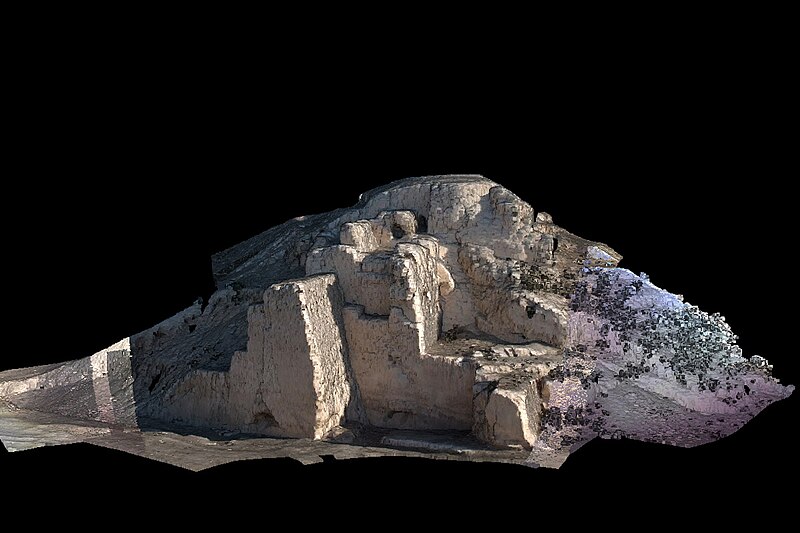
Erk Gala represents the absolute dawn of Merv's urban existence, serving as the oldest surviving citadel fortress across the entire oasis region. What startles every visitor who approaches these ancient ramparts is that these colossal circular walls, engineered entirely from unbaked sun-dried adobe mudbricks back in the sixth century BC, still tower nearly thirty meters above the desert floor and possess a massive earthen base that measures up to sixty meters in thickness. …
03 Gyaur Gala: Craftsmanship and Cultural Exchange
Gyaur Gala encompasses the immense rectangular urban expanse that grew directly around the southern perimeter of the original citadel at Erk Gala. Founded during the Seleucid era by King Antiochus the First under the official name Antiochia Margiana, this sprawling city was noted as unwatered by the ancient geographer Isidore of Charax. …
04 Great Kyz Kala: Corrugated Palace of the Desert
Great Kyz Kala stands as one of the most visually extraordinary and architecturally recognizable mudbrick structures surviving anywhere along the historic Silk Road. Known locally in the Turkmen language as the Maiden's Fortress, its most astonishing feature is its exterior facade, constructed in a deep, accordion-like corrugated pattern of closely spaced, semi-circular earthen columns. …
05 Kepderihana: The Mysterious Wall Niches
Kepderihana stands within the heavily fortified imperial citadel of Shahryar Ark on the eastern side of Sultan Gala, representing one of the best-preserved and most intriguing structures in Ancient Merv. What sparks intense debate among historians and archaeologists is the long-standing mystery surrounding the original function of this windowless, high-walled mudbrick building. …
06 Mausoleum of Sultan Sanjar: Heart of the Seljuk Empire
The Mausoleum of Sultan Sanjar stands as the undisputed crown jewel of Seljuk architecture and the most iconic landmark across the vast archaeological landscape of Ancient Merv. What stuns every traveler who approaches this site is the historical account that its soaring outer dome, originally clad in brilliant turquoise glazed tiles, was so extraordinarily high and vivid that incoming Silk Road caravans could spot its shimmering outline across the flat Karakum Desert a full day's march before…
07 Closing
Today we have walked together across the extraordinary archaeological landscape of Ancient Merv, a sacred sanctuary where two and a half millennia of human history lie quiet beneath the vast Karakum sky. Standing amidst these silent earthen ruins, it inspires a profound philosophical contemplation to realize that these weathered clay mounds once formed the single largest metropolis on Earth, sheltering up to half a million souls at its medieval zenith. …