Contents
History & cultureBY TELLBY7 sections · numbered as on the map01 Orientation
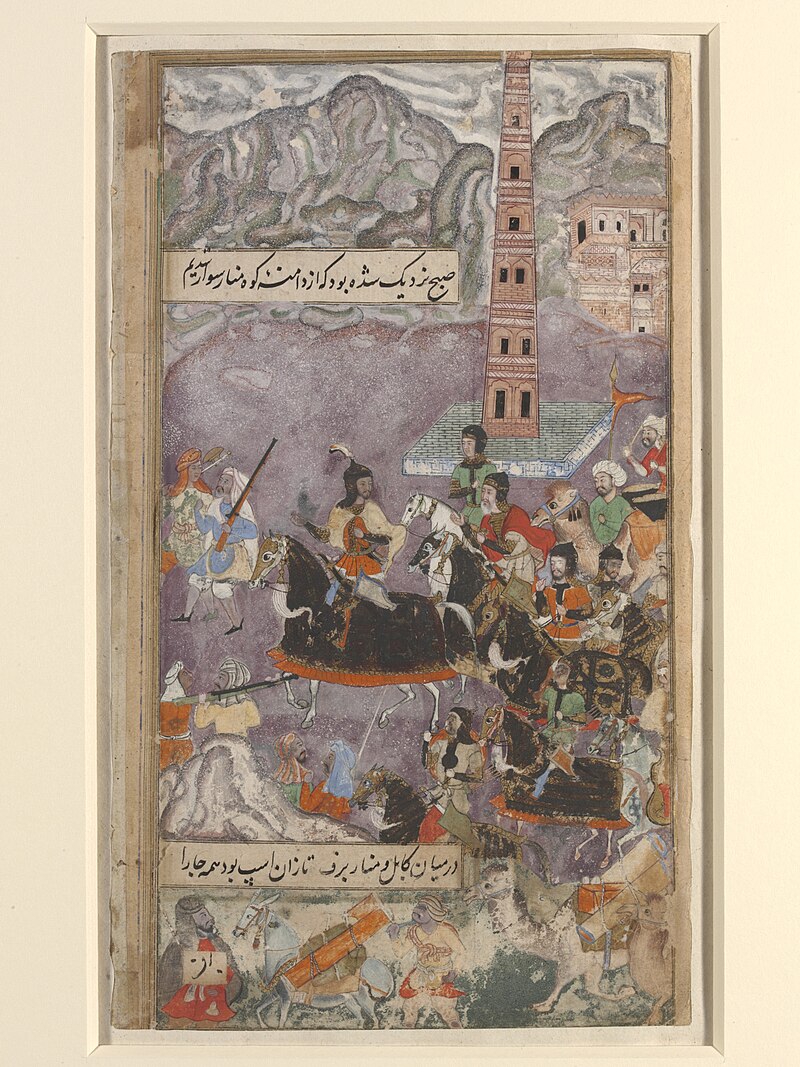
Welcome to the remote and awe-inspiring landscape of Ghor Province in western Afghanistan. Here, surrounded by rugged mountain peaks that rise over seven thousand feet high above the valley floor, the Hari and Jam Rivers converge in a narrow and formidable gorge. In this seemingly impassable terrain, far from any modern urban center, stands one of the most astonishing architectural masterpieces of the medieval Islamic world: the Minaret of Jam and its surrounding archaeological landscape. Designated as a UNESCO World Heritage Site in two thousand two, this extraordinary place represents the long-lost summer capital of the Ghurid Empire, known historically as Firuzkuh, or Turquoise Mountain. Historically, the inhabitants of this isolated mountain fastness were pagan mountaineers who lived on the eastern fringe of the Iranian world. It was not until the early eleventh century, following military expeditions and missionary efforts by the Ghaznavid Dynasty, that the Ghurids were converted to Islam. Rising from the Shansabanid tribe, the Ghurid commanders rapidly transformed from mountain chieftains into imperial rulers. Between eleven forty-eight and twelve fifteen, the seasonally nomadic Ghurid sultans established their imperial summer court in this valley, governing an empire that stretched from eastern Iran across Central Asia to northern India and the Bay of Bengal. Though the Ghurids swept across the Asian continent like a brilliant flare, their capital at Firuzkuh was thoroughly destroyed by the armies of Genghis Khan in twelve twenty-two, leaving this soaring sixty-five-meter baked-brick tower as the solitary standing testament to their remarkable reign. As you stand here today, the magnificent minaret rises in what appears to be splendid isolation, but extensive archaeological investigations using satellite imagery and aerial mapping have revealed that it was once surrounded by a thriving urban settlement covering nearly twenty hectares. Our audio guide walking tour will lead you through this remarkable historical landscape step by step. We will begin right at the base of the minaret itself, where you can admire its intricate geometric brickwork and turquoise-glazed tile calligraphy. From there, we will walk along the banks of the Hari River to inspect the submerged brick courtyards and massive walls of the lost Friday Mosque, which was buried beneath river sediments in a catastrophic flash flood around twelve hundred. Next, we will climb the steep mountain slope to examine the mudbrick residential quarters where a year-round caretaker population lived, complete with an eight-hundred-year-old oil lamp preserved in a wall niche. We will then visit the remains of the Jewish cemetery, where Judeo-Persian headstones and imported Chinese ceramics reveal a multicultural trading network. Following that, we will turn our gaze toward Qasr-e Zarafshan on the northern cliff, where mudbrick fortress towers were built facing inward to monitor the internal population following religious riots. Finally, we will conclude at the base of the tower to discuss its dangerous lean, the environmental threats it faces from river erosion and earthquakes, and the international conservation efforts required to save this fragile legacy. Please step forward and begin your journey into the heart of the forgotten Ghurid Empire.
02 The Towering Brick Masterpiece and Blue Calligraphy
What is truly astonishing is that this gigantic, sixty-five-meter tower was constructed in eleven seventy-four entirely of baked bricks, stucco, terracotta, and turquoise-glazed tiles without a single piece of modern cement or steel reinforcement, standing as a marvel of engineering that has endured for nearly eight centuries in this isolated valley. …
03 The Lost Mosque and the Catastrophic Flash Flood
As we step toward the rushing waters of the Hari River, we encounter a surprising revelation that changes our entire understanding of this site: this towering minaret was never intended to stand in isolation, but was originally an integral component of a massive imperial Friday Mosque. Today, the Minaret of Jam appears to rise in solitary magnificence against the towering granite cliffs, leading early visitors to assume it was merely a isolated victory monument. …
04 Year-Round Inhabitants and the Forgotten Oil Lamp
As we ascend the steep mountain slopes overlooking the river junction, we come across a remarkable historical fact that reshapes our perspective on life in the Ghurid capital: even during the freezing, harsh winters when the sultan and royal court departed, a permanent caretaker population lived here year-round to maintain the city. …
05 The Jewish Cemetery and Far-Flung Trade Networks
As we reach this elevated section of the mountain slope, we are confronted with a truly surprising historical reality: in the heart of an isolated Islamic mountain capital existed a flourishing, permanent Jewish community with its own extensive cemetery. Italian researchers in the nineteen sixties discovered over seventy inscribed grave markers at this site, and recent surveys by the Minaret of Jam Archaeological Project identified four additional markers, establishing that a permanent…
06 Qasr-e Zarafshan and the Inward-Looking Fortifications
Directing our attention across the Hari River to the high northern cliffs, we behold the formidable mudbrick ruins of Qasr-e Zarafshan fortress, revealing one of the most surprising architectural anomalies in medieval military defense: these towers were built not to repel foreign invaders, but to conduct constant internal surveillance over the empire's own citizens. …
07 Closing
We have now returned to the base of the Minaret of Jam, bringing our tour of this extraordinary site to a close. As you stand beneath this soaring monument, the feeling of awe is tempered by a deep sense of urgency regarding its survival. Over the centuries, continuous river erosion from the Hari and Jam Rivers, severe water infiltration, and frequent regional earthquakes have severely compromised the structural stability of the tower, causing it to list dangerously by two degrees toward the…