Contents
History & cultureBY TELLBY7 sections · numbered as on the map01 Orientation
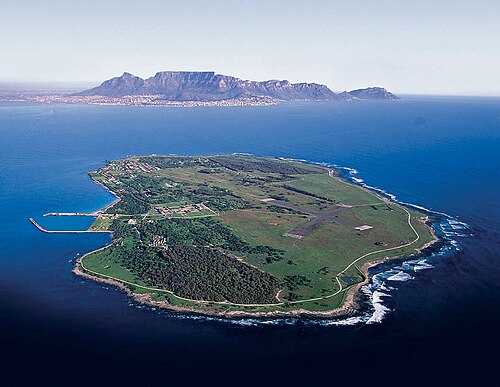
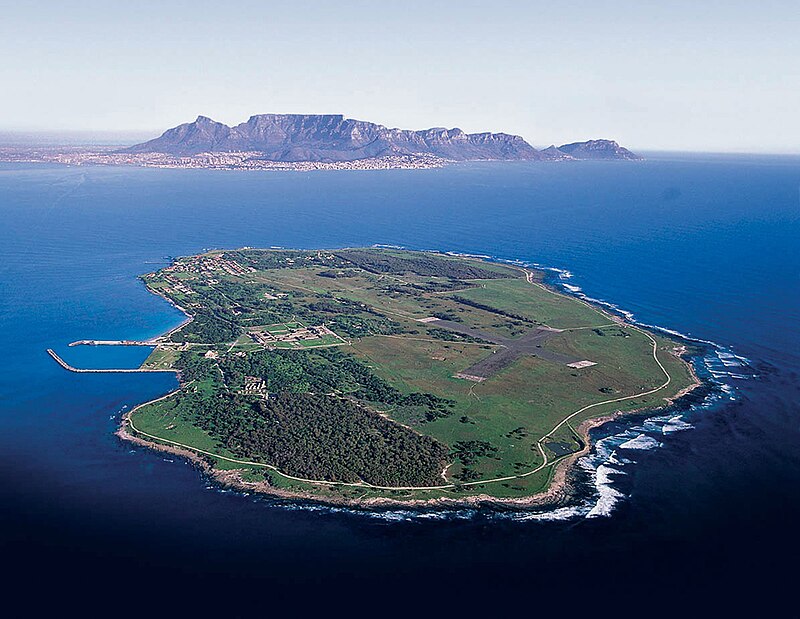
Welcome to Robben Island, situated at the entrance to Table Bay in South Africa. This site was inscribed on the World Heritage List because it bears witness to the triumph of the human spirit, of freedom, and of democracy over oppression, hardship, and adversity through forgiveness and reconciliation. Appearing serene from afar, this low-lying island possesses a space of human memory dating back ten thousand years, with its recorded history beginning upon the arrival of Vasco da Gama in 1498. The surrounding one-nautical-mile maritime zone forms a protective buffer zone safeguarding both underwater cultural heritage and delicate marine ecosystems. Over a period spanning more than four hundred years, this land has borne a deeply chequered history. Originally used by early European seafarers as a larder to gather fresh water and meat on long ocean voyages, it soon transformed into a place of banishment for indigenous Khoisan leaders, Malaysian Muslim religious figures, and Xhosa chiefs who resisted colonial expansion. During the nineteenth and early twentieth centuries, the island functioned as a leprosarium and a mental health facility for socially isolated individuals, before being converted into a coastal defence garrison during the Second World War. Its most notorious chapter opened with the establishment of the Maximum Security Prison, where political activists fighting against the oppressive apartheid regime were incarcerated alongside common law prisoners. Unlike penal colonies such as Devil's Island or Alcatraz, which remained symbols of inescapable despair, Robben Island achieved a profound spiritual transformation. Despite severe surveillance, backbreaking labor, and profound suffering, the political prisoners maintained their unyielding dignity. As expressed by leaders such as Nelson Mandela and Walter Sisulu, they transformed this island of pain into a worldwide icon of human rights, education, peace, and tolerance. Inscribed as a World Heritage Site in 1999, Robben Island embodies a unique duality of suffering and hope, standing today as a global place of pilgrimage where visitors experience the indomitable power of human reconciliation. We invite you to begin your journey through this sacred landscape of memory.
02 Murray's Bay Harbour: The Entry of Banishment
Thousands of political prisoners and banished leper patients took their very first terrifying steps onto this island through Murray's Bay Harbour, cut off entirely from the mainland. Look closely at the blunt concrete jetty extending out into the sea and the swaying, turbulent dark waters breaking against the stone barriers. …
03 Maximum Security Prison: Hope Behind Bars
Constructed by the apartheid regime to bury political opposition forever, this cold cement fortress instead served as a university that nurtured the future leaders of a free South Africa. Look beyond the thick iron bars at the long, dimly lit concrete corridors and the narrow bunk beds covered with thin blankets inside the communal cells. …
04 Limestone Quarry: Hard Labour and Vision
While the blindingly bright white limestone pit severely damaged the eyesight of the prisoners, it simultaneously served as an intellectual crucible where they secretly debated the future constitution and nationhood of a free democratic society. Look at the deeply pitted rough rock face and the quarry floor shining stark white under intense sunlight. …
05 Sobukwe Complex: Solitary Resilience
To isolate just one man from all other human contact on this island, the South African parliament enacted a special law written specifically for him. Look at the single-story small house standing lonely away from other prison buildings and the surrounding fence. This isolated cottage and its immediate surroundings form the Sobukwe Complex, where Robert Mangaliso Sobukwe, the founding leader of the Pan Africanist Congress, was subjected to extreme solitary confinement. …
06 Kramat and Village: Faith and Community
Long before Robben Island became an apartheid prison, in the eighteenth century, Islamic leaders exiled here from Southeast Asia recorded the very first Islamic jurisprudence in South Africa on this sacred ground between 1780 and 1793. Look at the Kramat shrine with its green roof and white walls resembling a mosque, and the village houses settled around it. …
07 Closing
As we conclude our tour on this coastal vantage point, please gaze across the ocean at the majestic silhouette of Table Mountain standing prominently on the Cape Town mainland. Across the cold waters of Table Bay, that magnificent mountain was the very beacon of hope that incarcerated political prisoners stared at every single day. …