Contents
History & cultureBY TELLBY4 sections · numbered as on the map01 Orientation
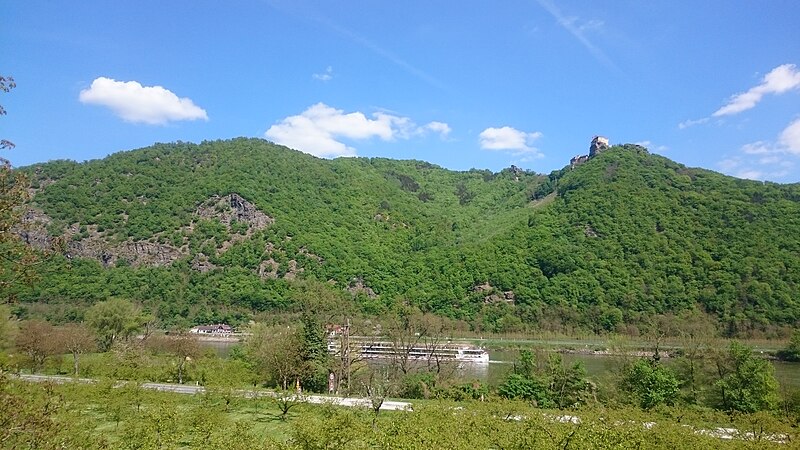
Welcome to the Wachau Cultural Landscape, an extraordinary UNESCO World Heritage site where human dedication and the magnificent natural geography of the Danube River Valley have existed in perfect aesthetic harmony for thousands of years. Stretching over thirty-six kilometers between the historic towns of Melk and Krems in Lower Austria, this narrow river corridor represents a living, evolving landscape carved out by nature and continuously perfected by generations of human effort. Designated by UNESCO for its exceptional preservation of medieval urban layouts, agricultural terracing, and monumental architecture, the Wachau stands as a monumental testament to how human civilization can enrich its natural environment without destroying its intrinsic ecological balance. Geographically, the Wachau valley rests precisely on a rare climatic boundary where warm, dry Pannonian air currents flowing from the east merge with cool, moist airflow descending from the surrounding forested highlands. This dynamic intersection produces constant air movement and dramatic temperature shifts between warm, sunlit days and crisp, cool nights, fostering an ideal mesoclimate that imparts rich aromatics and profound depth to the region's agricultural harvest. Beneath the soil, a diverse geological mosaic of ancient weathered primary rock, paragneiss, and fertile loess deposits provides a nutrient-rich foundation that defines the valley's landscape character. From the early Neolithic forest clearings to the medieval monastic stone terrace engineers, human labor has seamlessly integrated with the dramatic curves of the river. Along the water's edge, fortified medieval churches, historic winegrower farmsteads, and high cliffside ruins reflect centuries of strategic defense, trade, and cultural evolution that remain remarkably preserved to this day. The continuous harmonious interaction between the river and human settlement has shaped a cultural corridor unlike any other in Central Europe. As you begin your journey along this breathtaking stretch of the Danube, you will encounter the harmonious interplay of nature, spirituality, and viticultural mastery that defines the enduring spirit of the Wachau Cultural Landscape.
02 3. Dry-Stone Terraces of Spitz: A Mortarless Ecological Wonder
Did you know that the mortarless dry-stone walls supporting the vineyard terraces around Spitz cover an incredible area of over two point five million square meters and harbor twice as many animal species as the vineyards themselves? Built entirely by hand without a single drop of cement, these ancient stone terraces represent both a monumental feat of agricultural engineering and a thriving ecological sanctuary that defines the UNESCO World Heritage landscape. …
03 5. Weißenkirchen Fortified Church: Sanctuary Behind Medieval Defensive Walls
Did you know that in 1972 over sixty thousand citizens rose up in a historic grassroots protest against a planned industrial hydroelectric dam that would have raised the Danube River water level and submerged this medieval village under water? Had the government project proceeded between Dürnstein and Weißenkirchen, the catastrophic backwater would have flooded upstream, drowning irreplaceable historic architecture, ancient dry-stone terraces, and fragile riverside ecosystems. …
04 Closing
Our audio guide journey through the thirty-six kilometers of the Wachau Cultural Landscape now comes to a warm conclusion. From thirty-thousand-year-old Palaeolithic statuettes discovered along the riverbank to millions of square meters of medieval dry-stone terraces hand-built without mortar, and the monumental Baroque abbeys of Melk and Göttweig guarding either end of the valley, we have traveled together through thousands of years of human persistence and aesthetic harmony. …