Contents
History & cultureBY TELLBY7 sections · numbered as on the map01 Orientation
Welcome to the Ellora Caves, a monumental World Heritage site where three distinct religions were sculpted into a single massive rock wall through human dedication. Situated on the basaltic cliffs of the Deccan Plateau in India, Ellora is home to one of the largest rock-cut sanctuary complexes in the world. Located in the rain-shadow region of the Western Ghats, this dry environment might seem unforgiving at first glance. Yet, it flourished for centuries as a bustling center of trade, pilgrimage, and spiritual devotion. The secret behind the survival and long-term prosperity of such large religious communities in a resource-scarce landscape lies in an intricate water harvesting and conservation system cleverly integrated into the natural topography.
The geology of Ellora belongs to the Deccan Trap, formed by ancient volcanic lava flows during the late Cretaceous period. Specifically, the basaltic rock known as the Upper Ratangarh Formation contains vesicular air pockets and joint fractures capable of holding and transmitting substantial groundwater reserves. The Yelganga River, which flows directly through the cave complex, originates from a spring-fed reservoir on the upper Mhaismal Plateau. In local tradition, the river is revered as the physical embodiment of the water goddess Ila, from whom the historical name Elapura and the modern name Ellora are derived. Ancient builders carved channels, cisterns, wells, and reservoirs into the rock face to collect monsoon run-off and rainwater circulating through the porous basalt.
Ellora evolved along the Dakshinapatha, the premier north-south trade and pilgrimage route connecting ancient India. Merchant guilds and royal dynasties provided continuous patronage for the excavation of these monuments. The complex originally served as monsoon retreats for Buddhist monks during the rainy months, providing a secluded sanctuary for meditation and teaching. Over time, the rise of Puranic Hinduism and the presence of Jaina ascetics transformed the cliff into a vibrant interfaith landscape where different traditions coexisted peacefully side by side.
Beyond the rock-cut shrines, the broader micro-region encompasses Charanadri Hill, home to the sacred Jaina temple of Parshvanatha, and the medieval ashram established by the Vaishnava saint Chakradhar Swami inside the caves. Nearby Khuldabad houses renowned Sufi shrines including those of Pir Zainuddin Shirazi and Pir Burhanuddin Gharib. Together with the sacred Shivalaya Tirtha at the Grishneshvar Temple in Verul village, this territory represents a harmonious fusion of natural hydrology, trade, and sacred space. Let us begin our tour and explore the timeless architecture and ecological wisdom of Ellora.
02 Cave 10: The Buddhist Prayer Hall
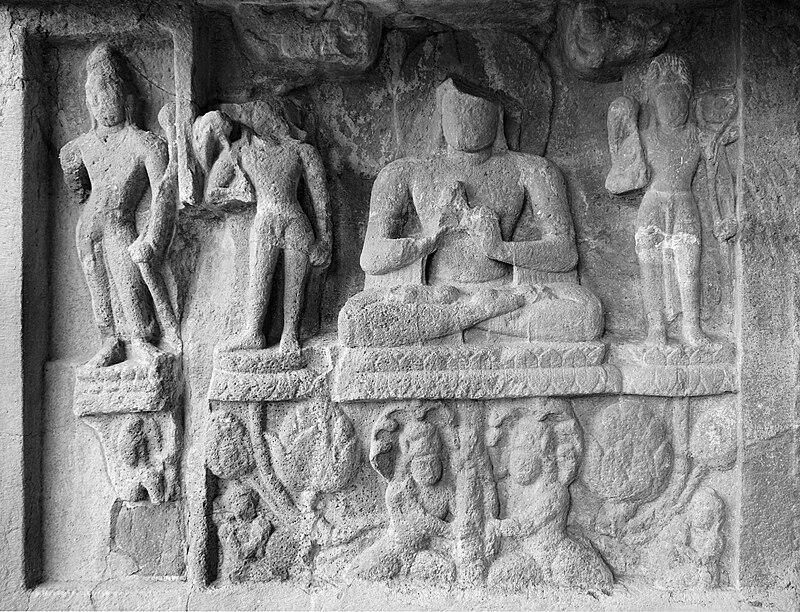
This massive rock cave was not constructed by stacking bricks, but is a living miracle hollowed out from a single monolithic mountain. Look at the arched window above the entrance and the towering rows of stone pillars extending deep inside the hall. Observe the magnificent central shrine containing a colossal seated Buddha image flanked by attendants, surrounded by a vaulted ceiling that meticulously imitates traditional wooden timber construction. …
03 Cave 16: Kailasa Temple Monolithic Wonder
You are standing before the largest single monolithic rock-cut temple in the world, carved entirely from top to bottom out of a single volcanic mountain. Look up at the massive monolithic stone elephants standing inside the courtyard and the extraordinary high-relief carvings decorating every surface of the rock walls. …
04 Cave 21: Rameshvara Cave
This is the historic site where Hindu mythology first experienced its grand and glorious revival at Ellora. Look at the exquisitely carved river goddess figures decorating the entryway pillars on the left and the beautifully sculpted three-dimensional portal framing the cavern entrance. Known as Rameshvara Cave or Cave 21, this structure represents the earliest Hindu cave sanctuary excavated within the entire Ellora complex. …
05 Cave 29: Dhumar Lena and Yelganga Waterfall
During the monsoon season, a magnificent waterfall cascades down the cliffside directly beside this cave, creating a breathtaking spectacle of nature and art. Look through the wide, open side portico of the cave toward the gorge below to see the surging flow of the Yelganga River. Commonly known as Dhumar Lena or Cave 29, this sanctuary is famous not only for its colossal pillared hall and imposing Shiva reliefs, but also for its dramatic setting integrated with the natural watercourse. …
06 Takaswami Ashram: Water Harvesting Sanctuary
Nestled inside a cluster of unfinished ancient cave excavations, this sanctuary served for centuries as a peaceful refuge providing life-giving water to weary pilgrims. Look inside the iron gate set into the rock face to view the clear, ancient cave cistern holding potable water within the mountain shadow. …
07 Closing
Today, we have traversed the extraordinary heritage of the Ellora Caves carved into the basaltic cliffs of the Deccan Plateau. The monumental rock-cut temples, alongside the ingenious water management systems concealed within their stone foundations, represent far more than ancient architectural wonder. They stand as a timeless testament to how human civilization can flourish in profound harmony with a challenging natural environment. …