Contents
History & cultureBY TELLBY8 sections · numbered as on the map01 Orientation
Welcome to the site entrance of the Maha Stupa at Amaravati, one of the most magnificent ancient Buddhist monuments in Andhra Pradesh, India. As you stand here at the threshold of this sacred ground, you are looking at a place that was locally known for centuries as Deepaladimma, which translates to the hill of lights. When Colonel Colin Mackenzie, the first Surveyor General of India, prepared the earliest maps and site plans of this location in eighteen hundred sixteen, he simply labeled the massive overgrown mound as Deepaladimma. Beneath that mound of earth and grass lay the buried ruins of a monument that ancient inscriptions referred to not merely as a stupa, but as the Mahacetiya, meaning the great sanctuary.
The ancient settlement immediately adjacent to this site was known as Dhanyakataka or Dharanikota, which served as a prominent capital city for ancient ruling houses. The name Amaravati itself is relatively modern, having been applied to the town and region after the construction of the Amareswara Lingaswamin temple in the eighteenth century. The word Amaravati conveys the profound meaning of the abode of the immortals, a title that truly reflects the eternal spiritual resonance and architectural grandeur of this monumental sanctuary.
The historic foundation of this Great Stupa traces back to the third century BCE during the reign of Emperor Ashoka of the Mauryan dynasty, who was a devoted patron of Buddhism. Archaeological discoveries at the site, including a quartzite pillar fragment bearing an inscription attributed to Emperor Ashoka, confirm that the sanctuary was established during this early Mauryan era. Initially founded as a modest brick structure enshrining sacred relics of the Buddha, the stupa underwent continuous expansion. During the post Mauryan period in the second century BCE and under the regional Sada dynasty starting around twenty BCE, the sanctuary grew significantly. Coins minted by the Sada rulers featured standing lions alongside revered Buddhist symbols, marking an era of active royal patronage before the Satavahana dynasty established firm control over the region in the second century CE.
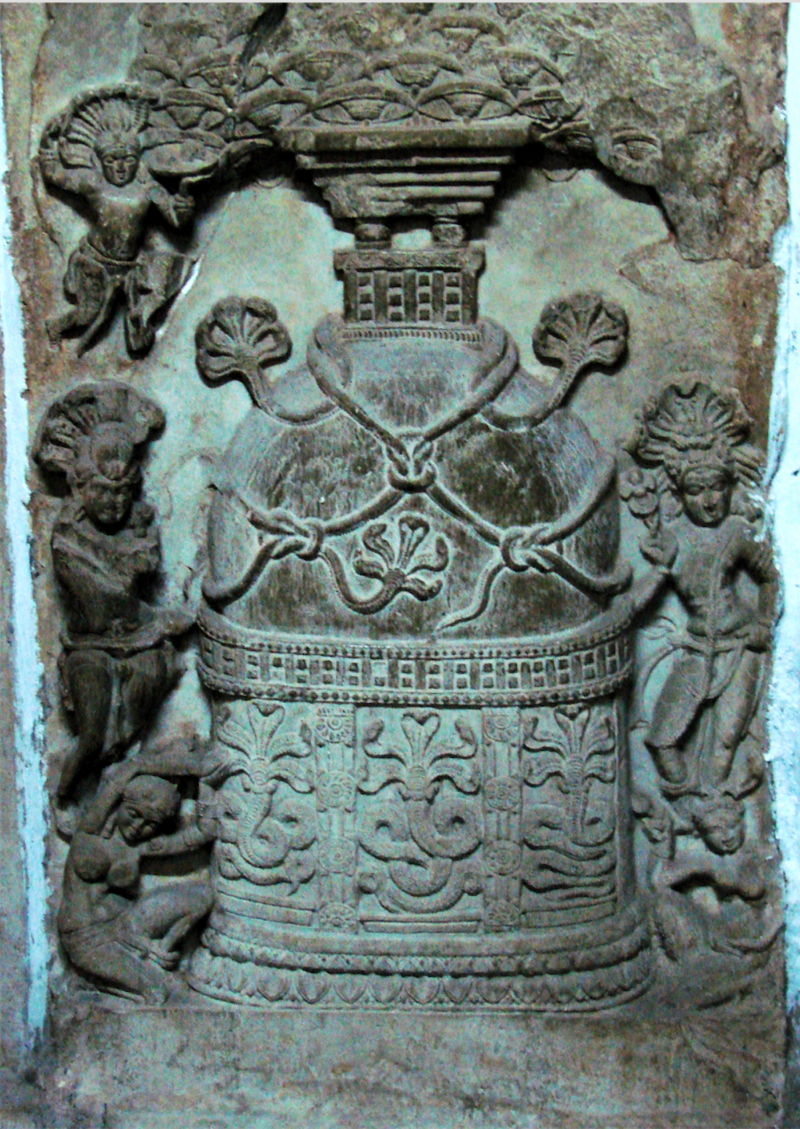
Under the illustrious Satavahana dynasty, the Maha Stupa reached the pinnacle of its architectural splendor and physical expansion. The solid earthen mound faced with brick was expanded and encased in brilliant white Palnad limestone slabs. Elaborate railings and sculptured gateways were erected, turning this site into a glittering jewel of early Indian art. Later ruling houses, including the Andhra Ikshvaku dynasty in the third and early fourth centuries, continued to maintain and enhance the complex. As you begin your walk into the sanctuary today, prepare to explore a sacred monument shaped by centuries of unwavering devotion and extraordinary artistic mastery.
02 West Gate & Ayaka Pillars
Please step forward and position yourself near the West Gate and the structural base area. This section around the western entrance holds immense historical importance, as it was the exact site excavated in eighteen hundred forty five by Sir Walter Elliot of the Madras Civil Service. During his pioneering exploration, Elliot carefully uncovered the elaborate railing base around the west gate and excavated numerous sculpted limestone slabs and structural pillars, which were subsequently…
03 Tholobate Drum Slabs & Palnad Marble
Now, please move closer toward the circular base of the stupa, known architecturally as the tholobate or drum section. In its ultimate historical form, the Maha Stupa at Amaravati rested upon a massive cylindrical drum measuring approximately one point five five meters in height and forty nine point three meters in diameter. Above this solid base rose the giant hemispherical brick dome called the anda, spanning an astounding diameter of forty two meters. …
04 Outer Vedika Railing & Ushnisha Coping
Please stroll slowly along the path following the outer vedika railing, which forms the monumental boundary encircling the Great Stupa. In ancient times, Buddhist pilgrims entered through the cardinal gateways and walked along the paved processional path between this outer vedika railing and the inner drum. …
05 Lion Columns & Entrance Pilasters
Please move toward the area near the cardinal entrances, where freestanding columns and entrance pilasters topped with majestic sitting lions once stood. At each of the four main entry points to the sacred enclosure, tall stone columns surmounted by carved lions welcomed arriving devotees. In Buddhist iconography, the lion symbolizes both the royal lineage of Prince Siddhartha and the fearless proclamation of the Buddha's teachings, known as the Lion's Roar. …
06 Monastic Precincts & Krishna River View
Please stroll over toward the ancient monastic precincts that overlook the scenic banks of the Krishna River. Surrounding the Great Stupa were numerous monastic complexes known as viharas, where resident monks, visiting scholars, and novice practitioners lived, studied, and meditated. Situated on the right bank of the Krishna River, this location offered an ideal environment for contemplative spiritual life, with the calm flowing river providing a tranquil background for intense academic study…
07 Amaravathi Archaeological Museum
Now, please step inside the galleries of the Amaravathi Archaeological Museum, conveniently located directly adjacent to the historic site. Inside this museum, an impressive array of authentic limestone relief slabs, architectural fragments, and sculptures recovered during archaeological excavations are carefully preserved and displayed. …
08 Closing
As we bring our journey around the Maha Stupa at Amaravati to a close, please find a quiet spot with a panoramic view overlooking the entire sanctuary. From its initial foundation in the third century BCE under Emperor Ashoka, through its spectacular golden age under the Satavahana and Andhra Ikshvaku dynasties, this sanctuary served as a paramount beacon of Buddhist art, philosophy, and devotion for more than fifteen centuries. …