 Photo Wikimedia Commons
Contents
History & cultureBY TELLBY7 sections · numbered as on the map01 Orientation
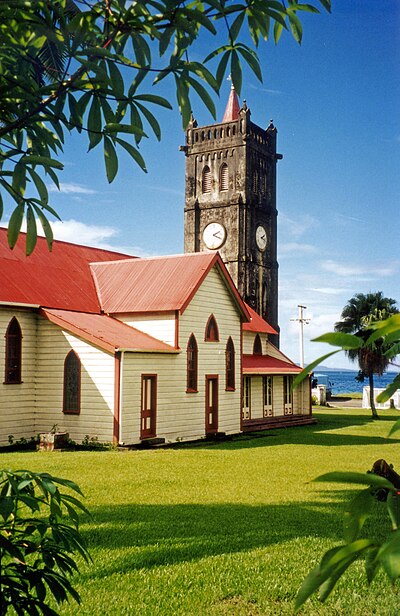
Welcome to Levuka Historical Port Town, Fiji's very first UNESCO World Heritage Site located on Ovalau Island. This tranquil and historic port town is picturesquely nestled beneath the lush forested slopes of an extinct volcano along the island's beachfront. Set among fragrant coconut palms and mango trees, the town developed from the 1820s onwards as a bustling center of commercial activity for American and European traders dealing in valuable sandalwood and bêche-de-mer. Vessels from across the globe frequented this natural harbor, prompting the rapid construction of copra sheds, commodious warehouses, bond stores, and essential port facilities directly alongside the indigenous Fijian settlements bordering the waterfront.
On October 10, 1874, King Cakobau, known as the Tui Viti, along with the high chiefs of Fiji, peacefully ceded the islands to Great Britain, officially establishing Levuka as Fiji's first colonial capital. Unlike standard colonial ports imposed by imperial powers, Levuka represents a rare and extraordinary cultural synthesis of Western maritime architecture and indigenous South Pacific building traditions. Because the local indigenous population continuously outnumbered European settlers throughout the nineteenth century, native Fijian traditions and settlement patterns exerted a profound influence on the urban layout, spatial organization, and structural growth of the town.
Recognizing its Outstanding Universal Value and remarkable intactness, UNESCO inscribed Levuka on the World Heritage List in 2013. The historic integrity of the port town had already been officially acknowledged as early as 1973, ensuring its steady conservation across the decades. Even after the colonial capital transferred to Suva in 1882, major trading enterprises retained their commercial bases in Levuka, allowing the town to preserve physical evidence representing every successive stage of South Pacific maritime colonization. Historic indigenous village sites like Totoga and Nasau, situated along the three streams draining the volcanic slopes, as well as the Baba indentured labor settlement, the former shell button factory site, and numerous nineteenth century timber structures, remain remarkably preserved today under the Fiji World Heritage Decree 2013.
Our audio walking tour today guides you along Beach Street, the main thoroughfare running continuously along the ocean edge. Bound by a continuous stone and concrete sea wall, Beach Street offers refreshing maritime breezes and an authentic nineteenth century atmosphere. As you stroll, you will observe single and two-story weatherboard buildings topped with corrugated iron hipped and gable roofs, side lanes radiating inland following natural land contours, and serene views across the coral reef. Throughout this tour, you will encounter remarkable landmarks including the Old Morris Hedstrom Building, the Levuka Town Hall, the historic Royal Hotel, and panoramic lookout points. Please wear comfortable walking shoes, pace yourself comfortably, and enjoy this living monument of Pacific history.
02 Beach Street and the Stone Sea Wall
Beach Street forms the continuous structural spine of the entire town along the ocean edge, bound by a robust stone and concrete sea wall. Please direct your gaze toward the water edge and observe the continuous concrete sea wall running alongside Beach Street right in front of you. This impressive coastal wall not only shields the historic waterfront from ocean waves but also provided the essential foundation upon which Levuka expanded as a thriving nineteenth century maritime port. …
03 Old Morris Hedstrom Building and Community Centre
It is a fascinating historical fact that two young graduates from a local school built a modest mercantile business right at this spot that eventually grew into one of Fiji's most famous and prominent trading corporations. Please pause and direct your attention to the historic structure standing directly ahead of you. …
04 Levuka Town Hall
It is a remarkable historical fact that this dignified civic building was erected in 1898 specifically to celebrate the silver jubilee of Queen Victoria. Erected during an era of significant imperial commemoration, the structure underscores Levuka's elevated status not merely as a regional trading port but as a vital administrative capital in the South Pacific. …
05 The Historic Royal Hotel
The historic Royal Hotel holds the remarkable title of being the oldest continuously operating hotel in the entire South Pacific. Please pause before this magnificent establishment and direct your eyes upward to observe its striking multi-story wooden verandas and broad, shaded balconies that frame the building's front elevation. …
06 199 Steps and Mission Hill Lookout
The straight, ascending staircase standing before you, known as the 199 Steps, holds the impressive distinction of being the longest flight of steps in all of Fiji. Please take a moment to admire these steep stone and concrete steps ascending directly upward through lush, vibrant tropical foliage toward the summit of Mission Hill. …
07 Closing
Welcome to the Deed of Cession Site, the historic location where our audio walking tour of Levuka Historical Port Town reaches its meaningful conclusion. It was precisely at this sacred spot in the Nasova area on October 10, 1874, that King Cakobau, known as the Tui Viti, along with the high chiefs of Fiji, signed the Deed of Cession peacefully transferring sovereignty of Fiji to Queen Victoria and Great Britain. …