 Photo Wikimedia Commons
Contents
History & cultureBY TELLBY7 sections · numbered as on the map01 Orientation
Welcome to the Tower of Kamianiec, a premier historic icon of Belarus and the proud symbol of the town of Kamianiec. Standing where you are today on this gentle hill overlooking the serene Lesnaya River, you are gazing upon an exceptionally preserved thirteenth-century stronghold. Built in the second half of the thirteenth century, this defensive structure is the only tower of its kind in Belarus to survive almost completely intact to the present day. While similar towers in cities like Brest, Grodno, Turaw, and Polotsk were destroyed during past conflicts, this tower stands proud under official state protection. Today, it functions as an esteemed branch of the Brest Regional History Museum, offering visitors an authentic glimpse into medieval military architecture. This defensive tower is not merely a sight to behold, but a living monument encapsulating the resilience and craftsmanship of the guardians who protected these borderlands.
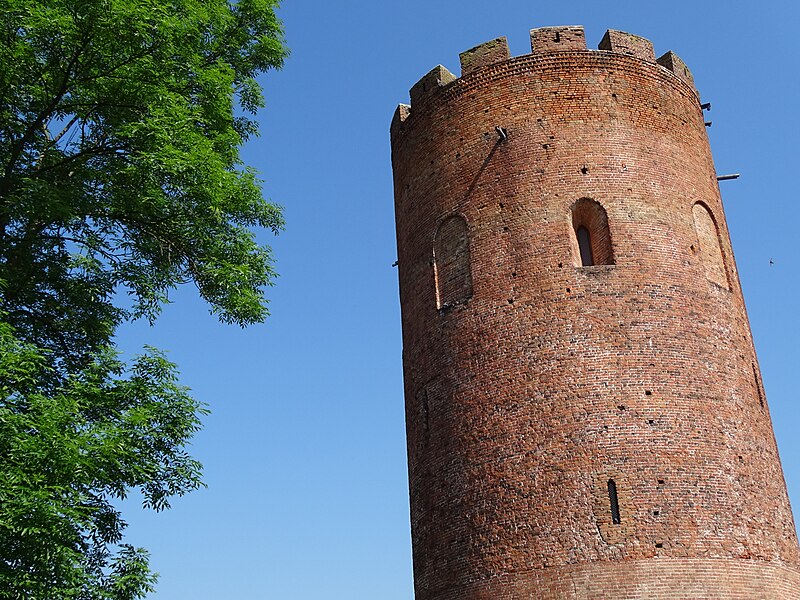
As you admire the exterior, your eyes are immediately drawn to the striking red brickwork that wraps around the entire structure. Nationally and internationally, the tower is widely recognized by its famous nickname, Belaya Vezha, which translates to the White Tower. This name has become a celebrated brand throughout Belarus, associated with health sanatoriums, hospitality venues, and even a prestigious annual international theater festival held in Brest. However, historical research confirms that the tower was never historically white. The nickname originated from a twentieth-century misconception caused by the author Georgy Kartsov. In his book about the Belovezhskaya Pushcha forest, he mistakenly wrote that the tower stood along the Belaya River, giving rise to this persistent legend.
In reality, the fortress was constructed from dark red and yellowish clay bricks. This natural brick-red color served a crucial military purpose by camouflaging damage to the exterior walls during sieges. Enemy attackers were unable to accurately gauge the impact of their catapult stones or projectiles against the masonry. This camouflage technique provided a distinct tactical advantage to the defenders inside. Although the tower was briefly painted with whitewash during the nineteen fifties, extensive restoration work during the nineteen nineties removed the white coating, returning the masonry to its authentic medieval appearance.
Resembling a massive chess rook, the tower incorporates architectural elements similar to Western European keep castles. Today, we will guide you through all five interior tiers up to the summit observation deck. We will explore the basement storehouse, archaeological displays, Grand Duchy of Lithuania historical hall, defensive masonry, and medieval armory. Please follow the path as we step inside to begin our tour at the first tier foundation.
02 Tier 1 Basement & Foundation
Welcome to the first tier basement storehouse. As you step onto this ground-level floor, you encounter a fascinating historical truth that completely reshaped our understanding of this fortress. For centuries, this entire lower section remained buried deep beneath a thick earthen mound. This caused historians and locals to mistakenly believe it was merely an underground cellar or storage pit. However, in nineteen hundred and three, a major restoration project was initiated. …
03 Tier 2 Archaeological Artifacts Room
Welcome to the second tier archaeological artifacts room. It is truly remarkable that despite the violent storms of war that swept through this region over the centuries, delicate pottery fragments and personal metal items survived buried deep within the soil of the fortress grounds without being destroyed. Throughout the Middle Ages, the land surrounding this tower was a battleground, enduring frequent sieges and raids by Crusaders, Tatars, and neighboring armies. …
04 Tier 3 Grand Duchy of Lithuania History Hall
Welcome to the third tier Grand Duchy of Lithuania history hall. As you step into this space, you will encounter a remarkable story regarding the physical durability of this fortress. In eighteen twenty-two, after the tower had lost its military function and suffered from neglect, local residents and contractors attempted to dismantle the structure to extract bricks for building material. However, their dismantling efforts failed completely. …
05 Tier 4 Defensive Architecture & Brickwork Hall
Welcome to the fourth tier defensive architecture and brickwork hall. This level highlights the astonishing engineering craftsmanship of the Tower of Kamianiec, showcasing a rare medieval bricklaying technique that was extraordinarily uncommon in Eastern Europe during the thirteenth century. At that time, most regional fortifications were built using stone rubble or earthworks. All-brick construction was extremely costly and technically demanding. …
06 Tier 5 Armory & Gothic Lancet Windows
Welcome to the fifth tier armory and Gothic lancet windows hall. Reaching this uppermost interior level, you immediately notice a striking contrast to the austere, utilitarian atmosphere of the lower tiers. Here, you are greeted by rare early Gothic pointed lancet windows and decorative wall niches. While the lower floors were engineered strictly for defense, ammunition storage, and provisions, this fifth tier was designed as a combined residential and command hall for nobility and high-ranking…
07 Closing
Congratulations on reaching the summit observation platform. Standing atop this thirty-meter high keep, an awe-inspiring panoramic view opens up before you. Looking out over the surrounding landscape, you can admire the winding course of the Lesnaya River and the peaceful, picturesque town of Kamianiec. From the very vantage point where medieval sentinels once kept vigilant watch for approaching armies, you are now enjoying one of the most treasured historic landscapes in all of Belarus. …