 Photo Wikimedia Commons
Contents
History & cultureBY TELLBY7 sections · numbered as on the map01 Orientation
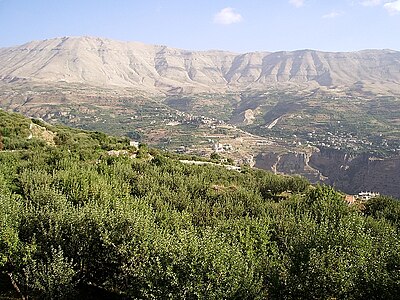
Welcome to the Holy Valley of Qadisha and the Forest of the Cedars of God, a sanctuary where nature, history, and spirituality converge in profound harmony. Designated as a World Heritage site in nineteen ninety-eight, this sacred landscape holds a unique place in human culture. It is a holy site where early Christian monastic traditions are carved directly into an extraordinary natural environment, preserving the quiet legacy of faith alongside the historic remains of the great Cedars of Lebanon that were once sought after across the ancient Mediterranean basin for major religious constructions, basilicas, and sacred temples. For centuries, the deep limestone gorge of the Qadisha Valley served as an isolated refuge for hermits and monastic communities seeking divine contemplation far away from the turbulence and persecution of the secular world. The silent prayers offered within these rock-hewn sanctuaries still resonate through the mountain mist and high cliffs today. Moreover, this ancient landscape is inextricably tied to the artistic and spiritual journey of Kahlil Gibran, one of the most beloved writers and visual artists in world history. Ranked as the third best-selling poet of all time, behind only William Shakespeare and Laozi, Gibran captured the global imagination with his masterwork The Prophet, a literary masterpiece that has been translated into more than one hundred languages and has never been out of print since its publication. Born in the nearby mountain village of Bsharri, Gibran drew endless poetic inspiration from the raw, mystical majesty of these surrounding cliffs and sacred cedar groves. His world-renowned literature and symbolist art reflect the universal love, philosophical insight, and deep peace nurtured by this holy terrain. Through this comprehensive audio tour, you will explore the dramatic panoramic overlooks of the gorge, walk near the village entrance where Gibran spent his early childhood, visit the rock-carved Mar Sarkis Monastery where his earthly body rests, and discover the magnificent original artworks and manuscripts preserved in his museum gallery. Please take a moment to pause, breathe in the pure mountain air, and allow the timeless echo of the Holy Valley to guide your thoughts as we step forward into this unforgettable journey across history and soul.
02 Sanctuary Hidden in the Cliffs
It is an astonishing fact that ancient Christian monasteries were constructed directly into the sheer faces of these dramatic limestone cliffs, integrating perfectly with the wild mountain topography of the valley. Direct your eyes across the abyssal gorge toward the formidable rock faces and steep limestone cliffs stretching out before you. …
03 Birthplace of Poet Kahlil Gibran
It is a remarkable fact that Kahlil Gibran, one of the most widely read authors and poets in human history, was born in this quiet mountain village of Bsharri on January sixth, eighteen eighty-three, during the era of Ottoman Imperial rule. Lift your eyes to gaze upon the peaceful cluster of stone houses and winding cobblestone alleys visible just beyond the village entrance. …
04 Final Resting Place Carved in Rock
It is an extraordinary and deeply moving fact that after Kahlil Gibran passed away in a New York hospital, his earthly remains were transported across the Atlantic Ocean aboard the French ocean liner Sinaia to finally be laid to rest in this historic mountain monastery. Direct your visual attention to the solid stone arch framing the main entrance and the rugged ancient exterior walls of the Mar Sarkis Monastery. …
05 Artistic Soul Transferred from New York
It is a remarkable and generous fact that in his final written will, Kahlil Gibran bequeathed the complete contents of his New York art studio, including over four hundred original paintings and drawings, personal books, and studio furniture, to his native town of Bsharri. Direct your gaze directly toward the delicate series of pencil and charcoal portraits displayed along the museum gallery walls. …
06 The Poet Who Stands Beside You
It is an astonishing and noble fact that Kahlil Gibran designated in his final will that all future American book royalties from his published works should be willed exclusively to his hometown of Bsharri to be used for civic betterment and public welfare. Focus your gaze upon the central stone tomb resting inside this rock-carved cave chamber and the famous inscription etched onto the adjacent limestone wall under soft accent lighting. …
07 Closing
Today, we have journeyed together through the sacred realm of the Qadisha Valley, the historic Forest of the Cedars of God, and the inspiring life and artistic legacy of Kahlil Gibran. Throughout this tour, we have witnessed how early Maronite Christian hermits carved sanctuaries of silent prayer and contemplation directly into sheer limestone cliffs, how ancient cedar groves provided sacred timber for the great religious monuments of human antiquity, and how a young boy from the humble…