Contents
History & cultureBY TELLBY1 sections · numbered as on the map01 Ho'opi'i Falls: Amber Mining in the Dominican Jungle
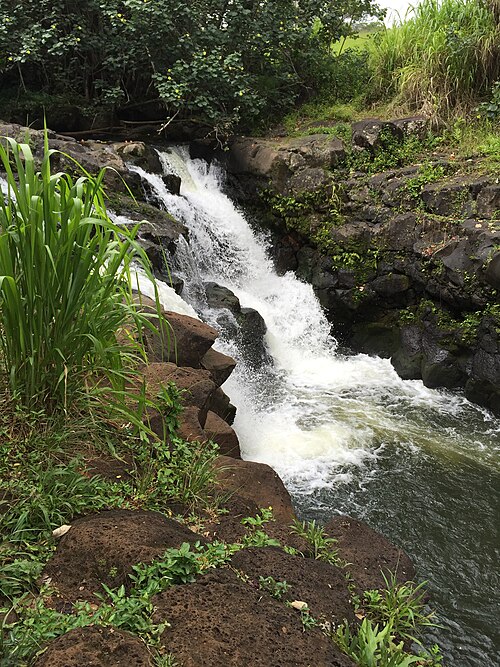
Welcome to a humid pocket of paradise where lawyers trade bags of cash for a drop of sap containing a dead mosquito! Hidden along Kapaʻa Stream on Kauaʻi, Ho'opi'i Falls served as the filming location for the Mano de Dios amber mine in the Dominican Republic. Early in Jurassic Park, greedy attorney Donald Gennaro treks into this jungle setting to inspect a fossilized amber stone extracted by local miners. That tiny insect trapped forty-six million years ago held the dinosaur DNA that started John Hammond's chaotic circus. Filming among these cascading tropical waters gave the scene an authentic, sun-drenched rainforest ambience. Notice how the cool stream flows over smooth basalt rocks surrounded by dense Hawaiian foliage. It looks peaceful, but this spot represents the origin of genetic catastrophe: human greed extracting secrets better left buried in mud. Using ancient blood to resurrect carnivores might sound like a brilliant investment to a lawyer, but math teaches us tiny extracts yield massive disasters. Enjoy the gentle sound of Ho'opi'i Falls, watch your step on slick rocks, and if anyone offers you amber jewelry containing ancient bugs—walk away!