 Photo Wikimedia Commons
Contents
History & cultureBY TELLBY8 sections · numbered as on the map01 Orientation
Welcome to the sacred Jagannath Temple in Puri Odisha located on the eastern coast of India at latitude nineteen point eight zero four seven two and longitude eighty five point eight one eight three three. This grand temple complex stands as one of the four most sacred Hindu pilgrimage sites collectively known as Char Dham alongside Badrinath Dwarka and Rameswaram. Known anciently as Purusottama Kshetra or Nilachala this holy realm is revered as a living divine abode mentioned in sacred texts such as the Skanda Purana Narada Purana and Matsya Purana. According to ancient temple records King Indradyumna of Avanti commissioned the very first temple on this holy site during Satya Yuga. The current monumental structure was rebuilt from the eleventh century onwards by King Anantavarman Chodaganga Deva the founder of the Eastern Ganga dynasty. Later rulers of the Gajapati monarchy such as Kapilendra Deva and Anangabhima Deva the third further institutionalized this temple as a major state supported spiritual center. As you approach this magnificent complex you will encounter a deeply revered custom that has been upheld for centuries. In strict accordance with temple codes known as Agama Shastra and Purusottama Kshetra Mahatmya entry inside the inner sanctum is reserved exclusively for practicing Hindus Jains Buddhists and Sikhs who accept the Vedic traditions. Visitors belonging to Abrahamic faiths such as Christianity Islam and Judaism as well as atheists agnostics and foreign born converts are traditionally denied entry beyond the main gates. Historical figures including former Prime Minister Indira Gandhi and foreign devotees of ISKCON were respectfully restricted from entering due to these ancient ritual purity mandates. This rule is maintained not out of racial or national discrimination but out of a profound commitment to maintaining the divine protocol and ritual purity of the living deity. The Gajapati Maharaj along with the thirty six categories of servitors known as Chhatisha Niyog strictly enforces these sacred traditions to protect the sanctum. For non Hindu visitors and foreign travelers who cannot enter the inner courtyard full spiritual participation remains accessible in many profound ways. You may visit the nearby rooftop viewpoint to behold a breathtaking panoramic view of the grand temple towers and the holy Nila Chakra disc. Furthermore during the grand annual festival of Rath Yatra Lord Jagannath emerges from His sanctum onto the Grand Road to offer His divine sight to all humanity without any distinction. Anyone can also partake of the sacred food offering known as Mahaprasad or Abhada Bhog at Ananda Bazaar where divine grace is shared universally. Let us now begin our exploration of this ancient sanctuary.
02 Singhadwara and Aruna Stambha
You are now standing before the main eastern entrance of the temple complex known as the Singhadwara or the Lion Gate. Facing directly eastward toward the Grand Road called Bada Danda this gate serves as the principal gateway among the four cardinal entrances of the sanctuary. The entrance derives its name from the magnificent pair of crouching colossal lion sculptures positioned on elevated platforms flanking the doorway to guard the holy precincts. …
03 Baisi Pahacha and Patita Pavana
As you step past the threshold of the Lion Gate you encounter the revered flight of twenty two holy steps known as Baisi Pahacha. In the local Odia language Baisi means twenty two and Pahacha means steps forming the iconic spiritual staircase that leads pilgrims upward into the main courtyard of the temple. …
04 Mukti Mandapa and Temple Outer Walls
Passing beyond the twenty two steps you emerge into the sprawling inner courtyard of the Jagannath Temple complex which spans over forty thousand square meters. This vast religious sanctuary houses at least thirty active shrines and over one hundred twenty distinct structures showcasing the monumental fluidity and structural elegance of classic Kalinga architecture. The entire complex is fortified by two concentric stone enclosures designed to protect the sacred zone. …
05 The Main Spire and Nila Chakra
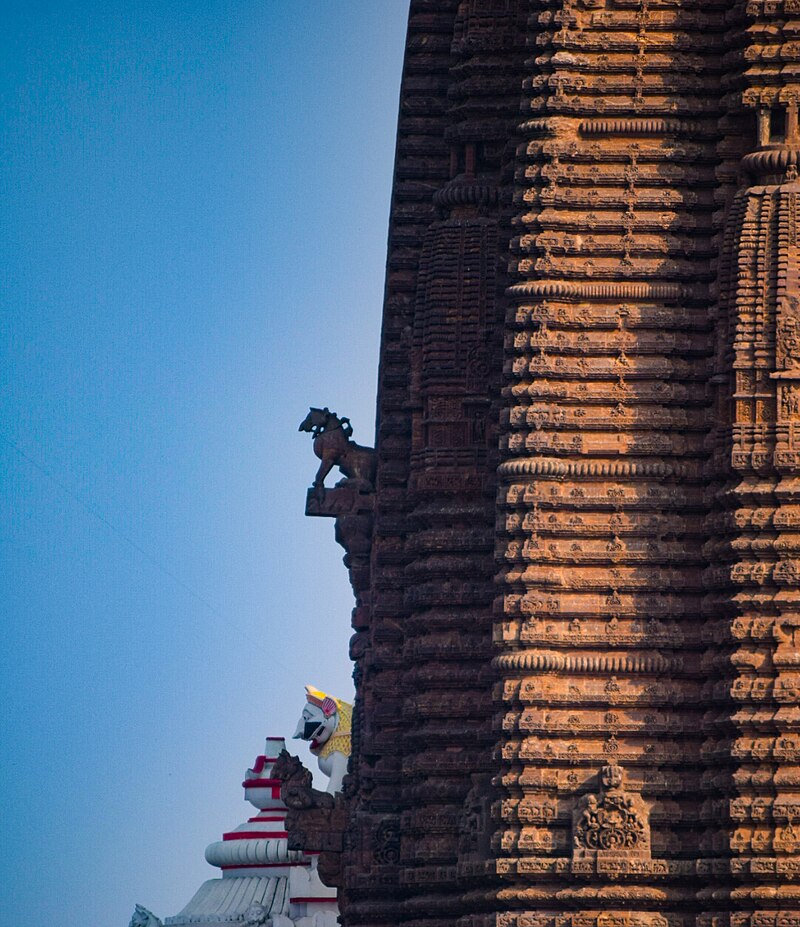
We now direct our attention toward the monumental central spire known as the Deul and the sacred blue discus called Nila Chakra mounted at its crown. Soaring to a magnificent height of two hundred fourteen feet and eight inches which is approximately sixty five meters above the inner sanctum this curvilinear Rekha Deula tower is the tallest temple spire in all of Odisha. Deep inside the innermost sanctum or Garbhagriha sits the bejeweled throne platform known as the Ratnabedi. …
06 Rosaghara Kitchen and Mahaprasad
Located within the temple compound is Rosaghara recognized as the second largest temple kitchen in the world capable of preparing food for up to one hundred thousand people in a single day. This vast culinary facility stands as a testament to the grand hospitality and devotional tradition of Puri Jagannath Temple. …
07 Heritage Corridor and Viewing Points
Surrounding the outer perimeter of the temple complex lies the newly transformed landmark known as the Shree Jagannath Heritage Corridor or Shree Mandir Parikrama. Spanning a width of seventy five meters directly surrounding the massive Meghanada Pacheri wall this expansive heritage walkway was created to offer a seamless spacious and inspiring environment for millions of visiting pilgrims. …
08 Closing
As our audio guide tour of the sacred Jagannath Temple in Puri comes to a close we hope this journey has offered you profound insights into one of India most revered spiritual treasures. This ancient sanctuary in Odisha represents far more than extraordinary Kalinga architecture and rich historical records it is a living vibrant realm of devotion equality and timeless spiritual traditions. …