 Photo Wikimedia Commons
Contents
History & cultureBY TELLBY8 sections · numbered as on the map01 Orientation
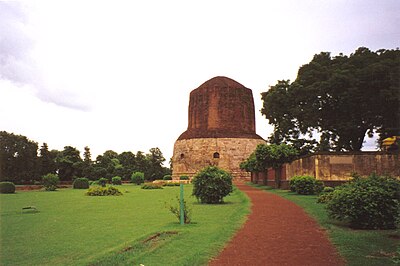
Welcome to the Sarnath Museum, located in the sacred town of Sarnath, Uttar Pradesh, just a short drive from the bustling city of Varanasi in India. Sarnath holds a profoundly revered place in history and in the hearts of Buddhists around the world. It was right here, more than two thousand five hundred years ago, that Siddhartha Gautama, known as the Buddha, delivered his very first sermon after attaining enlightenment. In a quiet grove known as the Deer Park, he spoke to his first five disciples, imparting the fundamental teachings of the Four Noble Truths and the Eightfold Path, thereby setting in motion the Wheel of the Law and laying the enduring foundation for Buddhism. The Sarnath Museum, recognized as the oldest site museum of the Archaeological Survey of India, was established to preserve, display, and study the extraordinary collection of antiquities excavated directly from this adjacent archaeological site. In the year 1904, the Government of India made the official decision to construct a dedicated site museum to keep these precious findings in their proper historical perspective and geographical context. The creation of this institution was realized through the visionary initiative and dedicated guidance of Sir John Marshall, who was then serving as the Director General of Archaeology in India. The architectural plans for the museum building were prepared by Mr. James Ramson, the then consulting architect to the Government of India. Drawing inspiration from ancient Buddhist monastic design, Ramson planned the building to reflect half of a traditional monastery, or Sangharam, resulting in an elegant, dignified, and harmonious architectural structure. Completed in the year 1910, the museum provides an ideal environment to showcase these magnificent artifacts in the exact context of their original discovery. Today, the Sarnath Museum comprises five spacious main galleries and two open verandah exhibition areas, housing an astonishing collection of six thousand eight hundred and thirty-two sculptures, architectural fragments, and ancient antiquities. These holdings span a vast historical period ranging from the third century BCE during the reign of the Mauryan Empire up to the twelfth century CE. The museum is open to visitors every day from 9:00 AM to 5:00 PM, with the exception of Fridays, for a nominal entrance fee. As you explore this treasure trove of art and spiritual heritage, we kindly ask that you show respect for these sacred relics by dressing modestly and maintaining a quiet, contemplative demeanor throughout your visit. Prepare to embark on an extraordinary journey through time, discovering the profound art, spiritual evolution, and enduring legacy of Buddhist culture preserved within these walls.
02 Lion Capital of Ashoka
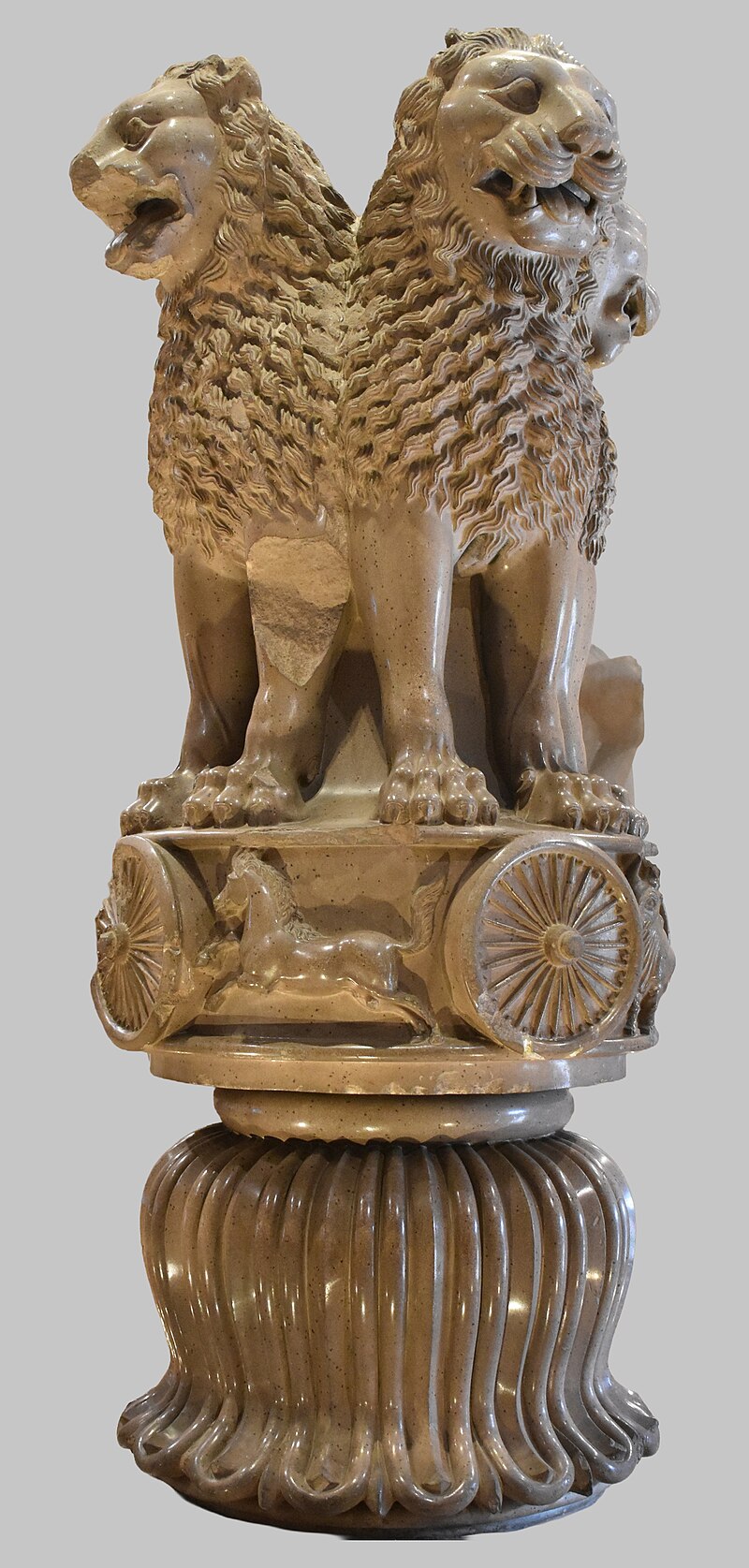
You are now standing before the single most celebrated masterpiece in the Sarnath Museum, the magnificent Lion Capital of Ashoka. Carved around 250 BCE during the Mauryan period under the reign of Emperor Ashoka, this sandstone capital originally surmounted a majestic pillar erected at the sacred site of Sarnath where the Buddha delivered his first sermon. …
03 Bala Bodhisattva Statue
As you move further into the main gallery space of the Sarnath Museum, your attention will immediately be drawn to a grand and commanding stone sculpture standing prominently to the left of the central Lion Capital of Ashoka. This exceptional artifact is the celebrated Bala Bodhisattva statue, created during the Kushan period. …
04 Buddha Preaching His First Sermon
Please step toward one of the most iconic and spiritually profound masterpieces in the Sarnath Museum, the world-renowned fifth-century sculpture depicting the Buddha Preaching His First Sermon. Created during the golden age of the Gupta Empire, this celebrated sandstone statue captures the sacred historical moment when Siddhartha Gautama sat in the Deer Park at Sarnath and delivered his maiden discourse to his first five disciples, setting the Wheel of the Law in motion. …
05 Standing Buddha with Abhayamira Inscription
We now direct your attention to another exceptional treasure preserved within the main collection of the Sarnath Museum, the Standing Buddha with the Abhayamira Inscription. This remarkable sandstone statue holds immense historical and epigraphic value for archaeologists and art historians worldwide. Carved during the reign of King Kumaragupta II of the Gupta dynasty, the sculpture bears an explicit inscription indicating that it was created in the year 154 of the Gupta Era, which corresponds…
06 Bodhisattva with Lotus and Multi-Armed Bronze
As you continue your journey through the exhibition halls of the Sarnath Museum, we invite you to focus on two remarkably rare and iconographically significant sculptures that highlight the rich development of Bodhisattva worship: the delicate Bodhisattva with a Lotus and the extraordinary Multi-Armed Bronze Bodhisattva. …
07 Foreigner Head and Hindu Deities Collection
We welcome you to the final exhibition section of the Sarnath Museum, featuring the Foreigner Head with a Conical Cap alongside the remarkable collection of Hindu Deities. The artifacts assembled in this area provide fascinating proof that ancient Sarnath was not merely an isolated Buddhist sanctuary, but rather a vibrant, cosmopolitan center of cultural exchange and interfaith artistic co-existence connected to West Asia and beyond. …
08 Closing
This concludes our official audio guide presentation for the Sarnath Museum. Throughout your journey today across the five main galleries and two verandah exhibition spaces, you have explored highlights from the museum's remarkable collection of six thousand eight hundred and thirty-two cataloged artifacts, spanning from the third century BCE Mauryan Lion Capital of Ashoka to exquisite Gupta period Buddhas and medieval Hindu sculptures. …