Contents
History & cultureBY TELLBY7 sections · numbered as on the map01 Orientation
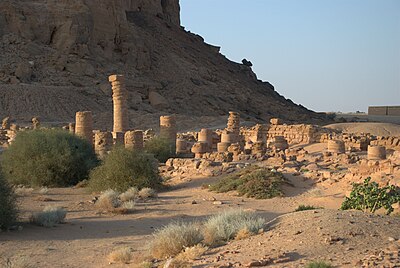
Welcome to Gebel Barkal and the Sites of the Napatan Region, a extraordinary testament to the ancient civilization of Kush along the Nile valley. This world heritage site encompasses five distinct archaeological areas stretching over more than sixty kilometers in the Nile valley, including Gebel Barkal, Kurru, Nuri, Sanam, and Zuma. Together, these sites represent the Napatan and Meroitic cultures of the second kingdom of Kush, preserving an architectural and cultural tradition that shaped the political, religious, social, and artistic landscape of the region for more than two thousand years. Rising dramatically before you is Gebel Barkal, a striking sandstone mesa reaching a height of one hundred and four meters with a distinctive flat top. Since antiquity, this mountain has been deeply intertwined with sacred traditions and local mythology. Ancient Egyptians and Kushites believed that the state god Amun, often depicted in a ram headed form, resided inside this holy mountain. Consequently, rulers erected monumental temples at the base of the hill to seek divine approval, perform sacred rituals, and legitimize their royal authority. The surrounding landscape served as the center of power for the Kushite rulers of the Twenty Fifth Dynasty, who conquered Egypt and expanded their reign across the region. Throughout the site, you will encounter the remains of monumental temples, grand stone columns, royal palaces, living complexes, and ancient pyramids set against the desert environment. Even today, the local inhabitants continue to regard this hill and its largest temples as holy and sacred places, maintaining a living connection to these ancient traditions. Today audio guide tour begins right here at the main entrance area and guides you through a carefully planned route visiting the most significant structures of the site. We will first walk toward the ruins of the Great Temple of Amun to observe its remaining stone pillars and ram statues. Next, we will visit the remarkable rock cut Temple of Mut carved directly into the cliff base, followed by Temple B700 where sacred coronation rites took place. Afterwards, our route leads around the mountain to the royal pyramids of Gebel Barkal standing on the desert plain, and then to the rock cut tombs of Hillat al Arab located to the south. Finally, we will return to a scenic vantage point overlooking the entire sanctuary to conclude our journey. As you walk among these ancient stone structures and relief carvings, prepare to immerse yourself in the rich history of a great civilization. Let us now move forward to our first stop at the Great Temple of Amun.
02 The Great Temple of Amun
We are now standing at the sprawling, magnificent ruins of the Great Temple of Amun, positioned directly at the eastern base of the sacred mesa of Gebel Barkal. This expansive archaeological ground holds a extraordinary historical secret that dates back over three thousand five hundred years. Around 1450 BC, the formidable Egyptian pharaoh Thutmose III conquered this territory along the Nile and established a fortified settlement known as a menenu to define the southernmost boundary of the…
03 Rock-Cut Temple of Mut
Moving a short distance from the Great Temple of Amun along the cliff line, we arrive at the remarkable Temple of Mut, carved directly into the sheer sandstone base of Gebel Barkal. This rock-cut sanctuary holds a truly astonishing revelation for visitors. Excavated deeply into the solid heart of the mountain cliff, the subterranean chambers of this temple preserve vibrant painted scenes and intricate relief carvings executed by ancient Kushite artists three thousand years ago, retaining much…
04 Temple B700
Adjacent to the Temple of Mut lies Temple B700, a smaller yet historically profound structure within the Gebel Barkal sanctuary. Though modest in physical dimensions compared to the neighboring Great Temple of Amun, this location filled a surprising and crucial function in ancient Kushite state religion. …
05 Royal Pyramids of Gebel Barkal
Arriving at the open desert plain on the western side of Gebel Barkal, we are greeted by one of the most visually striking and dramatic panoramas of the entire archaeological landscape, the Royal Pyramids of Gebel Barkal. These ancient monuments possess a surprising architectural distinction that sharply differentiates them from the famous royal tombs of Lower Egypt. …
06 Rock-Cut Tombs of Hillat al-Arab
Reaching the archaeological locality of Hillat al-Arab, situated approximately three kilometers south of Gebel Barkal, we encounter a remarkable ancient cemetery that holds a fascinating story of preservation and historical survival. This site contains about twenty tombs carved directly into the natural sandstone rock, dating back to the crucial era from approximately 1200 BC to 750 BC. What renders this ancient graveyard truly extraordinary is a surprising twist of fate from antiquity. …
07 Closing
Standing once again at this breathtaking vantage point overlooking the majestic silhouette of Gebel Barkal, our journey through the heart of ancient Nubia comes to its conclusion. Today we have explored a monumental cultural landscape stretching over more than sixty kilometers along the Nile Valley. For over two thousand years, from 1500 BC through the sixth century AD, this region served as the vibrant heart of the Kingdom of Kush, shaping the political, religious, artistic, and social destiny…