Contents
History & cultureBY TELLBY7 sections · numbered as on the map01 Orientation
Welcome to Seri Bahlol, one of the most magnificent relics of the ancient Gandhara civilization and an esteemed UNESCO World Heritage Site located in Pakistan. I am delighted to be your expert audio guide today as we step back through time to explore the extraordinary history, spatial architecture, and artistic legacy embedded within this ancient fortified town. You are currently standing at the primary orientation viewpoint, situated atop an elevated earthen mound that rises approximately nine meters above the surrounding landscape. As you take a moment to look around, gaze north toward the rugged mountain ridges where the famed monastic sanctuary of Takht-i-Bahi perches high on the crests, contrasting dramatically with the fertile, sunlit plains of the Peshawar valley stretching out around us. To understand why Seri Bahlol holds such profound global significance without becoming lost in complex official inscription paperwork, it can be stated in a few clear words: Seri Bahlol is a remarkable first-century Kushan fortified city that preserves the living essence of ancient secular urbanism alongside vibrant Buddhist religious culture. While the neighboring monastery at Takht-i-Bahi was intentionally established high on secluded crags to escape military invasions and maintain monastic tranquility, Seri Bahlol was strategically engineered upon an elevated earth mound in the center of a rich agricultural basin. It functioned as a bustling walled town where monastics, merchants, stone carvers, and local families coexisted in absolute daily harmony. Recognizing this extraordinary relationship between mountain sanctuary and plain citadel, UNESCO inscribed both Takht-i-Bahi and Seri Bahlol as a joint World Heritage property in nineteen eighty. Our guided walking itinerary today is carefully designed to lead you through the spatial framework of this historic city. From this central vantage point, you can map out the journey ahead: directly in front of us lies the northern outer defensive wall constructed in signature masonry; further inward stretches the expansive central residential mound; to the east and south lie specialized excavation sectors known as Mound E and Mound C, where monumental stupa bases, royal coin hoards, and colossal sculptures were unearthed; and finally, our walk concludes along the eastern perimeter boundary where ancient foundations touch the living modern village. As you prepare to immerse yourself in the sights and stories of Gandhara, take a deep breath and feel the ancient winds sweeping across this mound. When you are ready, please follow the designated pathway forward to our first featured stop, the Outer Defensive Wall and Mound.
02 Outer Defensive Wall & Mound
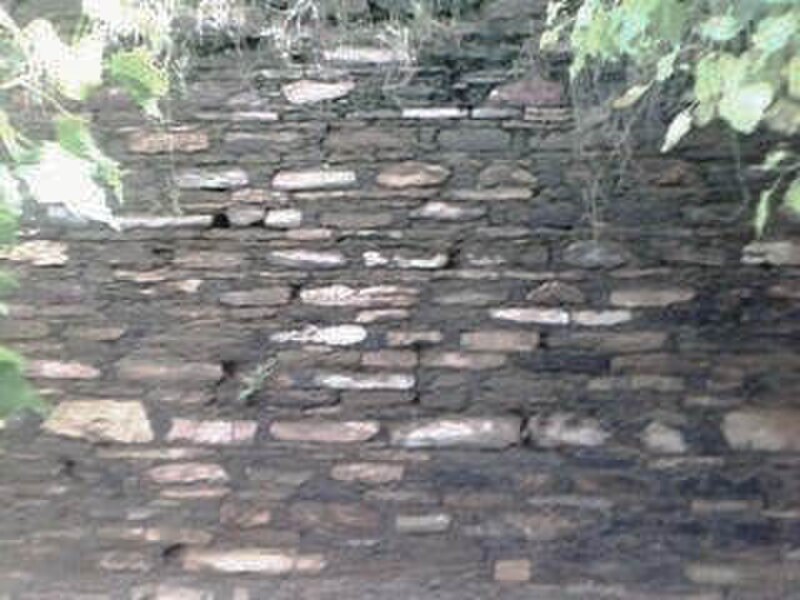
The ancient defensive wall standing proudly upon an elongated natural earth mound that reaches up to nine meters in height presents an extraordinary marvel of military fortification engineered by the master builders of the Kushan Empire in the first century. Harnessing the natural elevation of this long mound rising above the fertile, sun-drenched plains of the Peshawar valley, this defense system demonstrated a level of architectural ingenuity rarely encountered across ancient South Asia. …
03 Central Residential Mound & Ancient City
There is a compelling historical thesis supported by modern archaeological research that this very site of Seri Bahlol is the grand ancient Gandharan town of Foshafu or Palusha, which was visited and described in vivid detail by the famous Chinese pilgrim monks Songyun and Xuanzang. For over half a millennium, this urban complex attracted devout travelers from across East Asia, establishing itself as a celebrated metropolis in the heart of the central Gandhara plain where spiritual devotion and…
04 Mound E Stupa Base & Coin Discovery
It is truly extraordinary that right in the middle of this ancient Buddhist sanctuary, copper coins depicting the sacred bull of the Hindu god Shiva and white marble linga fragments were uncovered, proving a dramatic religious transition and harmonious coexistence over time. This remarkable archaeological discovery demonstrates that Seri Bahlol was not a static site, but a dynamic sacred space where distinct religious traditions overlapped across different historical eras. …
05 Mound C Colossal Head & Sculptural Finds
It is a fascinating mystery in Gandhāran art history that a colossal head measuring over fifty centimeters in height was discovered with absolutely no trace of its torso, leading archaeologists to deduce that the missing body had been constructed internally from a wooden framework covered in friable clay. …
06 Eastern Mound & Boundary
It is deeply evocative that modern village homes are built directly upon the stone foundations of an ancient fortified city, where past and present precarious touch and intertwine. Seri Bahlol does not exist merely as an isolated monument of the past, but as a living landscape where modern residential life overlaps directly with two-thousand-year-old urban ramparts. Look closely at the mudbrick walls and domestic structures visible just ahead of you. …
07 Closing
Thank you very much for joining this audio guide tour through the extraordinary historic site of Seri Bahlol. As you walked along the ancient city layout, from the first-century Kushan defensive wall to the central residential mound, the Mound E stupa court, the sculpture discovery site at Mound C, and the eastern village boundary, we hope you experienced an unforgettable journey into the heart of Gandhāran civilization. …