 Photo Wikimedia Commons
Contents
History & cultureBY TELLBY7 sections · numbered as on the map01 Orientation
Welcome to the Tak'alik Ab'aj National Archaeological Park, an exceptional historical sanctuary where the ancient heritage of the Olmec civilization and the vibrant birth of the Early Maya crossed paths at a bustling crossroads of ancient trade and culture. My name is your senior curator and audio guide narrator, and it is my distinct privilege to accompany you through this UNESCO World Heritage landmark. Situated in the Pacific slope region of El Asintal within the Retalhuleu department, approximately two hundred kilometers west of Guatemala City, this remarkable archaeological complex offers an atmosphere distinctly different from the vast plain pyramids of Tikal or Quiriguá. Rather than overwhelming visitors with colossal stone towers, Tak'alik Ab'aj captivates through its intricate carved stelae, sophisticated stone hydraulic engineering, precise astronomical alignments, and ceremonial platforms set within a lush tropical ecosystem. The name Tak'alik Ab'aj, which signifies Standing Stone in the K'iche' Mayan language, captures the essence of a place defined by its monumental lapidary art. Archaeologists and historians have documented that human occupation here spanned over seventeen hundred years of continuous cultural evolution, thriving as a primary commercial engine along the Pacific slope. Due to its strategic position along the vital long-distance trade corridor connecting the Isthmus of Tehuantepec in modern Mexico with present-day El Salvador, Tak'alik Ab'aj served as a vital commercial and cultural hub where ideas, artistic traditions, agricultural goods, and religious customs were shared extensively among diverse Mesoamerican populations. Merchants and emissaries traversed these trade routes carrying jadeite, cacao, obsidian, and colorful feathers, facilitating an unprecedented intellectual cross-pollination between the fading Olmec world and the emerging Maya elite. This extraordinary role as a living laboratory of Mesoamerican cultural transition earned the park its prestigious inscription as a UNESCO World Heritage site in twenty twenty-three. Today's audio tour will guide you on foot through five key ceremonial locations across the park grounds. As you stroll beneath the green forest canopy along signposted pathways, please remain on designated walkways and help us preserve these fragile stone monuments for generations to come. Take time to absorb the profound worldview, political philosophy, and technological mastery preserved in stone. Let us now begin our walking journey by proceeding toward our first main stop, the Open-air Museum, where stone monuments eloquently tell the story of two great civilizations.
02 Open-air Museum and Sculpture Display of Cultural Transition
The astounding archaeological discovery that ancient Maya rulers chose not to destroy, deface, or discard the stone sculptures of the preceding Olmec civilization, but instead intentionally transported them to the main ceremonial platform facades to display them alongside newly carved Maya stelae in what functions as an ancient Open-air Museum, stands as one of the most remarkable findings in Mesoamerican history. …
03 The Bearer of the Ancestor Sculpture
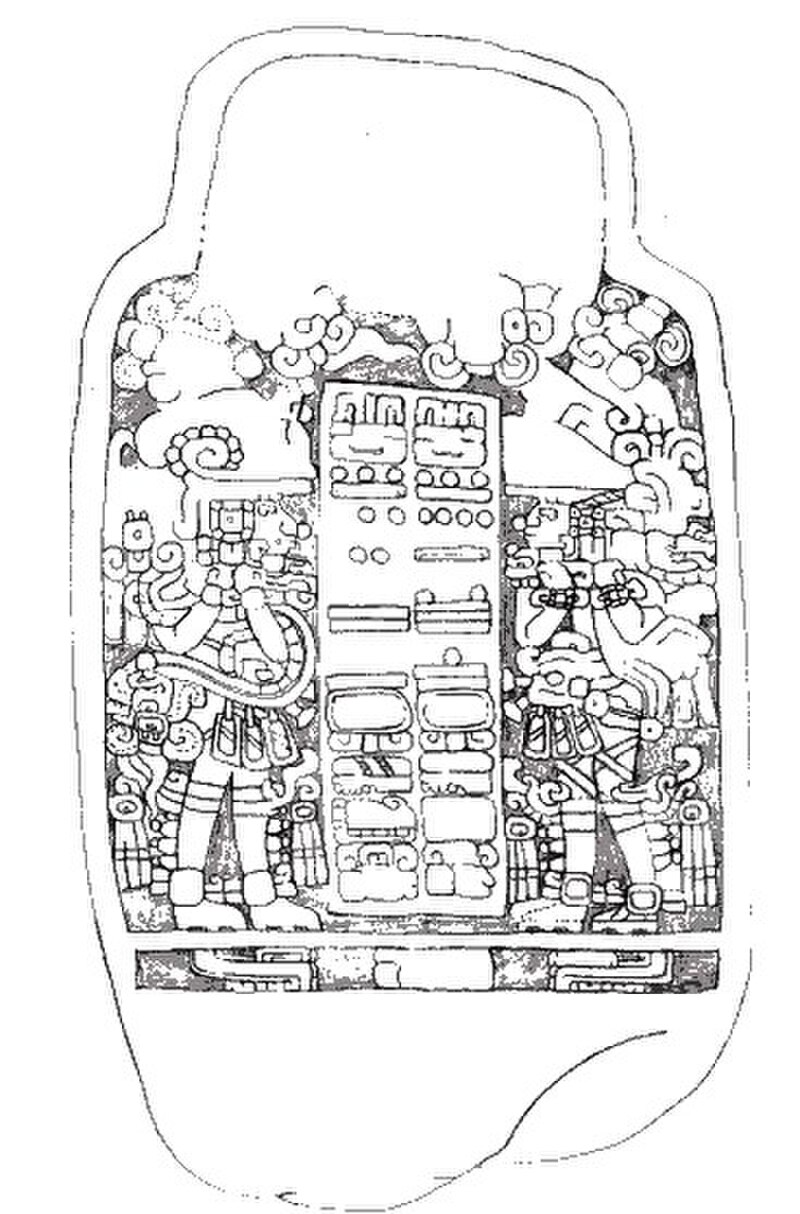
The astounding archaeological realization that an Early Maya monarch sought to prove his royal legitimacy and divine right to rule by commissioning a stone monument that depicts him physically carrying the heavy figure of his Olmec cultural ancestor on top of his head and across his back, provides an extraordinary window into ancient Mesoamerican political philosophy. …
04 Central Group and Mux Axis Mundi
The astounding archaeological reality that the entire urban layout of Tak'alik Ab'aj was masterfully engineered as a vast cosmic map structured around ancient cosmogram principles, where four cardinal avenues intersect at a central point designated as the navel of the world, provides a breathtaking glimpse into ancient Mesoamerican spatial design. …
05 Astronomical Observatory and Three Alignment Rows of Sculptures
The astounding archaeological discovery that over two thousand years ago, ancient astronomers at Tak'alik Ab'aj tracked the precise movement of constellations and the daily trajectory of the sun across the seasons to develop the Mesoamerican Long Count Calendar system, stands as one of the most brilliant scientific milestones in world history. …
06 Royal Tomb of King K'utz Chman and Las Muñecas Offering
The astounding archaeological discovery inside this tomb of a carved jadeite pendant shaped like a vulture's head—an iconic royal symbol—alongside a unique funerary offering of six female clay figurines buried in exact alignment with the sun's cosmic trajectory, represents one of the most magnificent finds in pre-Columbian history. …
07 Closing
Today, we have walked together along the sacred pathways of Tak'alik Ab'aj, tracing the thousand-year history where the Olmec and Maya civilizations converged. From the Open-air Museum to The Bearer of the Ancestor sculpture, from the Mux navel at the Central Group to the Astronomical Observatory and the Royal Tomb of King K'utz Chman, we have witnessed how ancient people carved their profound worldview into enduring stone. Yet Tak'alik Ab'aj is far more than a silent relic of the past. …