Contents
History & cultureBY TELLBY7 sections · numbered as on the map01 Orientation
Welcome to the Archaeological Site of Sabratha, a monumental ancient maritime city positioned along the sun-drenched Mediterranean coast of North Africa. As you stand here today with the gentle sea breeze sweeping across the shoreline, you are stepping into a extraordinary historical realm where multiple world civilizations overlaid one another across more than a millennium. Sabratha stands as a uniquely transparent testament to North African antiquity, showcasing how an early indigenous coastal settlement evolved into a lucrative Carthaginian trading post, passed into the Numidian Kingdom, transformed into a brilliant Roman metropolis, and was reshaped under the Byzantine Empire before fading into history. Recognizing its outstanding universal value, UNESCO inscribed this coastal treasure as a World Heritage Site in 1982.
Long before grand imperial stone structures rose along these shores, the natural harbor was home to indigenous North African Berber communities, specifically the Zwagha tribe. Around the fifth century BCE, Carthaginian merchants recognized the strategic value of this sheltered bay, which offered exceptional protection from prevailing westerly winds, and established a permanent trading emporium known as Tsabratan. Operating alongside Leptis Magna and Oea as part of a famous coastal triad known to the Greeks as the Emporia, Sabratha served as a vital gateway connecting the Mediterranean maritime network directly to the rich interior of Africa. Through direct overland caravan routes reaching deep into the Saharan oasis of Ghadames, precious goods including ivory, gold, olive oil, and exotic wild animals were brought to this harbor and shipped across the sea.
Following the defeat of Carthage and the fall of the Numidian Kingdom under rulers Masinissa and Jugurtha, Rome assumed control of this thriving trade hub. During the peak of the Roman Empire, the city underwent an astonishing period of expansion and architectural renewal. The urban area doubled in size, accommodating a population of up to thirty thousand inhabitants. Friable local limestone structures were replaced with enduring imperial marble monuments, grand public plazas, temples, and an unparalleled theatrical venue.
As you begin your walking tour today, your path follows the ancient urban grid oriented toward the sea. You will first discover the remarkable synthesis of artistic traditions at the Mausoleum of Bes, before moving to the civic center at the Forum and Judicial Basilica. From there, your steps will guide you to the water's edge at the Temple of Isis, onwards to the breathtaking Roman Theatre, and finally to the late Byzantine ramparts that sheltered the city's closing historical chapter. Please walk mindfully along these ancient stone paths and enjoy this immersive journey into antiquity.
02 Mausoleum of Bes
Standing before you is the Mausoleum of Bes, a monumental funerary structure that represents one of the most astonishing examples of architectural and artistic synthesis found anywhere in the ancient Mediterranean world. At first glance, this soaring tower structure mesmerizes the observer because it seamlessly fuses Egyptian religious iconographies, Greek heroic mythologies, and Punic architectural traditions into a single cohesive design. …
03 Forum & Judicial Basilica
You are now standing within the expansive Forum and Judicial Basilica, which functioned as the political, legal, and commercial heartbeat of Roman Sabratha. It was right here inside this court building that one of the most famous trial spectacles of the classical world took place in the year 158. The celebrated Berber-Roman philosopher, poet, and novelist Lucius Apuleius, globally renowned as the author of The Golden Ass, stood before the Roman proconsul in this basilica to defend himself…
04 Temple of Isis
Welcome to the Temple of Isis, a sanctuary dramatically positioned right along the edge of the Mediterranean shore where crashing waves continuously echo against ancient stone. Occupying a magnificent geographic elevated platform overlooking the coastline, this sacred precinct served as a vital spiritual beacon for mariners and international merchants in antiquity. …
05 Roman Theatre of Sabratha
Welcome to the Roman Theatre of Sabratha, the undisputed crowning jewel of this World Heritage site and widely celebrated as the most spectacular and completely restored Roman theatrical monument in North Africa. Built toward the end of the second century during the reign of Emperor Commodus and further embellished under the Severan dynasty, this colossal venue was engineered to accommodate thousands of spectators within its sweeping semi-circular auditorium, offering citizens a breathtaking…
06 Byzantine Church & Ramparts
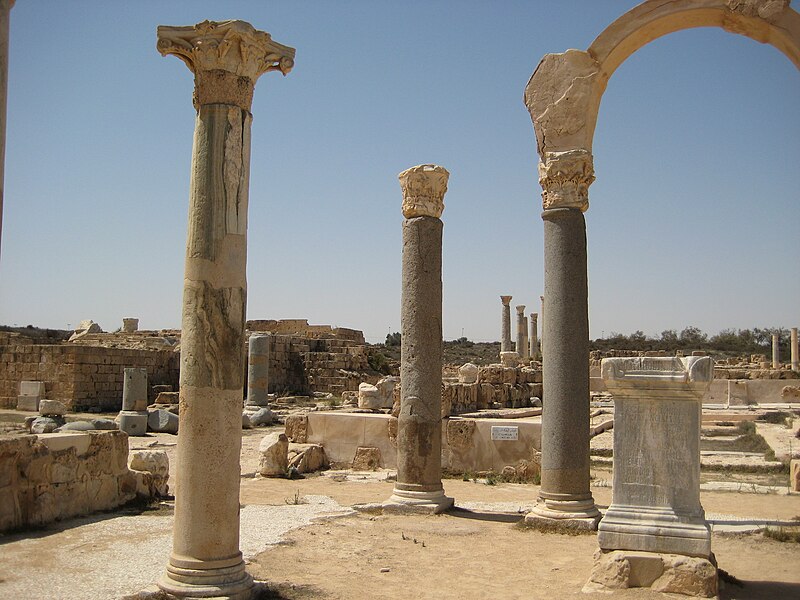
You have arrived at the Byzantine Church and Ramparts, a historical sector that encapsulates the final transformation and resilient twilight era of ancient Sabratha. Following a series of catastrophic fourth-century earthquakes and fifth-century Vandal invasions, the once-expansive imperial city shrank dramatically in both physical size and population. …
07 Closing
As our audio guide tour comes to a conclusion, take a final moment to stand near the coast and look back across the sweeping archaeological landscape of Sabratha. What began as a modest indigenous Zwagha settlement evolved into a lucrative Carthaginian trade port, flourished as a grand Roman imperial metropolis, and endured as a resilient Byzantine fortress. …