 Photo Wikimedia Commons
Contents
History & cultureBY TELLBY7 sections · numbered as on the map01 Orientation
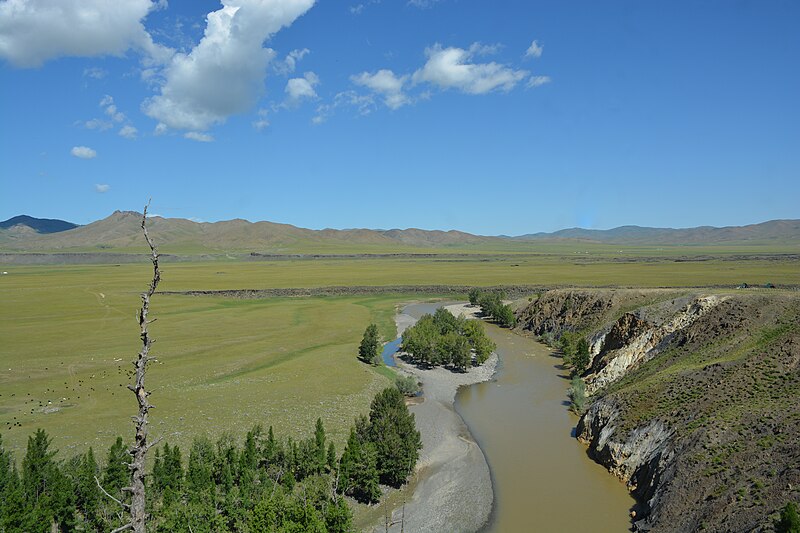
Welcome to the Orkhon Valley Cultural Landscape. As you stand before this vast open plain where the grass sways gently under the endless blue sky and the Orkhon River flows peacefully through Central Mongolia, you are stepping directly into the ancient cradle of steppe civilizations. Located roughly three hundred and twenty kilometers west of Ulaanbaatar, this serene valley may seem like an untamed wilderness at first glance. However, for more than two millennia, this very ground served as the undisputed heart of powerful nomadic empires that shaped the destiny of Eurasia. UNESCO designated this magnificent region as a World Heritage site because it preserves an exceptional, continuous record of nomadic pastoral traditions intertwined with the administrative, commercial, and spiritual centers of great ancient states. Here, successive cultures lived in profound harmony with their natural surroundings, developing sustainable pastoral traditions that remain a noble and active way of life for Mongolian herders today. From the early Hunnic tribes to the Gokturk Khaganate, the Uyghur Empire, the Khitan, and the mighty Mongol Empire, every major power that sought to rule the steppes established its ceremonial or political base in this sacred valley. The mountains and rivers surrounding us were not mere natural geographic features to these nomadic peoples; they were sacred realms from which imperial legitimacy and spiritual power flowed. Through this audio guide, you will embark on an unforgettable journey through five iconic historical spots that define the heritage of Central Asia. First, we will visit Khoshoo Tsaidam to encounter the legendary Bilge Khan memorial and hear the ancient voice of the Gokturks carved in stone. Next, we will explore the impressive ruins of Khar Balgas, the massive mud brick capital of the Uyghur Empire that once spanned fifty square kilometers across this plain. Our third stop brings us to the famous palace site of Karakorum, where Ogedei Khan erected a legendary silver tree fountain that poured alcoholic beverages for international guests from all over the known world. Fourth, we will inspect the celebrated Stone Turtle of Karakorum, a massive sculpture that has silently witnessed eight centuries of imperial rise and fall. Finally, we will arrive at Erdene Zuu Monastery, where one hundred and eight pristine white stupas stand upon the foundation stones of the old Mongol capital to blossom as the historical center of Mongolian Buddhism. Listen closely to the wind sweeping across the grassland as we step back into the living history of the steppes.
02 Khöshöö Tsaidam Turkic Memorials
Central Asian nomads did not rely on foreign scribes to write their history, but instead carved their own triumph and tragic struggles in their native runic script upon giant stone steles standing right in the middle of this vast grassland. As you stand before the Khoshoo Tsaidam memorial complex in the Tsaidam Lake area, pause for a moment and look down at the eroded stone base beneath your feet that once supported grand ceremonial halls. …
03 Khar Balgas Ruins
On a vast grassland where one might expect to see only temporary felt tents and horse corrals, there once stood a colossal walled metropolis covering fifty square kilometers, complete with military barracks, temples, and international trading districts. As you walk among the silent ruins of Khar Balgas, pause for a moment and look up at the towering remnants of the mud brick watchtowers that still break the flat horizon. …
04 Karakorum Palace Site & Silver Tree Fountain
In the middle of the Mongolian steppes, a Parisian goldsmith captured by imperial armies constructed a marvelous silver tree fountain for the Great Khan that automatically served fine drinks from four silver spouts whenever a silver angel sounded its trumpet. Standing at the palace site of Karakorum, pause for a moment and look down at the stone pillar bases scattered across the earth where the grand Tumen Amgalan Palace once stood. …
05 Stone Turtle of Karakorum
While the great palace, wooden pavilions, and city walls of Karakorum were reduced to ash and rubble during ancient wars, this monumental stone turtle has remained standing in its exact original spot for over eight hundred years as the sole surviving witness to the Mongol Empire. Standing before this impressive monument, look first at the deep square socket carved directly into the center of the turtle shell. …
06 Erdene Zuu Monastery Wall & Stupas
The magnificent white perimeter wall and one hundred and eight stupas surrounding this monastery were constructed using recycled stone blocks gathered directly from the ruined palaces and city walls of Karakorum. As you stand before the monastery grounds, look at the long, perfectly aligned row of white stupas stretching along the rectangular wall. Next, direct your eyes upward toward the corner entrance gate, adorned with traditional multi tiered tiled roofs. …
07 Closing
As our audio guide tour comes to a conclusion, take a moment to stand quietly and feel the gentle wind sweeping across the vast grassland of the Orkhon Valley. Together, we have traveled through thousands of years of human history, tracing the profound footprints of successive nomadic empires that shaped the destiny of Eurasia. We stood before the Khoshoo Tsaidam memorials to hear the ancient voices of Turkic heroes carved in stone, warning their people never to lose their nomadic identity. …